1. Project Background and Needs Analysis
Commercial districts are among the most vibrant public spaces in a city, supporting shopping, dining, leisure, cultural activities, and social interaction. However, conventional commercial districts often face challenges such as limited infrastructure functionality, fragmented information, inefficient management, and high energy consumption.
Traditional streetlights provide only basic illumination. Waste collection depends heavily on manual inspections, benches offer limited functionality, directional signage is difficult to update, and the overall experience of visitors and residents is often inadequate. Meanwhile, district operators must manage security, sanitation, energy consumption, information publishing, and commercial operations through separate systems, without a unified data platform or effective coordination mechanism.
With the development of the Internet of Things, artificial intelligence, and renewable-energy technologies, urban furniture is evolving from static infrastructure into intelligent service terminals.
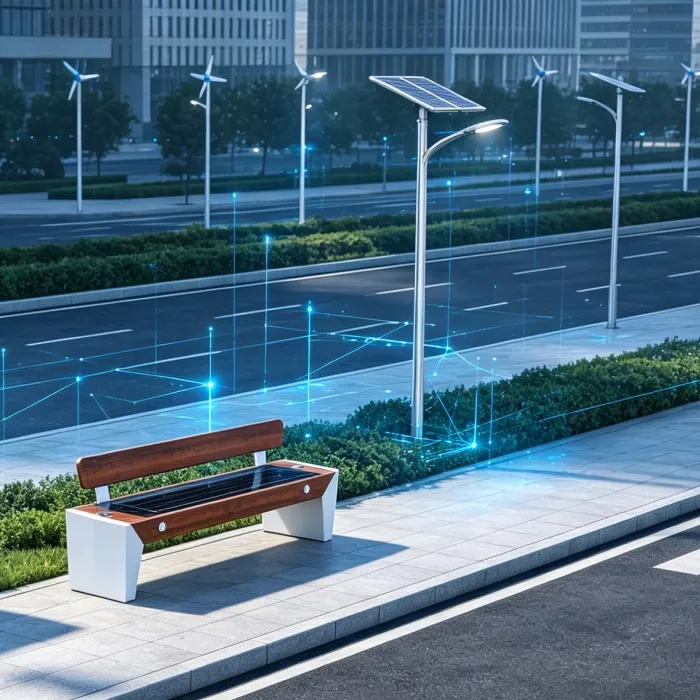
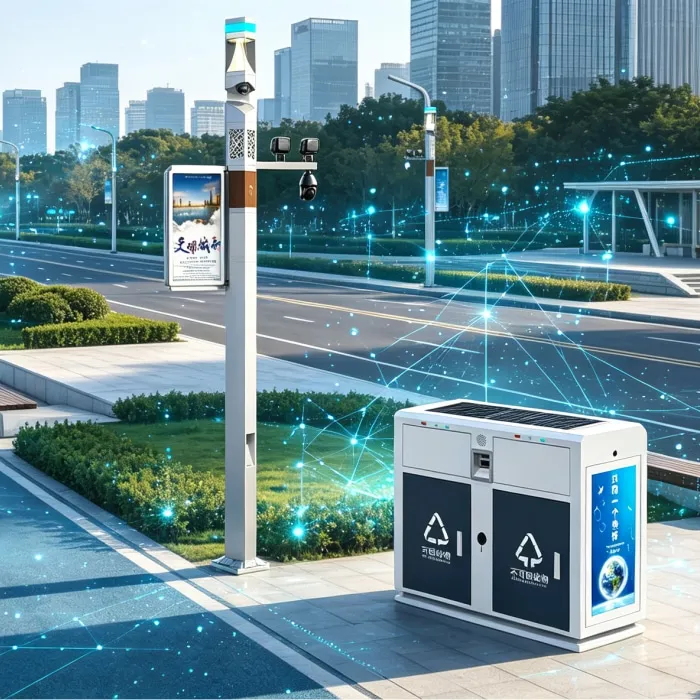
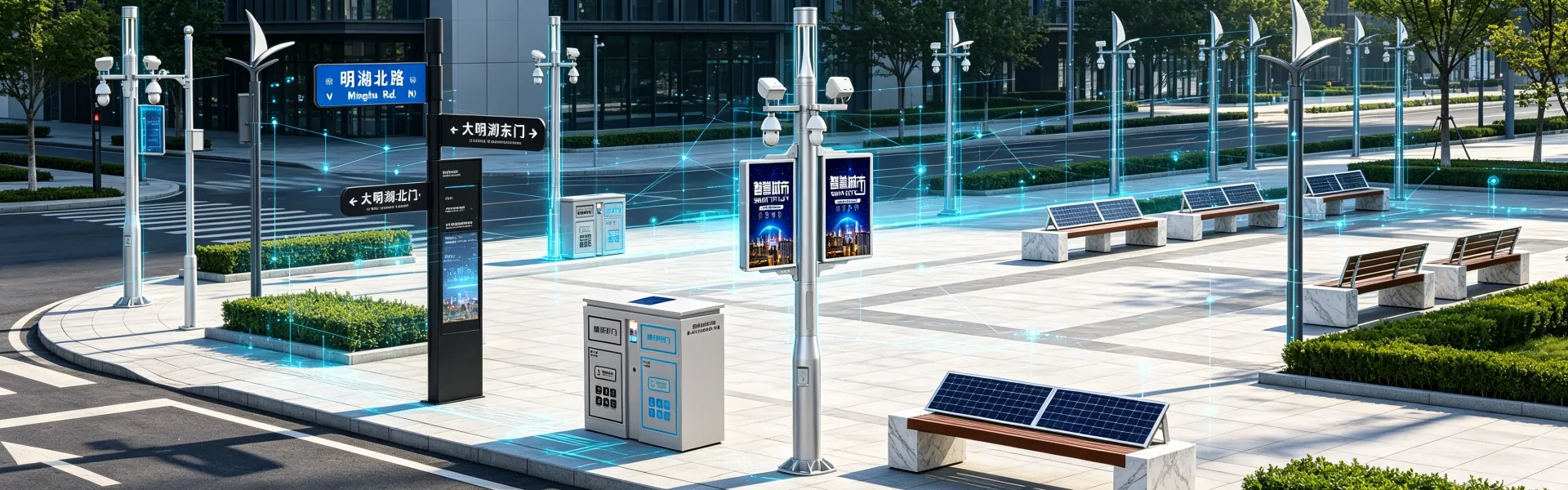
Smart street poles, smart waste bins, smart benches, and smart wayfinding poles integrate sensing, communication, interaction, and control capabilities. Together, they can transform commercial districts into intelligent public spaces that are connected, responsive, and people-oriented.
Designed specifically for commercial districts, Sanqian Smart offers an integrated smart city furniture system solution. The solution uses smart street poles as the core infrastructure and integrates smart waste bins, smart benches, smart wayfinding poles, and other intelligent facilities.
Through the unified Sanqian Smart Cloud Platform, the system enables device connectivity, data aggregation, coordinated operations, and closed-loop maintenance. It helps commercial districts achieve more refined management, more human-centered services, data-driven operations, and an enhanced brand image.
2. Design Principles and Standards
The solution follows the principles of people-oriented design, safety and reliability, integration and resource sharing, green and low-carbon development, and aesthetic coordination.
The design primarily references the following standards:
- Smart City, Smart Multi-Functional Pole, Specifications for Service Functions and Operation Management (GB/T 40994)
- Standard for Urban Road Lighting Design (CJJ 45)
- Urban Public Facilities, Urban Furniture, Terms (GB/T 41418)
- Information Security Technology, Baseline for Classified Protection of Cybersecurity (GB/T 22239)
The system is customized according to the commercial district’s spatial scale, pedestrian volume, business composition, architectural style, and landscape characteristics.
Key Design Indicators
- Average illuminance of at least 25 lx on primary district roads
- Average illuminance of at least 30 lx in key plaza areas
- Illuminance uniformity of at least 0.4
- Smart waste-bin fill-level detection accuracy of at least 98%
- Overflow-alert response time of no more than 1 minute
- Wireless charging power of at least 10 W for smart benches
- Environmental data collection at least once every 5 minutes
- Interactive response time of no more than 2 seconds for smart wayfinding poles
- Platform device online rate of at least 99%
- Average fault-repair time of no more than 4 hours
3. Overall System Architecture
The system adopts a four-layer device–network–cloud–application architecture, creating an IoT network that covers the entire commercial district.
Device and Sensing Layer
This layer consists of smart street poles, smart waste bins, smart benches, smart wayfinding poles, and other intelligent facilities deployed across different functional areas of the district.
Depending on the application scenario, each facility can integrate environmental sensors, cameras, interactive screens, and communication modules for data collection, edge computing, and control execution.
Network Transmission Layer
The system uses the district’s existing fiber-optic resources and supports fiber-to-pole and fiber-to-device connectivity for the wired backbone network.
In areas where cable installation is difficult, 5G/4G, WiFi 6, or LoRa wireless technologies can be used to supplement coverage.
The network layer also supports secure integration with the district’s security network, commercial operation systems, and municipal management platforms.
Platform Layer
The Sanqian Smart Cloud Platform serves as the core of the system. It provides device access, data processing, rules-engine management, alarm handling, energy-consumption analysis, GIS visualization, coordinated-control strategies, and maintenance work-order management.
The platform provides standard API interfaces and can connect with integrated smart-city management platforms and existing systems used by commercial district operators.
Application Layer
The application layer provides web-based management interfaces, mobile mini-programs, and on-site interactive terminals for district management offices, property-management companies, sanitation departments, merchants, and visitors.
Role-based and permission-based access allows different users to access the appropriate functions, creating one unified management network and one integrated service interface.
4. Core Smart City Furniture Functions
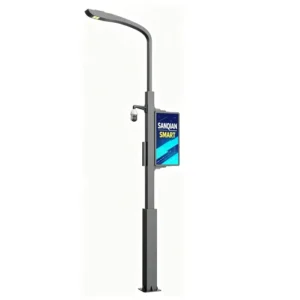
4.1 Smart Street Poles, The Core Infrastructure of the Intelligent District
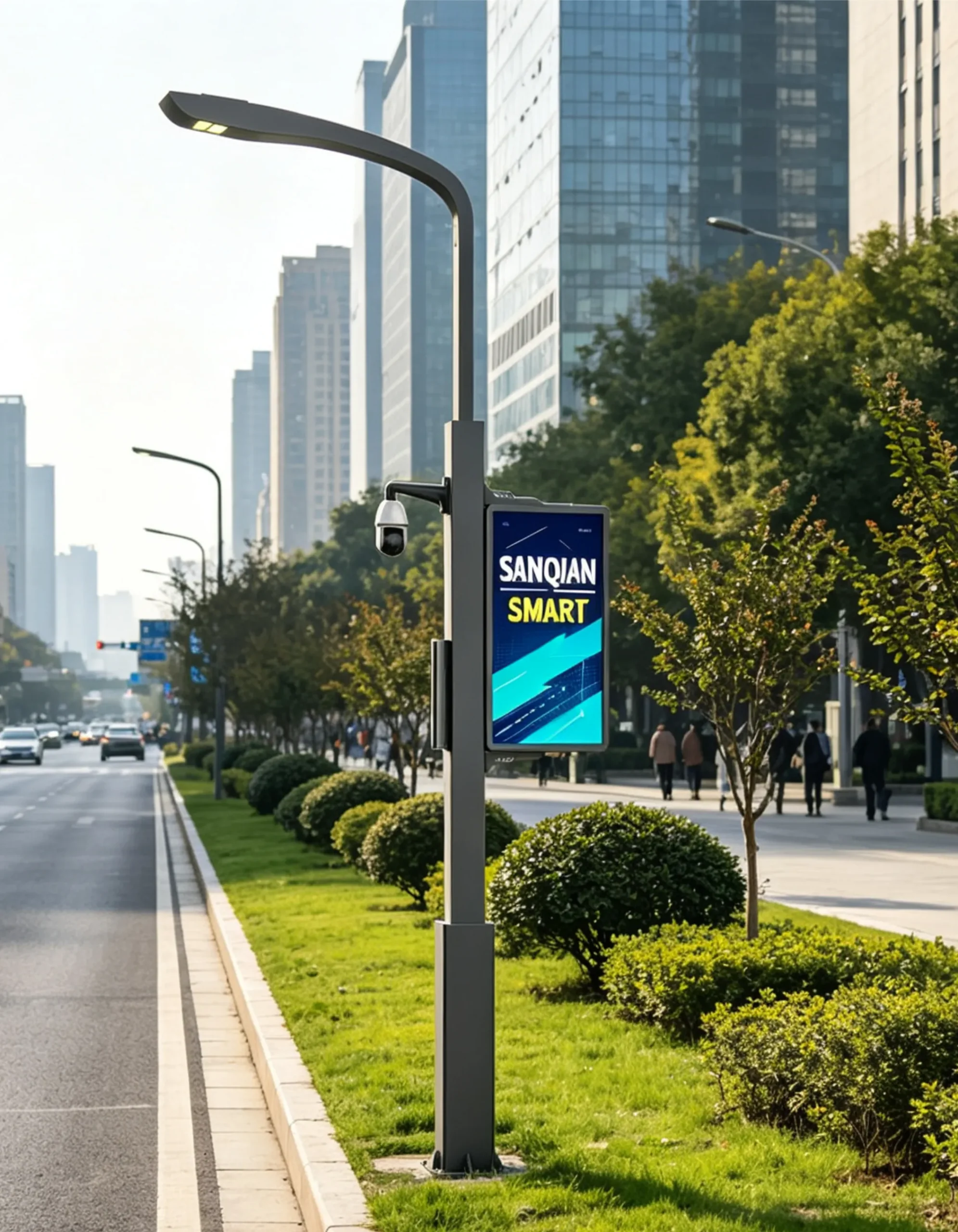
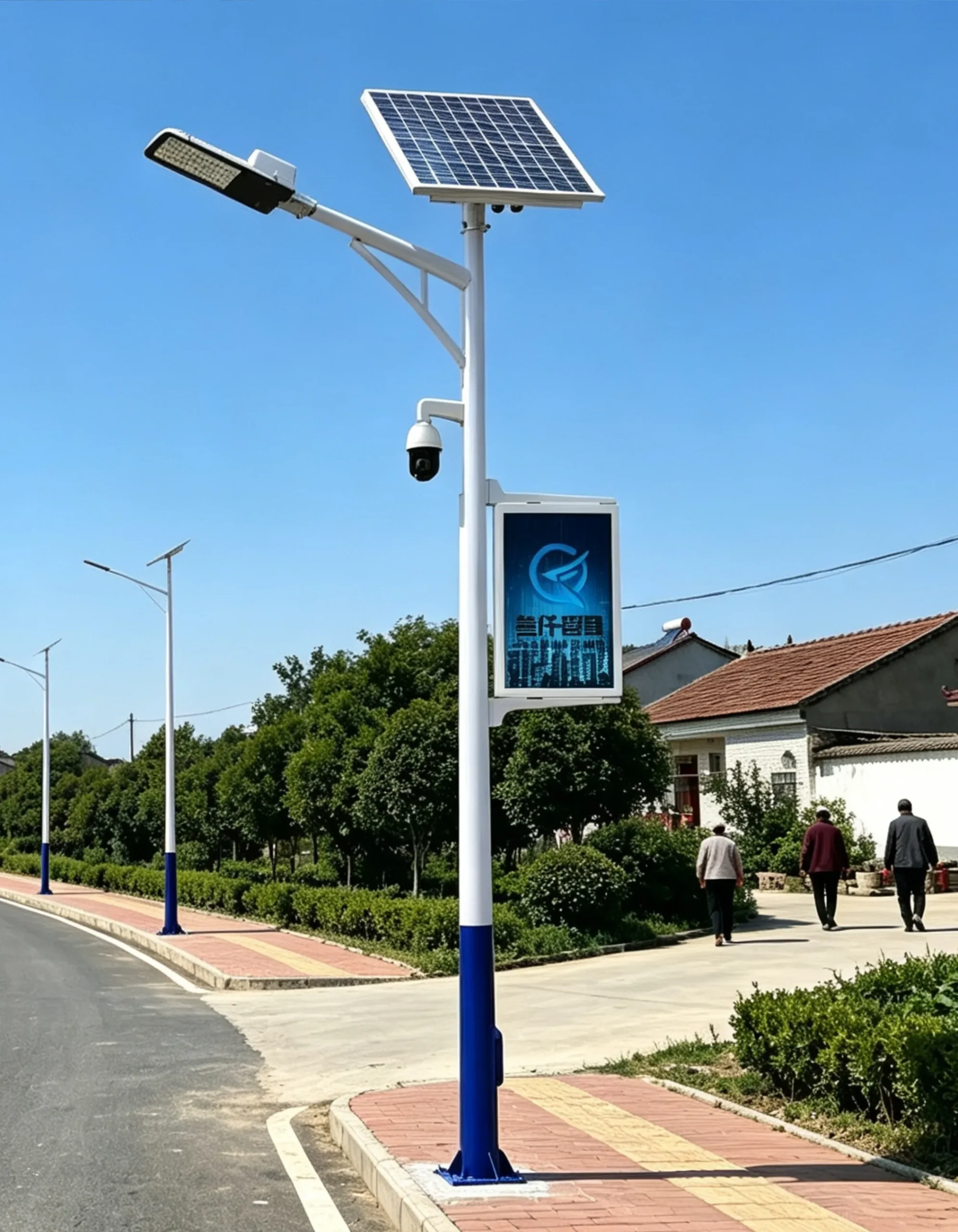
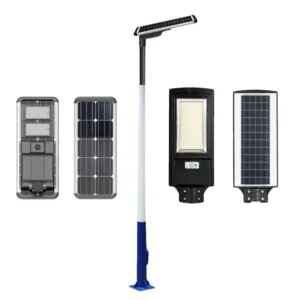
Smart street poles are the primary infrastructure for the intelligent transformation of commercial districts.
They feature a modular design, with pole heights generally ranging from 8 to 12 meters. Their appearance can be customized to complement the surrounding architecture and streetscape.
The poles can support the following functional modules:
Intelligent Lighting
High-efficiency LED luminaires with a luminous efficacy of at least 160 lm/W are used. The color temperature can be adjusted between 3000K and 4000K.
Microwave radar and ambient-light sensors enable adaptive lighting, automatically increasing brightness when pedestrians approach and reducing it when the area becomes quiet.
During major festivals and events, the system can switch to colored lighting modes to enhance the commercial atmosphere.
The overall energy-saving rate can exceed 50%.
Video Security
The poles integrate high-definition cameras with a resolution of at least 4 megapixels. Supported functions include facial-image capture, intrusion detection, pedestrian-flow counting, and other intelligent analytics.
The cameras can be connected to the district security platform for unified monitoring and coordinated response.
Information Display Screens
Double-sided LED or LCD screens can display commercial advertisements, event announcements, safety reminders, weather information, and other content.
Content can be centrally managed, scheduled, arranged remotely, and displayed in split-screen mode.
Public Address System
IP column speakers support background music, scheduled announcements, and emergency broadcasts. They can also be linked with the security system for coordinated emergency communication.
Wireless Network Coverage
Integrated WiFi 6 access points provide visitors with free, high-speed wireless connectivity.
Device-connection data can also be collected to support pedestrian-flow analysis and commercial operation planning.
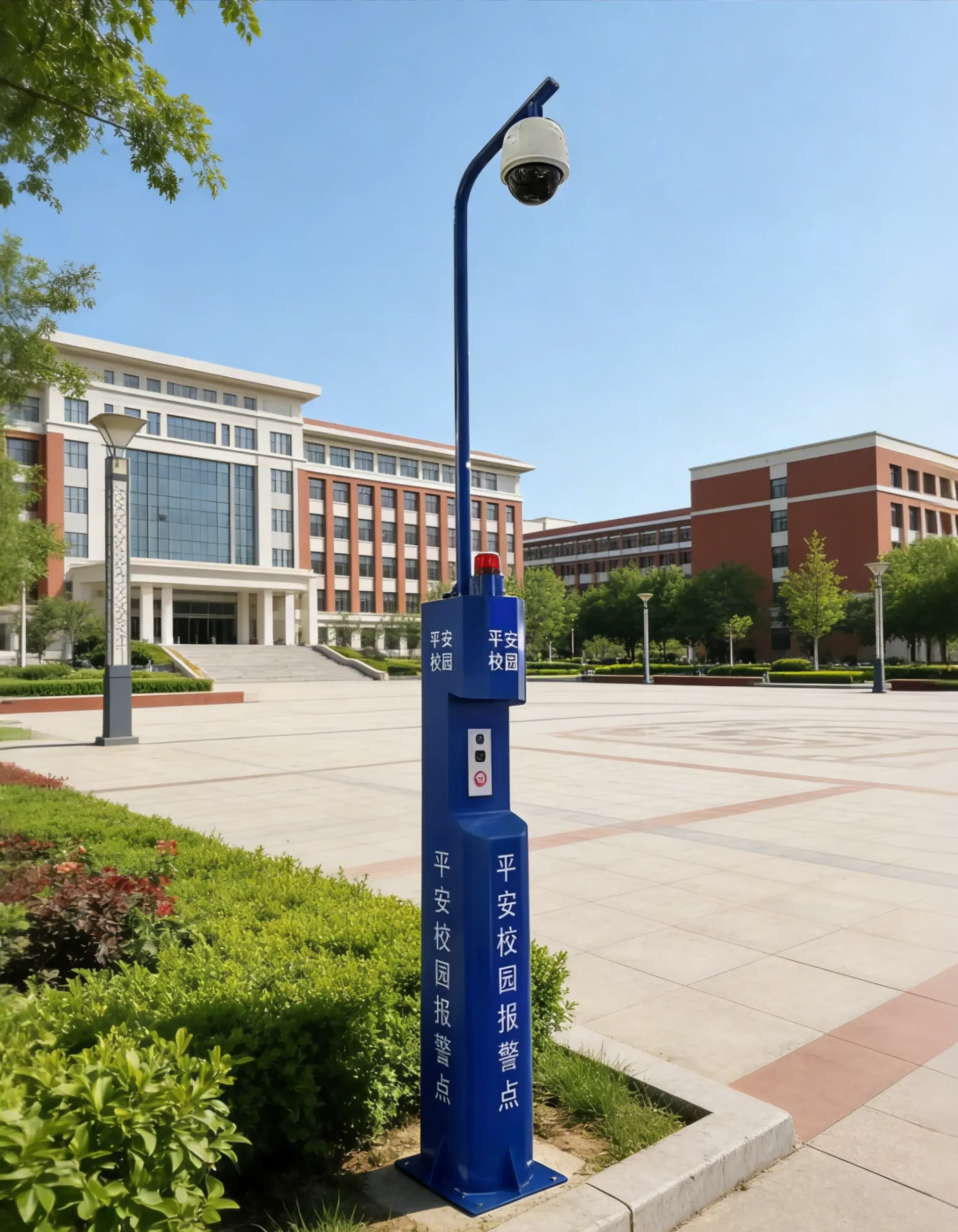
One-Button Assistance
An emergency-assistance box is installed on the pole and supports two-way voice communication.
When an alarm is triggered, nearby cameras are automatically activated or called up for verification and response.
Optional 5G Small Cell
The poles can provide mounting space for telecommunications operators to improve mobile-network coverage in the commercial district.
This can also create additional revenue through pole-site leasing.
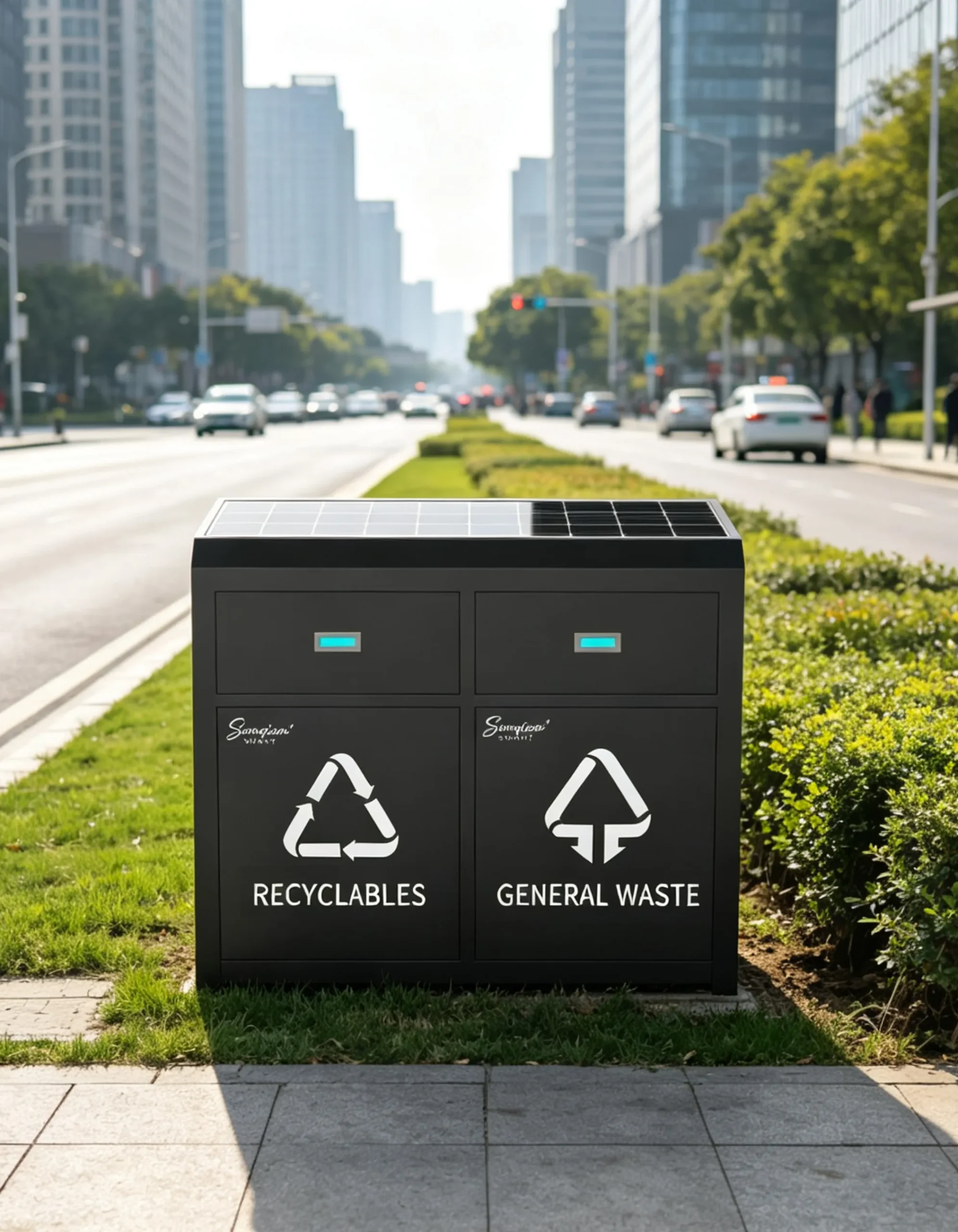
4.2 Smart Waste Bins, Digital Terminals for Sanitation Management
Sanqian Smart waste bins use a combination of solar power and mains electricity and provide the following functions:
Fill-Level Detection
Ultrasonic or infrared sensors monitor the waste level in real time. The fill-level threshold can be configured according to operational requirements.
When the fill level reaches 80%, the system automatically generates a collection work order and sends it to sanitation staff through the mobile application.
This enables “collection when full,” helping prevent waste overflow.
Automatic Compression, Optional
Selected high-capacity models include an integrated compression mechanism that can reduce waste volume to approximately 30% of its original size.
This extends collection intervals and reduces transportation costs.
Intelligent Waste-Sorting Guidance
Touchscreens or voice prompts guide visitors in sorting and disposing of waste correctly.
Selected models also support QR-code-based reward points, which can be linked to discounts and promotions offered by nearby merchants.
Odor Control and Fire Safety
Built-in activated-carbon filters and ultraviolet sterilization modules help reduce odors and inhibit bacterial growth.
Temperature sensors provide automatic alerts in the event of abnormal temperature increases.
Data Analytics
The system records disposal volume, collection frequency, and the number of fill-level alerts.
The platform generates sanitation heat maps to optimize waste-bin placement and collection routes.
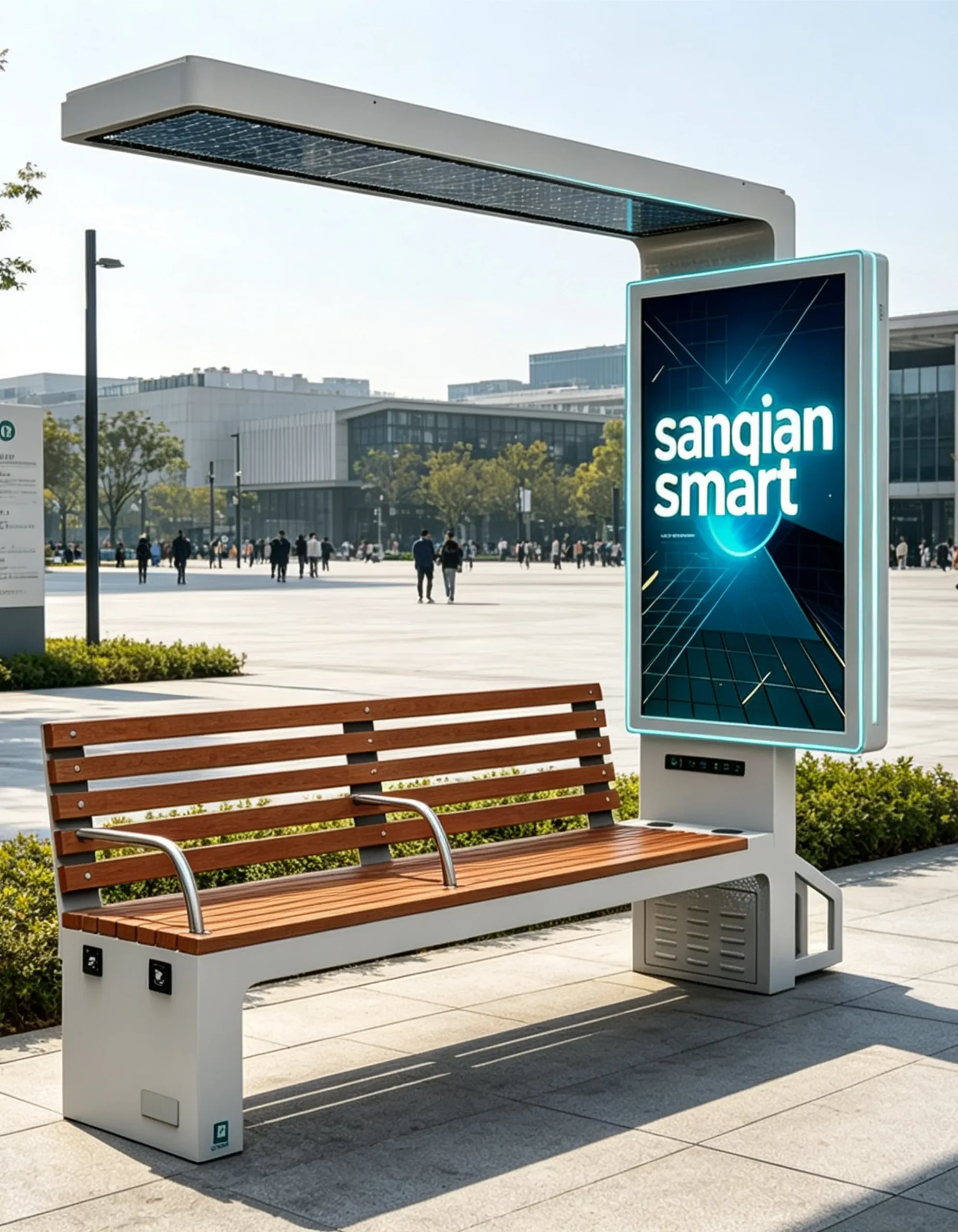
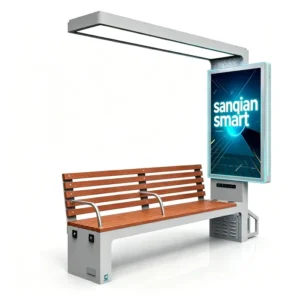
4.3 Smart Benches, Enhancing Public-Space Services
Smart benches upgrade traditional seating into multifunctional public-service terminals. They are suitable for plazas, rest areas, tree-lined spaces, and other public areas.
Solar-Powered Charging
High-efficiency monocrystalline photovoltaic panels can be integrated into the armrests or backrests.
Lithium iron phosphate batteries provide energy storage, while USB-A, USB-C, and Qi wireless charging options help visitors keep their mobile devices powered.
Climate-Comfort Features
Optional heating modules can be installed for use in northern climates during winter.
Ventilation modules can be added for warmer southern climates, improving seating comfort in different seasons.
Ambient Lighting
LED light strips integrated into the base of the bench provide soft outline lighting at night, enhancing both the visual appeal and perceived safety of the surrounding area.
WiFi and Bluetooth
Integrated WiFi hotspots and Bluetooth beacons support indoor and outdoor positioning and navigation.
They can also assist with the delivery of promotional information from nearby merchants.
Pedestrian-Flow Sensing
Pressure sensors or infrared sensors can record usage frequency and duration.
This data supports public-space planning and optimization.
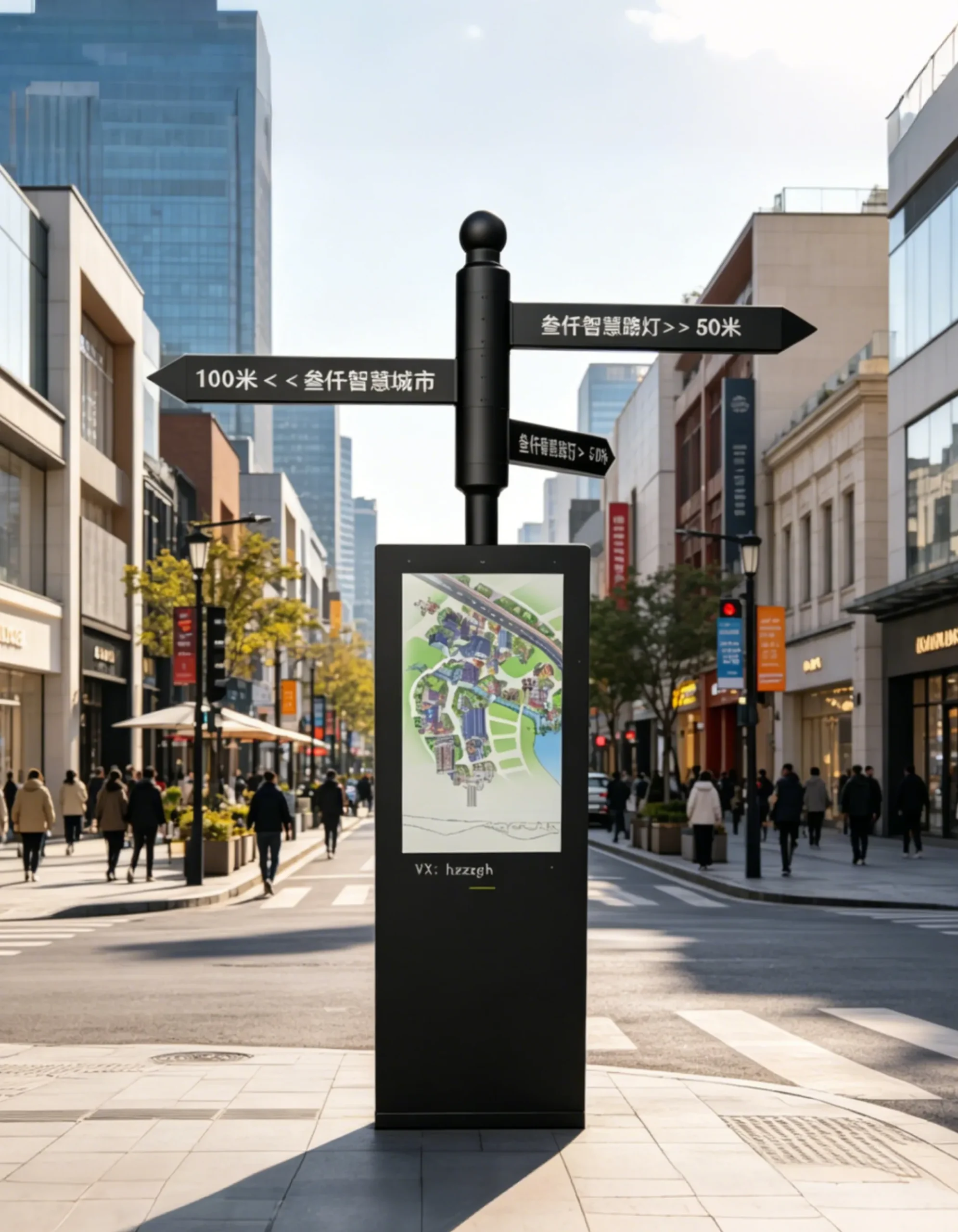
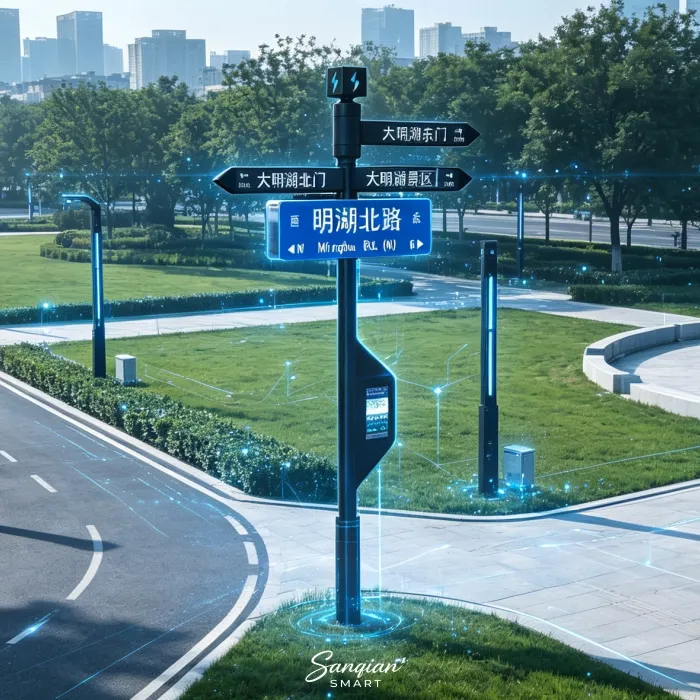
4.4 Smart Wayfinding Poles, Navigation and Interactive Information Hubs
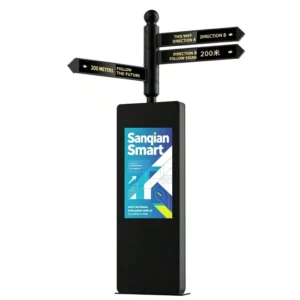
Smart wayfinding poles serve as information-navigation and visitor-interaction terminals.
They are typically installed at entrance plazas, road intersections, metro entrances, and other key locations.
Interactive Touchscreen
High-definition outdoor touchscreens support map browsing, destination searches, and route planning, with a response time of no more than 2 seconds.
Visitors can search for nearby shops, restaurants, restrooms, parking facilities, and other services.
Voice Search and Accessible Design
The system supports voice input and audio guidance.
Screen height and viewing angles can be designed to accommodate wheelchair users and visitors with different accessibility needs.
Commercial Information Delivery
The screens can display advertisements, promotional offers, event information, and performance schedules from district merchants.
Content can be targeted according to time and location, creating additional advertising revenue for the commercial district.
Emergency Assistance Button
A one-button assistance function connects visitors with the district security center, helping protect public safety.
Environmental Monitoring and Public Address
Environmental sensors and column speakers can be integrated at the top of the pole.
The system can display real-time temperature, humidity, and air-quality information while broadcasting service announcements and safety reminders.
5. Smart District Management Platform
The Sanqian Smart Cloud Platform serves as the unified management center for the commercial district’s smart city furniture system.
Full-Life-Cycle Device Management
All smart street poles, smart waste bins, smart benches, and smart wayfinding poles are assigned unique identification codes.
The platform manages asset registration, status monitoring, maintenance records, and service history, creating a digital asset ledger for the entire district.
Lighting and Energy Management
The platform records the energy consumption of streetlights, benches, display screens, and other devices on a daily, weekly, and monthly basis.
It generates energy-saving reports and supports area-based and time-based lighting and screen-brightness strategies for refined energy management.
Intelligent Sanitation Scheduling
When a smart waste bin reaches its configured fill level, the platform automatically generates a work order.
Combined with GIS-based route planning, the system helps determine the most efficient collection route.
Sanitation personnel can accept, process, and complete work orders through the mobile application, creating a closed-loop workflow.
Security Coordination and Emergency Response
One-button alarms, video monitoring, and public-address systems are deeply integrated.
When an alarm is triggered, the platform automatically retrieves footage from multiple nearby cameras. Security personnel can issue remote voice announcements and dispatch on-site staff when necessary.
Pedestrian-Flow and Commercial Analytics
Data collected through smart street-pole cameras, WiFi probes, bench sensors, and other devices can be used to analyze:
- Pedestrian volume
- Dwell time
- Visitor-flow distribution
- Activity heat maps
- Usage patterns in different areas
These insights support merchant operations, tenant management, and event planning.
Unified Information Publishing
The platform provides centralized content management for street-pole information screens, wayfinding-pole touchscreens, and public-address speakers.
It supports multi-level content review and scheduled publishing to ensure information accuracy, consistency, and security.
Maintenance Work Orders and Mobile Inspections
Device abnormalities trigger automatic alerts and generate maintenance work orders, which are sent to service personnel through the mobile application.
The system supports QR-code repair requests, photo uploads, maintenance tracking, and closed-loop work-order management to maintain a high equipment availability rate.
6. Typical Application Scenarios
District Entrance Plaza
Smart street poles, smart wayfinding poles, and smart benches are deployed at the entrance plaza.
Smart street poles provide high-brightness lighting and pedestrian-flow analysis. Smart wayfinding poles provide navigation and local-service information. Smart benches offer seating and charging services.
At night, coordinated lighting from the street poles and benches creates an attractive welcome landscape.
Main Commercial Street
Smart street poles are installed at intervals of approximately 25–35 meters, integrating lighting, video monitoring, information displays, and WiFi.
The screens display merchant advertisements and public information.
Smart waste bins are placed along the street and send automatic fill-level alerts to maintain a clean and orderly environment.
Dining and Leisure Areas
Smart benches and smart waste bins are installed in dining and rest areas.
The benches provide charging and WiFi services, while the waste bins offer compression and odor-control functions to minimize the impact of unpleasant odors on the dining experience.
During peak dining periods, the public-address systems on nearby smart street poles can play soft background music.
Secondary Streets and Covered Walkways
Smart street poles and smart waste bins are the primary facilities in these areas.
The system focuses on improving lighting and security monitoring to eliminate dark spots and safety blind spots.
One-button alarms on the street poles are linked with video monitoring to improve nighttime safety.
7. Implementation and Operation & Maintenance
A strategy of unified planning, zone-based implementation, and progressive optimization is recommended.
During the initial stage, the project team should complete a comprehensive site survey, determine pole locations, and plan power and communication routes.
The deployment plan should define the locations of smart street poles, smart waste bins, smart benches, and smart wayfinding poles.
Phase One
Priority should be given to the main commercial street, entrance plaza, and dining areas to establish a visible demonstration zone.
Phase Two
The system can then be extended to secondary streets, covered walkways, and other areas to achieve full district coverage.
For operation and maintenance, it is recommended to establish a structure led by the district management office, supported by daily inspections from the property-management company and technical support from a professional maintenance team.
The platform provides automatic monitoring 24 hours a day, seven days a week. On-site inspections should be performed daily, with comprehensive maintenance conducted quarterly to ensure high device availability and serviceability.
8. Benefits Analysis
Management Benefits
Through multi-system integration and data coordination, district management can shift from manual supervision to platform-based scheduling.
The efficiency of sanitation, lighting, security, and information publishing can be significantly improved, potentially reducing labor costs by 20%–30%.
Economic Benefits
Smart waste bins optimize collection frequency and reduce transportation and labor costs.
Advertising space on smart street-pole information screens and wayfinding poles can generate stable revenue.
With device energy consumption reduced by more than 50%, the system can also lower electricity expenses.
The typical overall investment payback period is approximately three to five years.
Social Benefits
Visitor experience is significantly improved, with convenient access to charging, WiFi, navigation, and emergency assistance.
The district becomes cleaner, more orderly, and safer.
Smart facilities also become a distinctive feature of the district, helping enhance the value and commercial appeal of surrounding businesses.
Environmental Benefits
Solar-powered smart benches and smart waste bins reduce dependence on grid electricity.
Energy-efficient LED lighting reduces carbon emissions and supports the development of greener commercial districts.
9. Representative Case Study
A representative example is the smart city furniture project implemented by Sanqian Smart in a central commercial pedestrian street in a provincial capital city.
The district is approximately 1.2 kilometers long and receives an average of 80,000 visitors per day.
The project included:
- 120 smart street poles
- 80 smart waste bins
- 60 smart benches
- 12 smart wayfinding poles
- One Sanqian Smart Cloud Platform connected to the district management office
After one year of operation:
- Nighttime lighting energy consumption decreased by 48%.
- Waste overflow incidents decreased by 95%.
- Sanitation collection efficiency increased by 40%.
- Smart benches were used for more than 2,000 charging sessions per day on average.
- Smart wayfinding poles recorded more than 100,000 cumulative information searches.
- Advertising revenue from information-display screens covered 60% of the project’s annual operation and maintenance costs.
- Visitor safety satisfaction increased from 82 points to 94 points.
The project was recognized by the municipal commerce authority as a Smart Commercial District Demonstration Project.
10. Conclusion
Commercial districts are centers of urban consumption and culture, as well as ideal testing grounds for smart-city development.
The Sanqian Smart Smart City Furniture System Solution uses smart street poles as the core infrastructure and integrates smart waste bins, smart benches, smart wayfinding poles, and other intelligent facilities.
Through a unified management platform, the solution enables device connectivity, data sharing, and coordinated business operations, transforming traditional commercial districts into public spaces that are connected, responsive, and people-oriented.
As artificial intelligence and digital-twin technologies continue to advance, smart city furniture will become a core component of refined district operations and human-centered public services, continuously supporting commercial vitality and improving the quality of urban public life.