1. Project Background and Needs Analysis
Urban parks are important public spaces for recreation, fitness, entertainment, and interaction with nature. As parks expand in size and offer increasingly diverse amenities, visitors have growing expectations for convenient and intelligent guidance services.
Traditional park navigation primarily relies on static signs and printed maps, which often suffer from delayed information updates, limited interactivity, lack of real-time guidance, and insufficient multilingual support. Visitors can easily lose their way in large parks and may struggle to locate attractions, restrooms, dining areas, parking lots, first-aid stations, and other facilities. Park operators also lack effective tools for delivering activity information, safety notices, and emergency instructions to visitors.
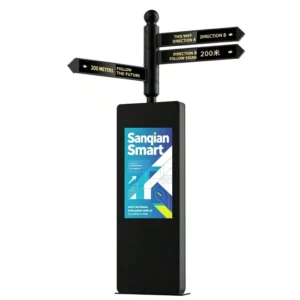
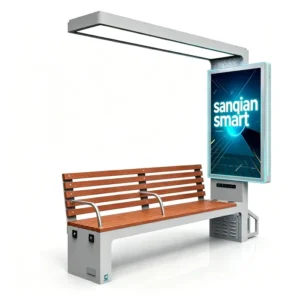
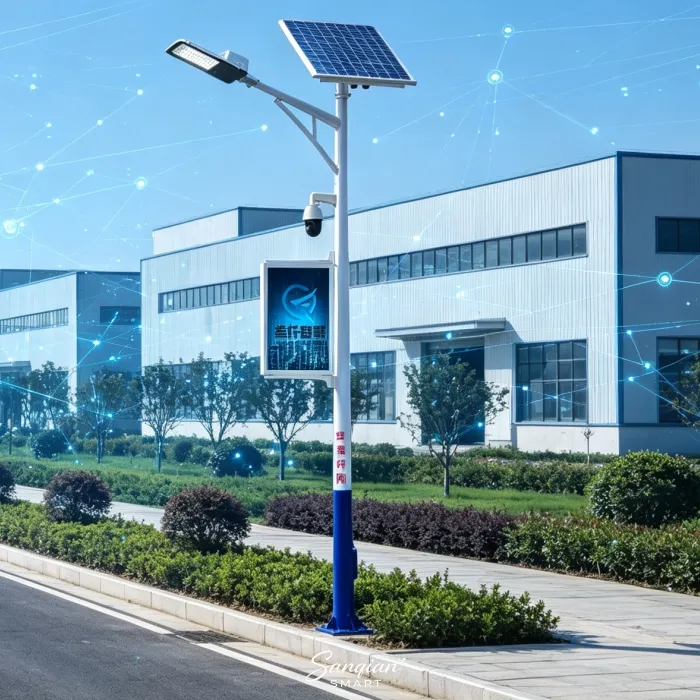
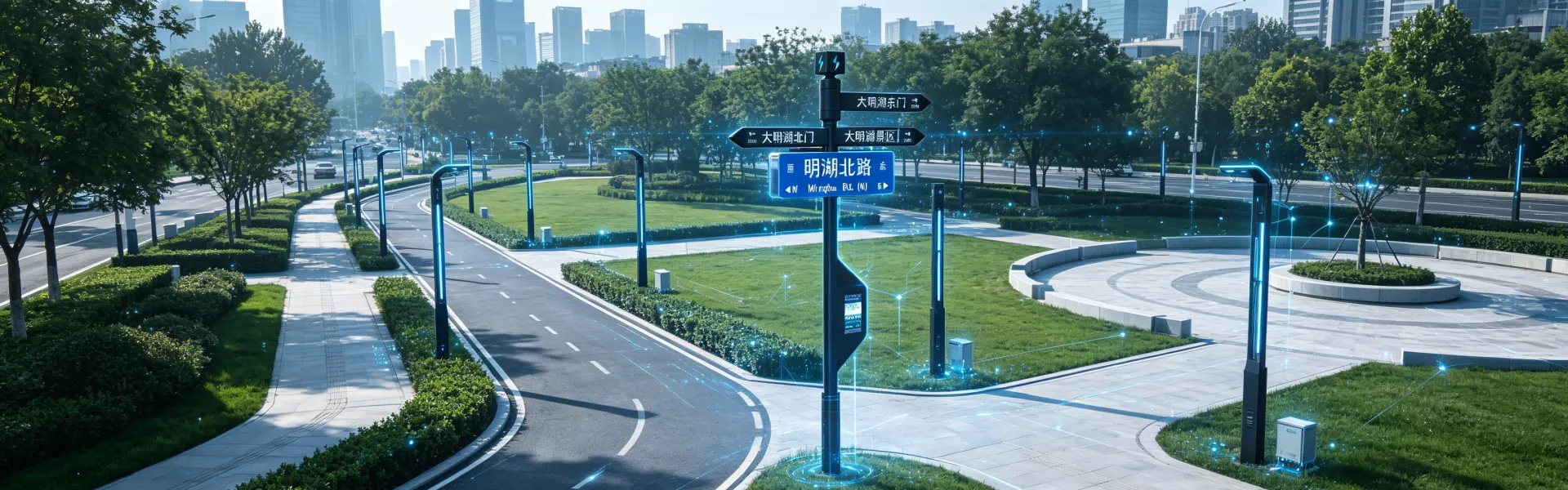
At the same time, the intelligent upgrading of park infrastructure has become an important trend. As a new type of smart city furniture, smart wayfinding poles combine traditional directional signage with touchscreen interaction, voice interaction, information publishing, environmental sensing, emergency assistance, and wireless connectivity.
They can serve as core terminals for park guidance services.
Designed for smart park applications, Sanqian Smart provides a park visitor guidance system based on smart wayfinding poles. Using smart wayfinding poles as interactive nodes, the solution combines a unified management platform with mobile applications to deliver convenient, intelligent, and user-friendly navigation services while improving park management efficiency and service quality.
2. Design Principles and Standards
The solution follows the principles of people-oriented design, safety and reliability, green and low-carbon development, aesthetic coordination, and easy maintenance.
The design primarily references the following standards:
- Smart City, Smart Multi-Functional Pole, Specifications for Service Functions and Operation Management (GB/T 40994)
- Standard for Park Design (GB 51192)
- Urban Public Facilities, Urban Furniture, Terms (GB/T 41418)
- Relevant accessibility and barrier-free design standards
The system is customized according to the park’s terrain, visitor circulation, landscape style, functional zones, and service requirements.
Key Design Indicators
- Touchscreen response time of no more than 2 seconds
- 100% accuracy of navigation information
- Support for Chinese, English, and other major languages
- One-button emergency-assistance response time of no more than 3 seconds
- Environmental data collection at least once every 5 minutes
- Platform device online rate of at least 99%
- Average fault-repair time of no more than 4 hours
3. Overall System Architecture
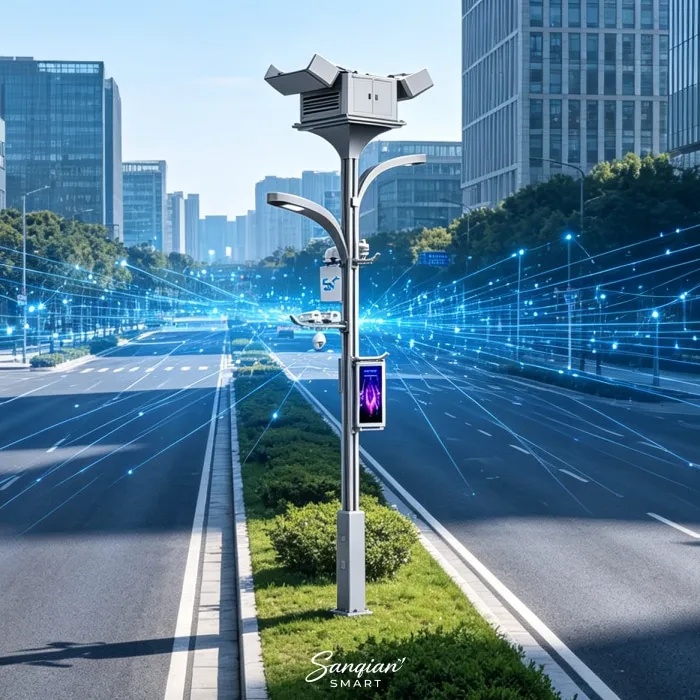
The system adopts a four-layer device–network–cloud–application architecture, creating a smart visitor-guidance IoT network covering the entire park.
Sensing and Interaction Layer
This layer consists of smart wayfinding poles deployed at key locations, including:
- Main park entrances
- Road intersections
- Areas surrounding major attractions
- Plazas
- Parking lots
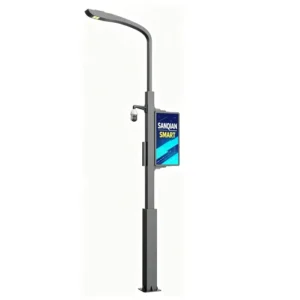
Each wayfinding pole can integrate a high-definition touchscreen, voice-interaction module, one-button emergency-assistance button, environmental sensors, IP broadcasting speakers, WiFi access points, and other devices.
The poles are responsible for navigation information display, visitor interaction, environmental data collection, and emergency response.
Network Transmission Layer
The system uses the park’s existing fiber-optic network and adopts a fiber-to-pole architecture to ensure high-speed data transmission.
For remote areas or locations where cable installation is difficult, 4G/5G networks or wireless bridges can be used for data backhaul.
The network layer supports secure integration with the park’s security system, public-address system, ticketing system, and other existing platforms.
Platform Layer
The Sanqian Smart Cloud Platform or a locally deployed smart park visitor-guidance management platform serves as the system’s core.
It provides:
- Device management
- Content management
- Data analysis
- Alarm management
- GIS-based visualization
- Coordinated-control strategies
Standard API interfaces are available for integration with the park’s existing systems.
Application Layer
The application layer provides web-based management interfaces, mobile mini-programs or apps, and on-site interactive terminals for park administrators, maintenance personnel, and visitors.
The system enables “one unified management network and one integrated service interface.”
4. Core Functions of Smart Wayfinding Poles
Smart wayfinding poles serve as the interactive core of the park visitor-guidance system.
They use a modular design, with pole heights generally ranging from 3.5 to 5 meters. Their appearance can be customized to complement the park landscape, with options such as wood-grain finishes, dark gray, and antique bronze.
4.1 Intelligent Navigation and Visitor Information
High-Definition Touchscreen
The system uses an outdoor high-brightness, anti-glare touchscreen that supports:
- Map browsing
- Attraction searches
- Route planning
- Facility searches
- Restroom locations
- Dining areas
- Parking lots
- First-aid stations
- Nursing rooms
- Other public amenities
Visitors can enter destinations by handwriting, pinyin, or voice. The system automatically plans an optimized route and displays the estimated walking time.
Multilingual Support
The interface supports Chinese, English, and other major local or international languages to accommodate overseas visitors.
Accessibility Mode
The screen height and viewing angle are designed to accommodate wheelchair users.
The system also supports voice guidance and enlarged text, helping meet accessibility and barrier-free design requirements.
QR-Code Integration
Visitors can scan a QR code displayed on the screen to synchronize the route to their mobile phone.
This enables them to continue navigating after leaving the wayfinding pole and solves the problem of information being interrupted once visitors move away from the terminal.
4.2 Information Publishing and Public Communication
Park Announcements
The system can publish real-time information, including:
- Opening and closing hours
- Event announcements
- Weather alerts
- Safety reminders
- Temporary service changes
Attraction Information
Text, images, and short videos can introduce the history, cultural background, and distinctive plants of each attraction, improving the overall visitor experience.
Public-Service Campaigns
The system can display public-service content related to:
- Responsible park visits
- Waste sorting
- Ecological protection
- Environmental awareness
- Public safety
Emergency Broadcasting
In the event of severe weather, a missing-person incident, temporary closure, or another emergency, the system can remotely switch all screens to full-screen alert mode.
4.3 One-Button Emergency Assistance
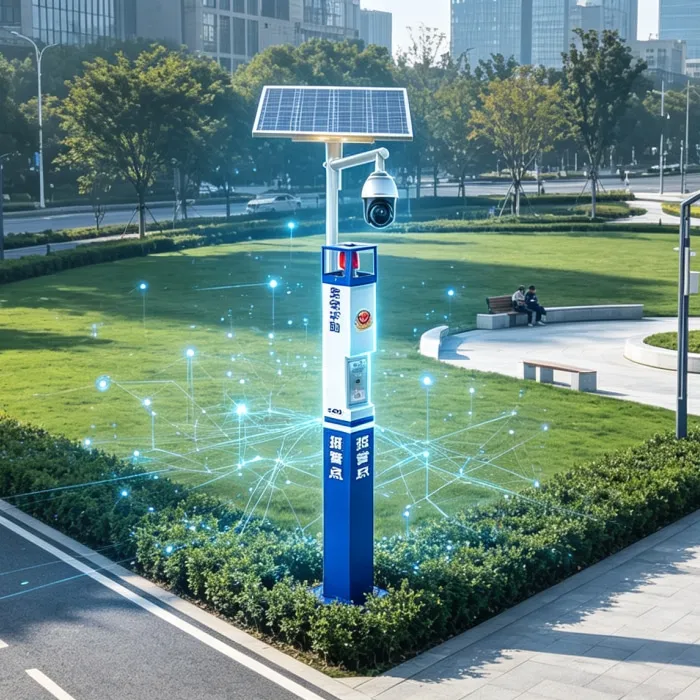
Emergency-Assistance Button
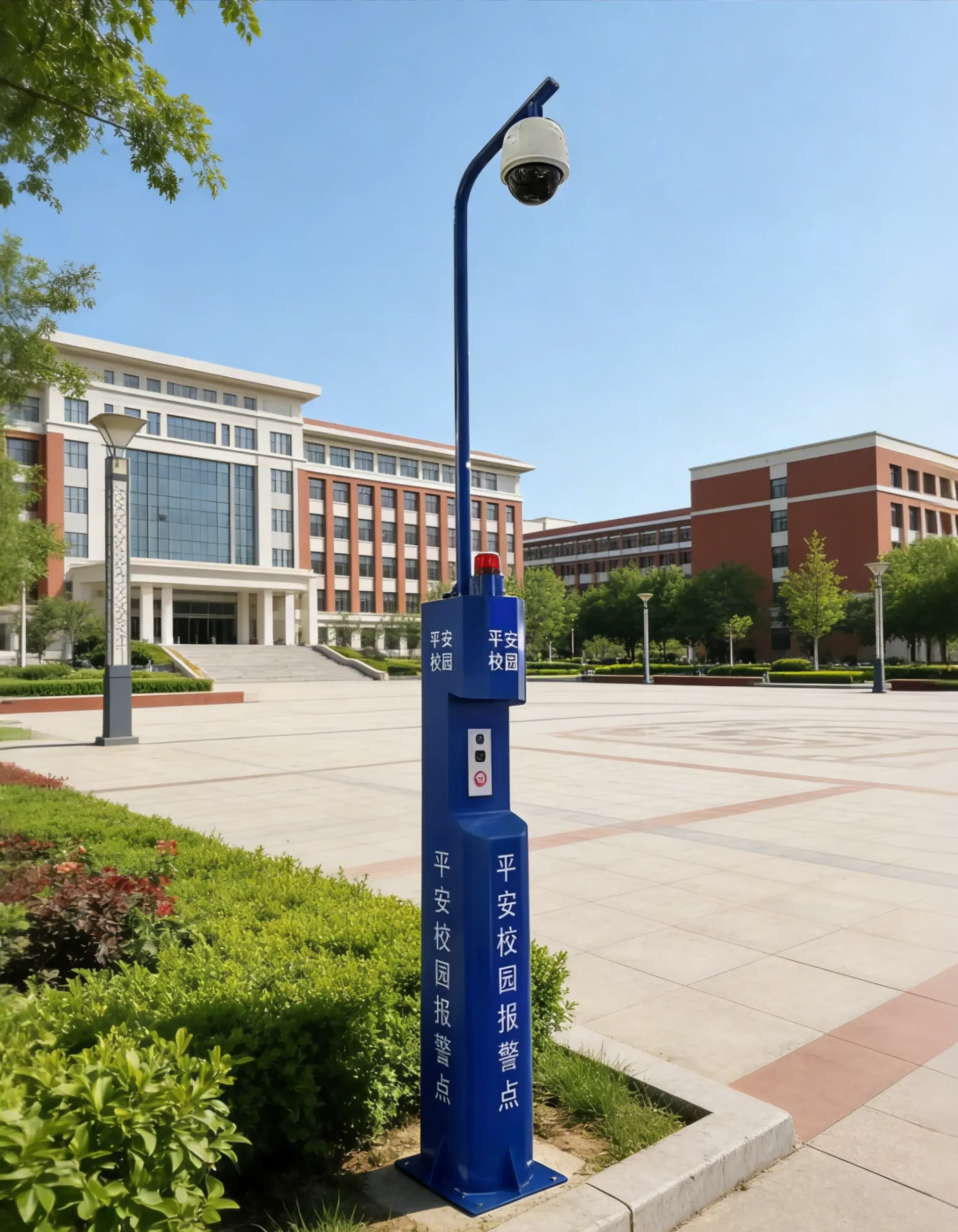
A clearly visible emergency-assistance button is installed on the pole.
When pressed, it establishes two-way voice communication between the visitor and the park management center.
Automatic Location and Video Coordination
The platform displays the exact location of the wayfinding pole where the alarm was triggered and automatically retrieves footage from nearby surveillance cameras to support rapid response.
Public-Address Coordination
During an emergency, nearby IP speakers can be activated to broadcast instructions and guide visitors to evacuate or move to a safe location.
4.4 Environmental Monitoring and Display
Integrated Sensors
Sensors installed at the top of the pole collect real-time environmental data, including:
- Temperature
- Humidity
- PM2.5
- PM10
- Noise
- Illuminance
- Other microclimate indicators
On-Screen Display
The navigation screen can display air-quality data, temperature, humidity, and comfort-index information for the current area.
Data Upload
Environmental data is uploaded to the management platform to support park ecological management, environmental assessment, and research analysis.
4.5 Public Address and Background Music
IP Speakers
Integrated network speakers support:
- Zone-based background music
- Scheduled announcements
- Park-closing reminders
- Missing-person announcements
- Emergency notifications
Coordinated Control
The public-address system can be linked with the emergency-assistance and security systems to support automatic voice reminders and manual announcements from park staff.
4.6 Wireless Network Coverage, Optional
WiFi Hotspot
The wayfinding pole can integrate a WiFi 6 access point to provide visitors with free wireless connectivity.
Connection data can also assist with visitor-flow analysis, subject to applicable privacy and data-protection requirements.
5. Smart Visitor-Guidance Management Platform
The Sanqian Smart Park Visitor-Guidance Management Platform serves as the central management system for the entire solution.
Full-Life-Cycle Device Management
Each smart wayfinding pole is assigned a unique identification code.
The platform records:
- Installation location
- Operating status
- Maintenance history
- Service records
- Device assets
This creates a complete digital asset register.
Visitor-Guidance Content Management
The platform centrally manages:
- Map data
- Attraction information
- Park announcements
- Facility information
- Emergency notices
Content can be updated remotely and in batches to ensure that all guidance information remains accurate and current.
Visitor-Flow and Heat-Map Analysis
Using wayfinding-pole interaction data, WiFi connection data, and linked camera data, the platform can analyze:
- Visitor distribution
- Popular search terms
- Visitor dwell time
- Activity heat maps
- Usage patterns in different areas
These insights support park operations, visitor-flow management, and event planning.
Alarm and Work-Order Management
Wayfinding-pole faults, emergency-assistance requests, and abnormal environmental readings automatically generate alerts and work orders.
Notifications are sent to maintenance personnel through the mobile application, supporting closed-loop incident handling.
GIS-Based One-Map Visualization
An electronic map displays the location, operating status, and online rate of all smart wayfinding poles.
Administrators can click on individual devices to view details and perform authorized remote operations.
Multi-Level Permission Management
The platform supports role-based access for different departments, including:
- Park administration
- Security personnel
- Cleaning teams
- Landscaping teams
- Maintenance staff
All operations are logged and traceable.
6. Typical Application Scenarios
Main Park Entrance
Large smart wayfinding poles are deployed at the main entrance to provide:
- A complete park map
- Today’s event schedule
- Ticketing and reservation guidance
- Visitor-route planning
- QR-code route synchronization
The public-address system can play scheduled welcome messages and safety reminders.
Main Road Intersections
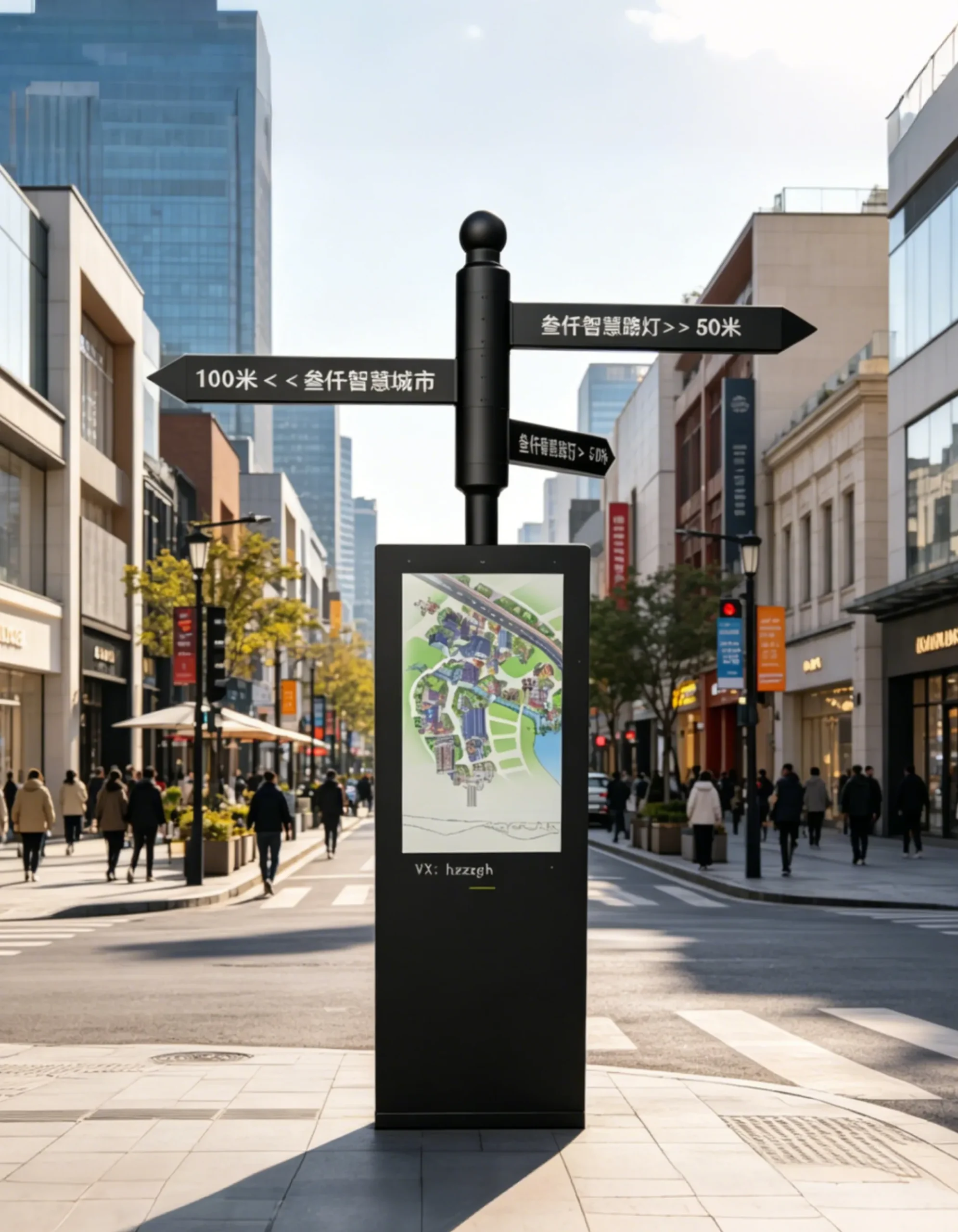
Medium-sized smart wayfinding poles display the direction and distance to nearby attractions.
Visitors can quickly search for restrooms, dining areas, and other facilities.
At night, the screen brightness is automatically reduced, while soft LED outline lighting is activated. The poles provide directional guidance while enhancing the visual appeal of the park environment.
Areas Surrounding Major Attractions
The wayfinding poles focus on displaying:
- Attraction introductions
- Recommended visiting times
- Photo-spot recommendations
- Cultural and historical information
Environmental sensors provide real-time air-quality data and comfort indicators.
The one-button emergency-assistance feature offers visitors a convenient way to request help in unexpected situations.
Children’s Activity Areas and Sports Facilities
Wayfinding poles can integrate IP speakers to play background music and friendly reminders.
Screens can display facility-use instructions, safety notices, and activity information.
Selected poles can also be equipped with emergency-alert buttons to strengthen safety protection.
Parking Lots and Secondary Entrances
Smart wayfinding poles guide vehicles and pedestrians separately.
When integrated with the parking-management system, they can display the number of available parking spaces and provide route guidance for visitors returning to their vehicles.
7. Implementation and Operation & Maintenance
A strategy of unified planning and phased implementation is recommended.
During the initial stage, the project team should complete:
- A comprehensive park survey
- Wayfinding-pole location planning
- Power and communication-route planning
- Integration planning for existing park systems
Priority should be given to the main entrance, major intersections, core attractions, parking lots, and other key locations.
Phase One
Deploy approximately 20–50 smart wayfinding poles, establish the management platform, and complete integration with existing park systems.
Phase Two
Optimize the locations and functions of the wayfinding poles based on visitor feedback and data analysis, gradually expanding coverage to the entire park.
For operation and maintenance, it is recommended to establish a management structure led by the park administration, supported by property-management inspections and professional maintenance services.
The platform provides automated monitoring 24 hours a day, seven days a week. Daily on-site inspections and comprehensive quarterly maintenance should be conducted to maintain high device availability and reliability.
8. Benefits Analysis
Improved Visitor Experience
The system changes the visitor experience from “finding directions is difficult” to “one-tap navigation.”
Visitors can quickly access route information, attraction details, facility locations, and service information.
Multilingual support improves satisfaction among international visitors, while QR-code synchronization to mobile phones solves the final-stage navigation challenge after visitors leave the wayfinding pole.
Improved Management Efficiency
Guidance content can be updated remotely and centrally, eliminating the high cost and inconvenience of replacing traditional signs.
The coordination of emergency assistance and public broadcasting improves the park’s emergency-response capabilities.
Visitor-flow heat maps and operational data provide a scientific basis for management decisions.
Economic Benefits
Smart wayfinding poles integrate navigation, broadcasting, environmental monitoring, WiFi, and other functions into one infrastructure system.
This reduces the cost of installing multiple separate poles and developing independent systems.
Commercial content displayed on the screens can generate advertising revenue and partially offset operation and maintenance costs.
Social and Environmental Benefits
Energy-saving functions, such as automatic screen-brightness adjustment and low-power LED lighting, support the development of greener parks.
Accessibility features demonstrate a commitment to inclusive public services and help enhance the park’s public image.
9. Representative Case Study
A representative example is a smart visitor-guidance project implemented by Sanqian Smart in a comprehensive urban park.
The park covers approximately 80 hectares and receives approximately 3 million visitors annually.
The project deployed 45 smart wayfinding poles covering:
- Six main entrances
- Twelve major intersections
- Eight core attractions
- Three parking lots
After operating through one peak tourist season:
- The cumulative number of visitor navigation searches reached 250,000.
- More than 60% of visitors used the QR-code route-synchronization function.
- More than 20 emergency-assistance requests were handled, all receiving a response within 3 seconds.
- The park administration remotely updated announcements more than 200 times through the platform.
- The replacement cost of traditional directional signs decreased by 70%.
- The visitor rating for “ease of navigation” increased from 78 points before implementation to 95 points after implementation.
The project was recognized by the municipal landscaping authority as a Smart Park Demonstration Project.
10. Conclusion
Smart wayfinding poles are an important entry point for smart park development.
With visitor guidance as the core function, they integrate information publishing, emergency assistance, environmental monitoring, public broadcasting, and wireless connectivity.
They transform traditional static directional signs into interactive, sensor-enabled, and interconnected smart terminals.
The Sanqian Smart Park Visitor-Guidance System Solution, based on smart wayfinding poles, uses a unified platform to coordinate devices and support data-driven operations.
It provides visitors with a convenient, safe, and comfortable experience while giving park operators efficient and intelligent management tools.
The solution is an effective pathway for the digital transformation of urban parks.