1. Project Background and Needs Analysis
Urban streets are the arteries of city operations, supporting transportation, public safety, urban appearance, environmental management, information services, and other essential functions.
As smart-city development continues to advance, the limitations of traditional street infrastructure are becoming increasingly evident:
- Streetlights provide only basic illumination and cannot support demand-based dimming or refined energy management.
- Traffic monitoring, public-security surveillance, environmental monitoring, and information-display equipment are installed on separate poles, resulting in excessive infrastructure, repeated construction, and visual clutter.
- Difficulties in selecting communication-base-station locations restrict 5G network coverage.
- Urban management relies heavily on manual inspections, resulting in low efficiency in identifying and resolving problems.
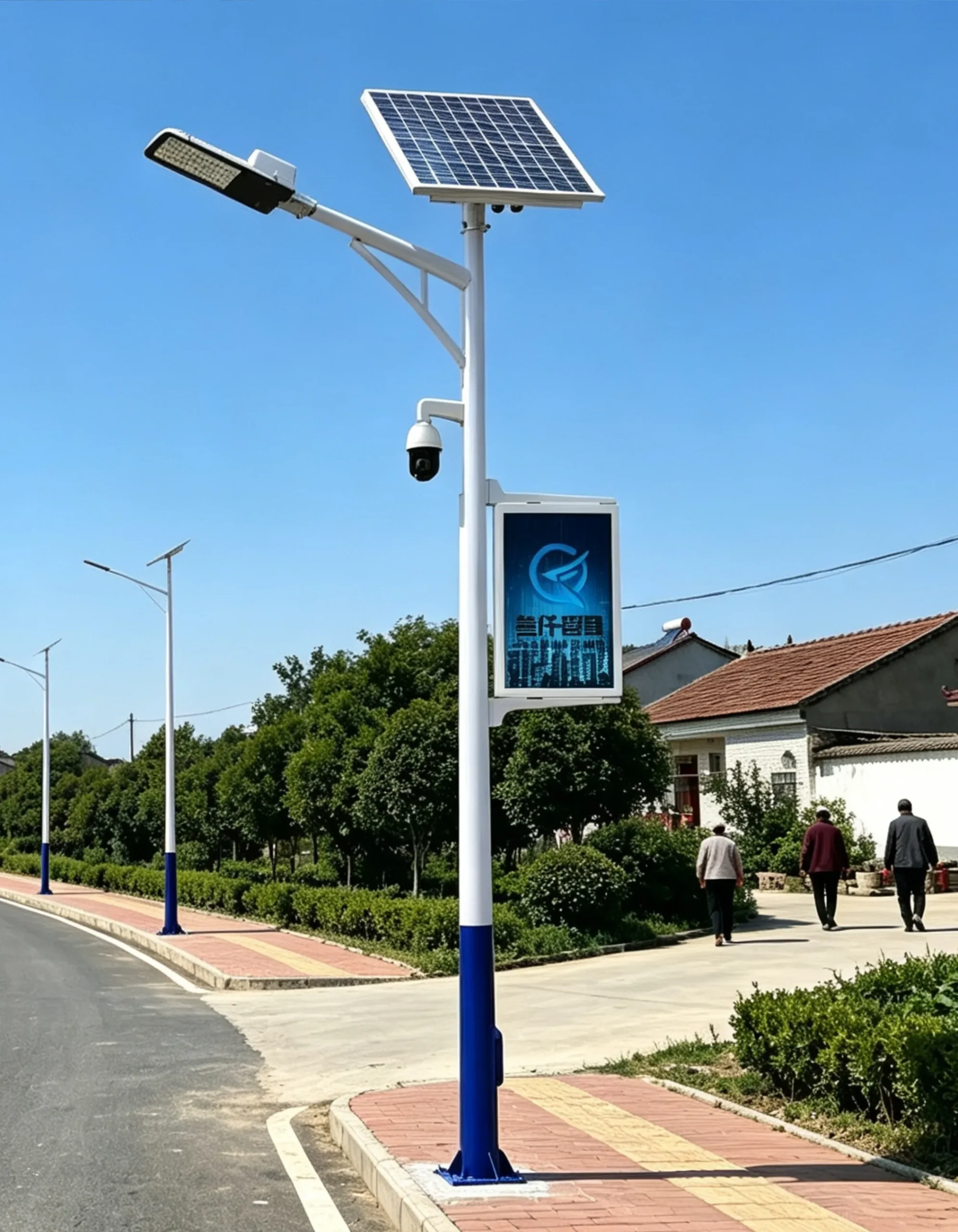
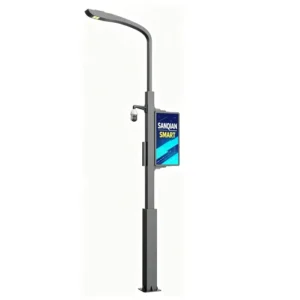
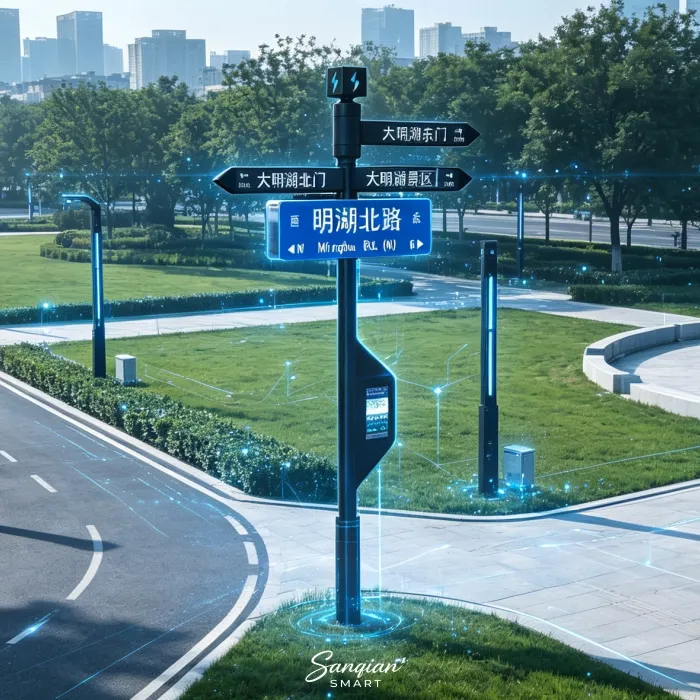
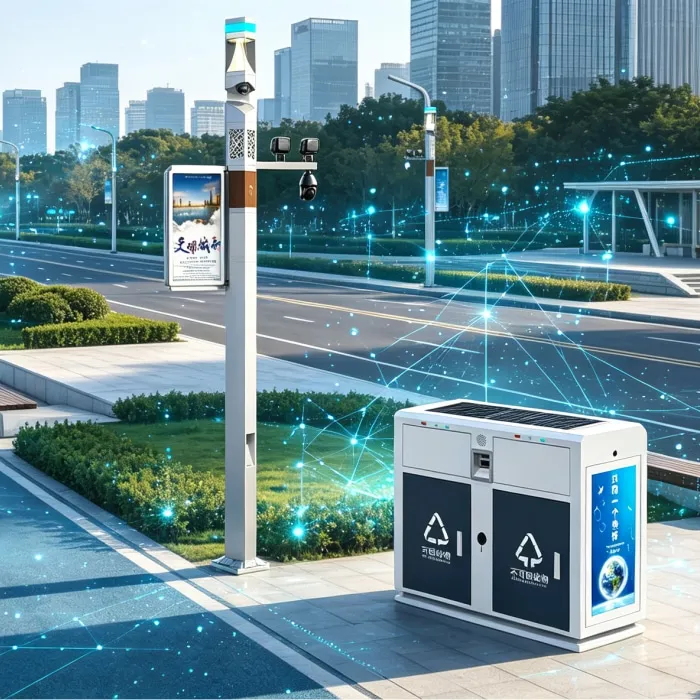
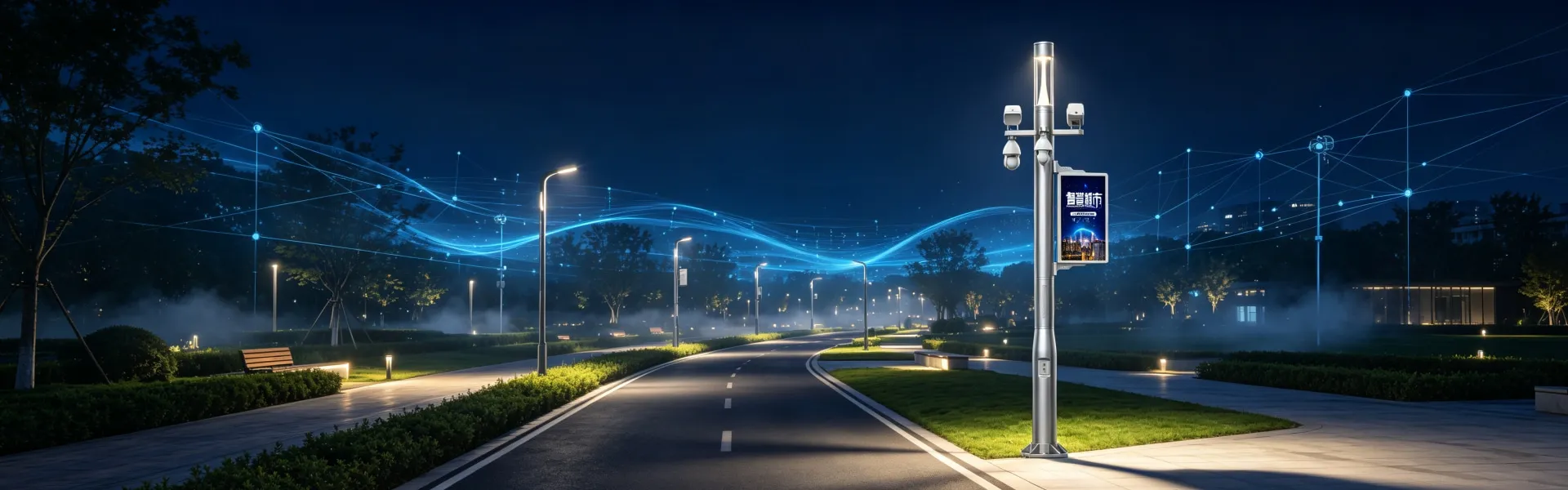
Smart street poles represent a new generation of urban infrastructure. They integrate lighting, communications, sensing, interaction, and power supply into a single platform, becoming intelligent nodes along urban streets.
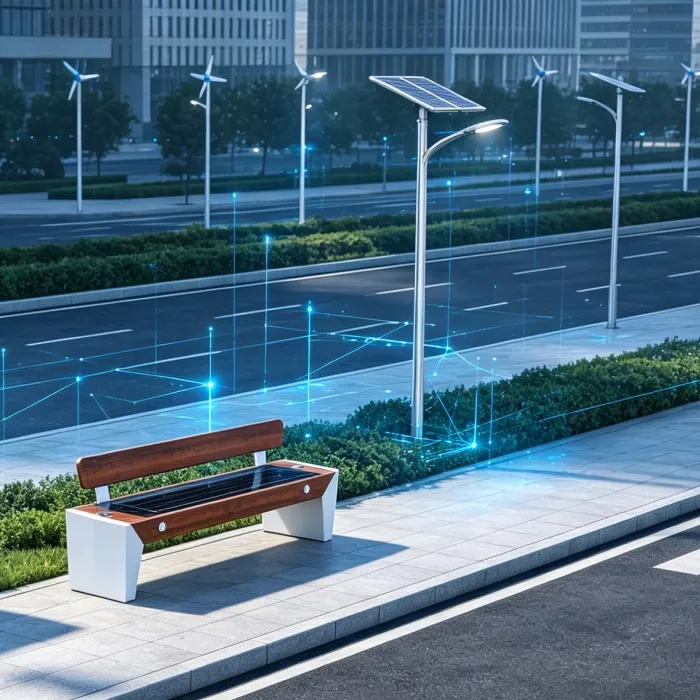
By upgrading existing roadside light poles through modular integration and unified platform management, smart street poles enable “multiple functions on one pole and unified management through one network.” They are an important foundation for implementing smart-city development.
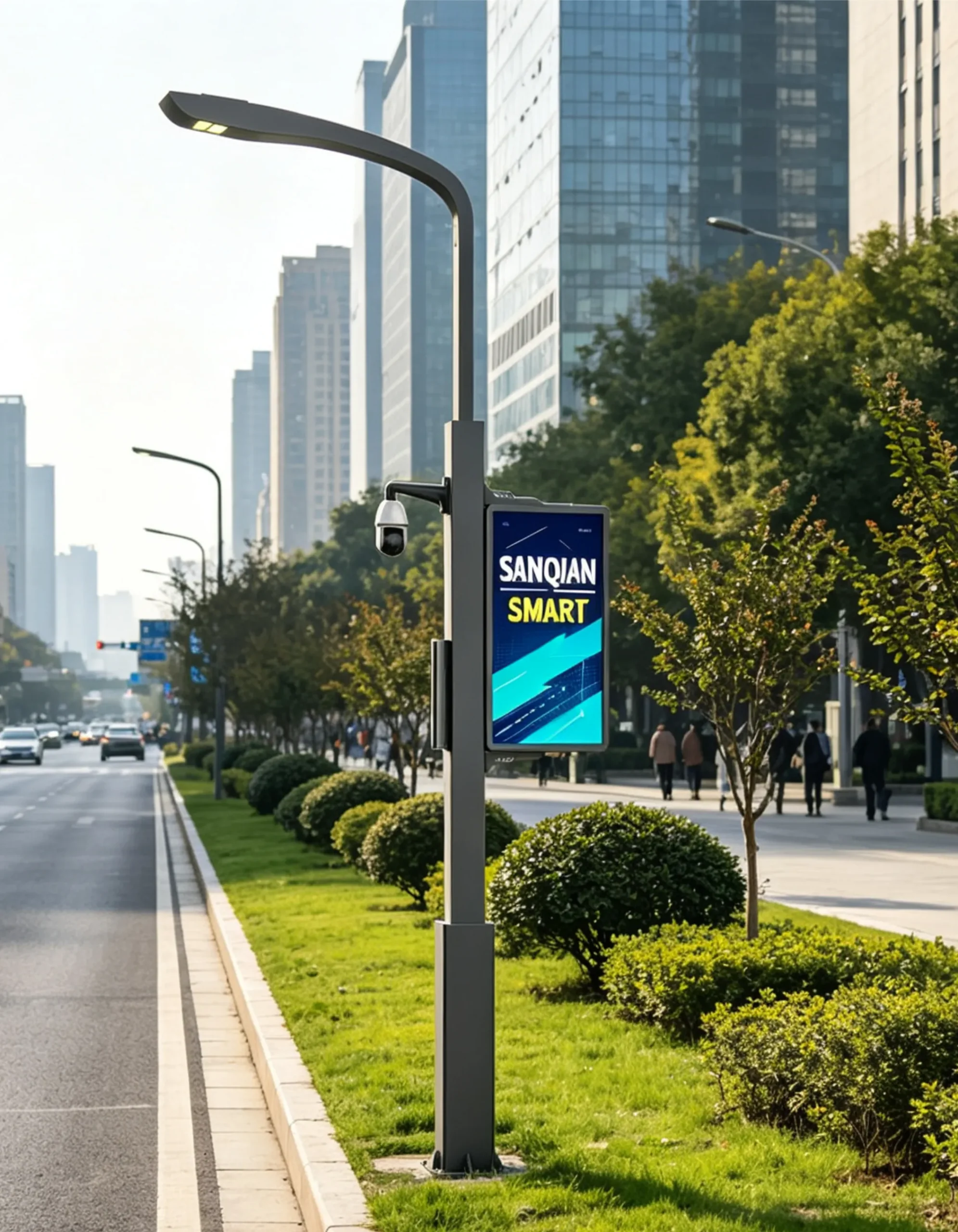
For urban streets and road applications, Sanqian Smart provides a smart street pole system solution centered on multifunctional smart poles. The solution integrates intelligent lighting, video surveillance, traffic sensing, information publishing, environmental monitoring, 5G small cells, one-button emergency assistance, renewable-energy charging, and other functions.
Through the Sanqian Smart Cloud Platform, the system enables device connectivity, data aggregation, and coordinated operations. It helps city administrators improve street-governance capabilities, optimize public services, reduce operating costs, and promote green and low-carbon development.
2. Design Principles and Standards
The solution follows the principles of unified planning, intensive resource sharing, safety and reliability, green and low-carbon development, and aesthetic coordination.
The design primarily references the following standards and guidelines:
- Smart City, Smart Multi-Functional Pole, Specifications for Service Functions and Operation Management (GB/T 40994)
- Standard for Urban Road Lighting Design (CJJ 45)
- Technical Standard for Security and Protection Engineering (GB 50348)
- Technical Code for Communication Base Station Engineering (GB/T 51278)
- Local smart street pole construction guidelines
The system is customized according to road classifications, traffic flow, utility-pipeline conditions, and the city’s streetscape and architectural style.
Key Design Indicators
- Average illuminance of at least 30 lx on urban arterial roads
- Average illuminance of at least 20 lx on secondary roads
- Average illuminance of at least 15 lx on local roads
- Illuminance uniformity of at least 0.4
- Smart street pole device online rate of at least 99%
- Average fault-repair time of no more than 2 hours
- 100% video-monitoring coverage in key areas
- 5G small-cell mounting capacity that meets operators’ co-construction and sharing requirements
- Platform support for up to one million connected devices
3. Overall System Architecture
The system adopts a four-layer device–network–cloud–application architecture, creating a city-level smart street pole IoT network.
Device and Sensing Layer
This layer consists of smart street poles deployed along urban roads.
Each pole can integrate:
- Intelligent lighting fixtures
- High-definition cameras
- Traffic-flow detectors
- Environmental sensors
- Information-display screens
- IP broadcasting speakers
- One-button emergency alarms
- WiFi/5G small cells
- Charging interfaces
The devices are responsible for data collection, edge computing, and execution control.
The poles use a modular structure and support flexible expansion according to application requirements.
Network Transmission Layer
The system uses fiber-to-pole connectivity as the primary networking method, supplemented by wireless backhaul.
This provides reliable transmission for high-bandwidth services such as video surveillance and 5G small cells.
Smart street poles can also function as edge-computing nodes. Local data is pre-processed before being uploaded to the central platform, reducing pressure on the core platform and lowering bandwidth consumption.
The network layer supports secure isolation and controlled interconnection with:
- Municipal government networks
- Public-security networks
- Telecommunications operators’ transport networks
Platform Layer
The Sanqian Smart Cloud Platform serves as the core management platform and provides:
- Device access
- Data aggregation
- Rules-engine management
- Alarm management
- Energy-consumption analysis
- GIS-based one-map visualization
- Coordinated-control strategies
- Maintenance work orders
The platform provides standard API interfaces for integration with:
- City operating platforms
- Traffic-management platforms
- Security platforms
- Urban-management systems
- Other municipal systems
This enables cross-departmental data sharing and coordinated governance.
Application Layer
Web-based and mobile applications are provided for different users, including:
- Urban-management departments
- Traffic-police departments
- Public-security authorities
- Environmental-protection departments
- Telecommunications operators
- Subdistrict offices
Role-based and permission-based access enables “one-screen visibility and unified management through one network.”
4. Core Smart Street Pole Functions
4.1 Intelligent Lighting System
The system uses high-efficiency LED luminaires with a luminous efficacy of at least 160 lm/W.
The color temperature can be adjusted between 3000K and 5000K. The luminaires feature a color-rendering index of Ra ≥ 70 and a protection rating of IP65 or higher.
They support stepless dimming from 0% to 100% and integrate microwave radar, light sensors, and intelligent single-lamp controllers to enable adaptive lighting.
The system supports the lighting strategy of “full brightness when vehicles approach and low brightness when traffic leaves.”
The platform develops differentiated lighting strategies based on:
- Road classification
- Time periods
- Seasons
- Real-time traffic flow
For example:
- Full-power operation during morning and evening peak hours
- Brightness reduced to 70% during off-peak periods
- Brightness reduced to 30%–40% late at night, combined with presence-based activation
The overall energy-saving rate can reach approximately 50%–60%.
4.2 Video Surveillance and Traffic Sensing
Smart street poles integrate high-definition network cameras with a resolution of at least 4 megapixels.
Supported functions include:
- Infrared night vision
- Intelligent video analytics
- License-plate recognition
- Facial-image capture
- Illegal-parking detection
- Wrong-way driving detection
- Pedestrian red-light violation detection
Cameras cover key areas such as:
- Road intersections
- Bus stops
- Pedestrian crossings
- Areas surrounding schools
- Other traffic- and security-sensitive locations
Video streams can be connected to public-security and traffic-management platforms to support automatic traffic-event detection and evidence collection.
Selected smart street poles can integrate microwave traffic-flow detectors to collect real-time data on:
- Traffic volume
- Vehicle speed
- Road occupancy
This data supports traffic-signal timing and intelligent traffic guidance.
4.3 Information Publishing and Traffic Guidance
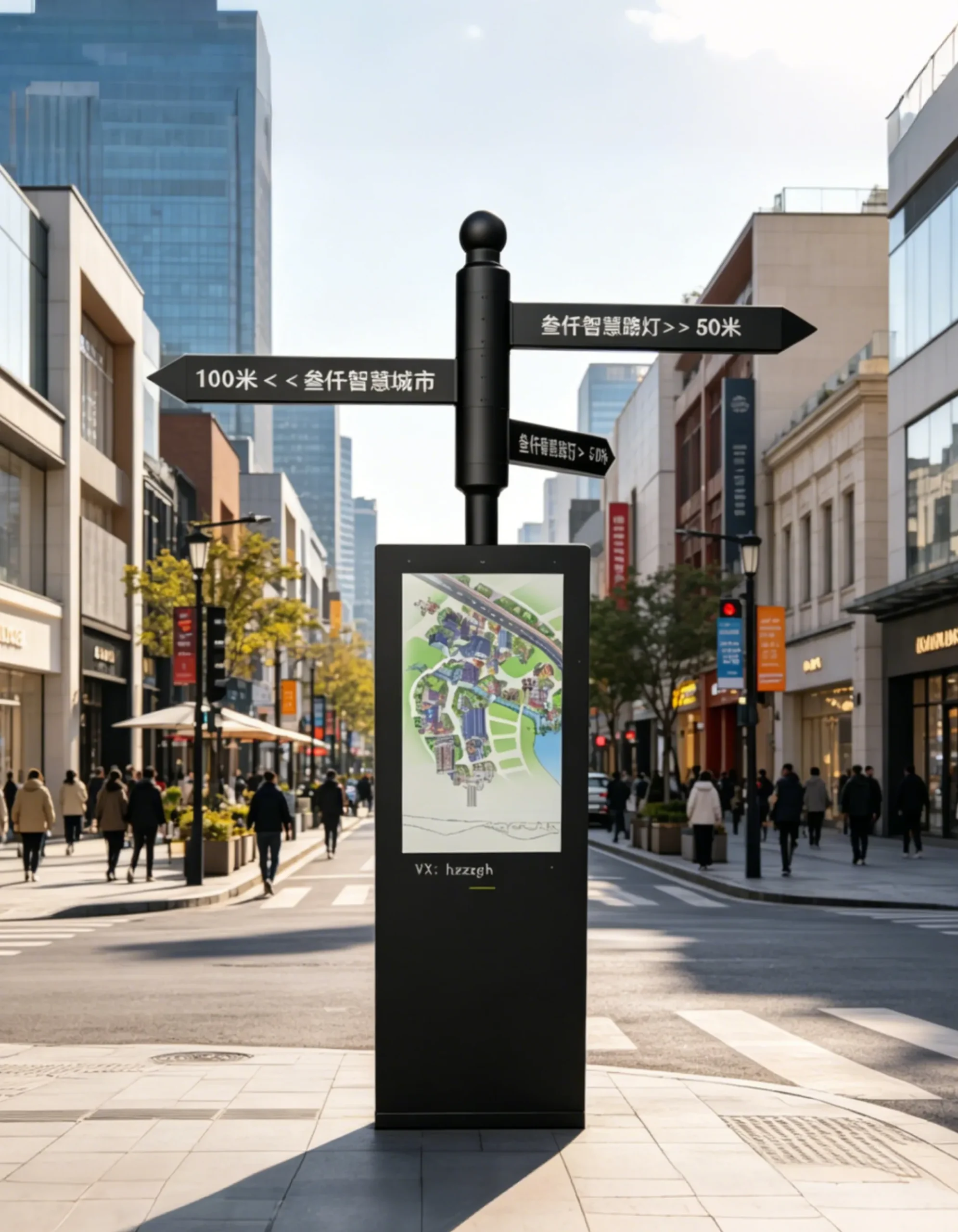
LED or LCD information-display screens can be installed on the middle or upper sections of smart street poles.
Double-sided displays can publish:
- Real-time traffic conditions
- Parking guidance
- Weather alerts
- Public-service announcements
- Commercial advertising
- Other municipal information
Content is centrally managed through the platform, with support for area-based and time-based publishing.
On congested road sections, the information screens can be linked with the traffic-guidance system to display:
- Recommended detours
- Estimated travel times
- Congestion alerts
- Accident information
4.4 One-Button Emergency Assistance and Public Address
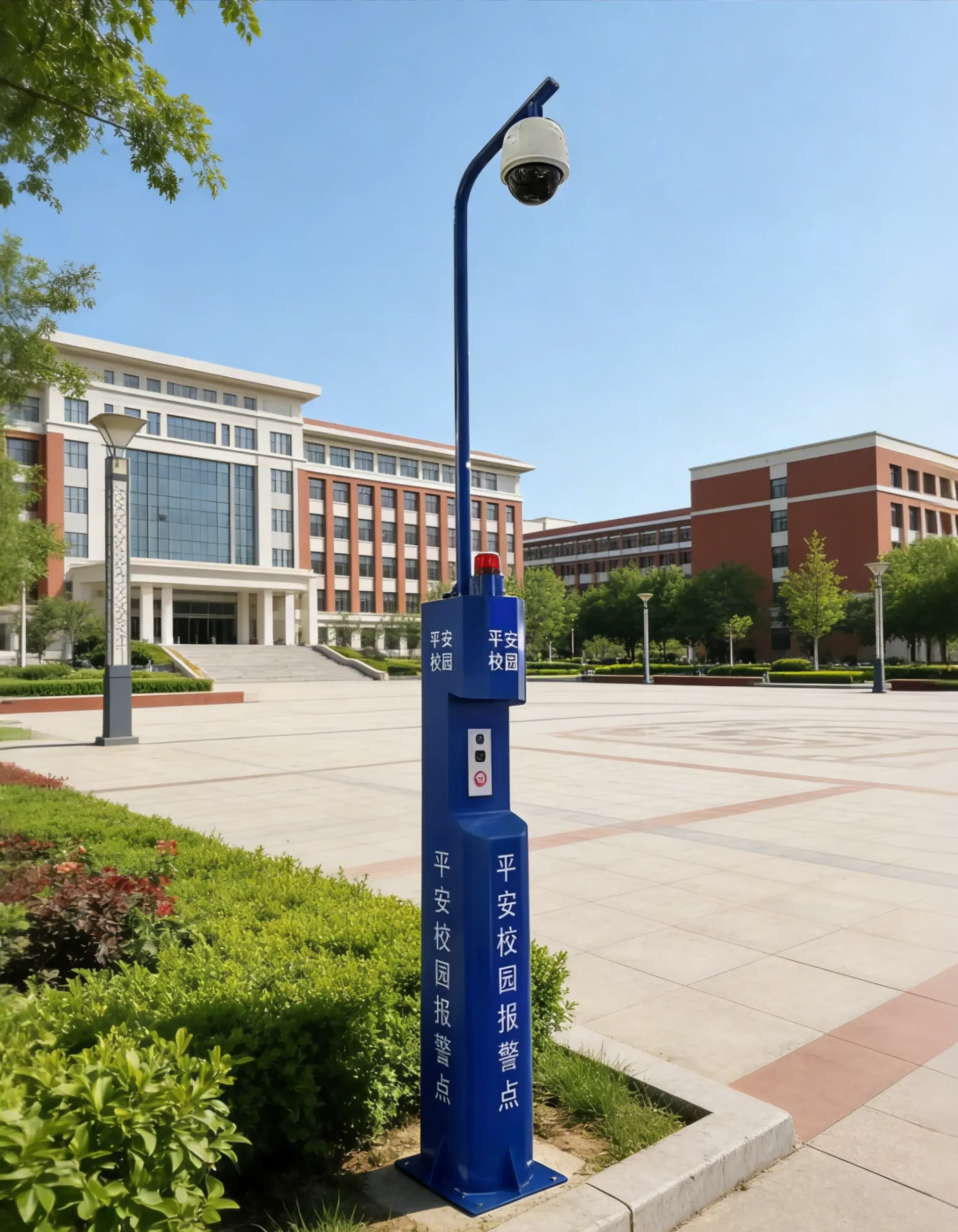
A one-button emergency-alarm box is installed on the pole and supports two-way voice communication and video coordination.
When a member of the public encounters an emergency, pressing the button automatically:
- Identifies the pole location
- Retrieves video from nearby cameras
- Alerts the relevant response personnel
Operators can issue remote voice instructions and coordinate on-site response.
IP column speakers are integrated into the smart poles and support:
- Background music
- Scheduled announcements
- Emergency broadcasting
The public-address system can be linked with the one-button emergency-alarm and fire-safety systems for:
- Emergency evacuation
- Public-safety management
- Incident response
- Security prevention
4.5 Environmental and Weather Monitoring
An integrated environmental sensor is installed at the top of the smart pole to collect real-time data, including:
- Temperature
- Humidity
- PM2.5
- PM10
- Noise
- Illuminance
- Wind speed
- Wind direction
- Atmospheric pressure
The data is uploaded to the platform in real time and used to generate urban environmental heat maps.
This information can support decision-making by environmental-protection and meteorological authorities.
Selected environmental data can also be synchronized to information-display screens, allowing residents to view real-time air-quality and weather information.
4.6 5G Small Cells and Wireless Coverage
Smart street poles provide telecommunications operators with:
- 5G small-cell mounting space
- Power-supply interfaces
- Data-transmission interfaces
The system supports co-construction and sharing by multiple operators.
Smart street poles can also integrate WiFi 6 access points to provide free, high-speed internet access in high-demand areas such as:
- Pedestrian streets
- Public plazas
- Bus stops
- Transportation hubs
WiFi connection data can also support pedestrian-flow analysis, subject to applicable privacy and data-protection requirements.
Through distributed smart street pole deployment, cities can rapidly achieve deeper 5G coverage while reducing the cost of constructing independent base-station sites.
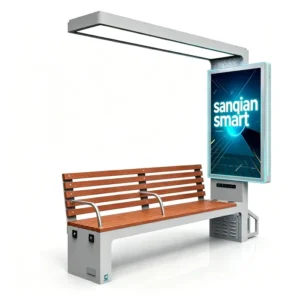
4.7 Renewable-Energy Charging and Public Convenience Services, Optional
In roadside parking areas and around commercial districts, smart street poles can integrate AC charging stations to provide slow charging for electric vehicles.
The lower section of the pole can reserve space for public convenience facilities such as:
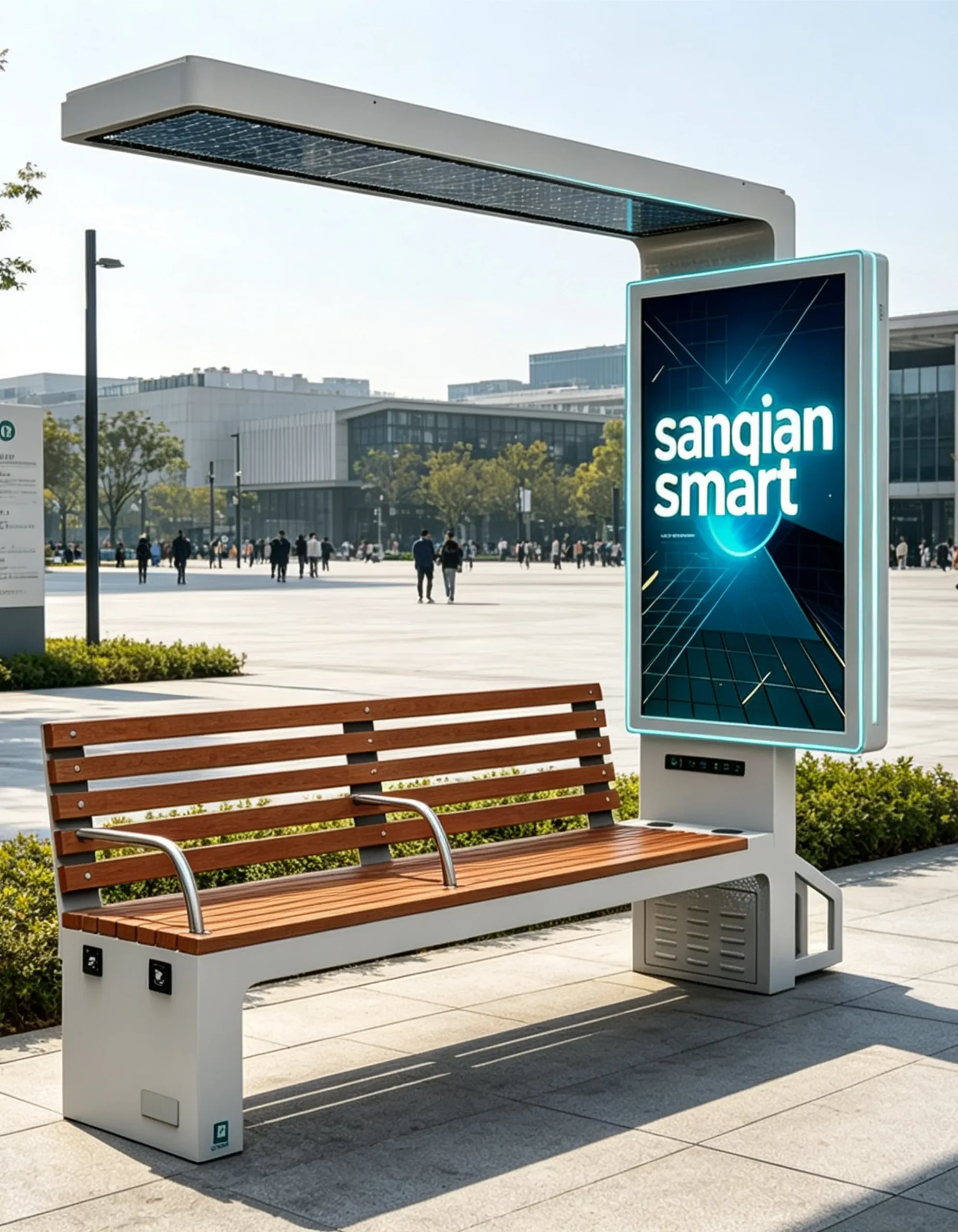
- USB charging ports
- Wireless mobile-phone charging
- Shared umbrella stands
- Other public-service amenities
These features help improve the overall service quality of urban streets.
4.8 Edge Computing and Intelligent Coordination
Smart street poles can integrate edge-computing gateways that support:
- Local video structuring
- Abnormal-event detection
- Device-status analysis
- Local data processing
This reduces pressure on the cloud platform and lowers network-bandwidth consumption.
The system also supports coordination between nearby smart poles. For example, when a traffic accident occurs on a road section, nearby poles can automatically:
- Increase lighting brightness
- Switch information screens to warning content
- Broadcast safety reminders
This enables near-real-time emergency response.
5. Smart Street Pole Management Platform
The Sanqian Smart Cloud Platform serves as the unified management center for the city’s smart street pole network.
Full-Life-Cycle Device Management
Each smart street pole and mounted device is assigned a unique identification code.
The platform provides:
- Digital asset records
- Device-status monitoring
- Remote configuration
- Firmware upgrades
- Maintenance-history management
This creates a digital ledger for urban infrastructure.
Lighting Strategy and Energy Management
Lighting strategies can be created according to:
- Roads
- Districts
- Time periods
- Traffic conditions
- Seasonal requirements
Strategies can be distributed remotely in batches.
The platform records the following data for each pole:
- Energy consumption
- Lighting uptime
- Fault rate
- Operating status
It generates energy-saving reports to support urban-lighting energy assessments.
Video and Event Management
The platform connects to video streams from smart street pole cameras and supports:
- Electronic-map positioning
- Video patrols
- Event review
- Historical footage retrieval
Traffic and public-security events identified through AI analytics are automatically sent to the relevant departments.
Alarm and Work-Order Management
The following conditions automatically generate alerts and work orders:
- Device disconnection
- Equipment faults
- Environmental readings exceeding thresholds
- Emergency-alarm activation
- Other abnormal conditions
Work orders are assigned to the appropriate maintenance teams according to type and location.
Mobile applications support closed-loop handling, with all actions recorded and traceable.
GIS-Based One-Map Visualization
The city map displays:
- Smart street pole locations
- Device operating status
- Online rates
- Alarm information
- Fault locations
The system supports layer filtering and heat-map analysis.
Open APIs and Data Sharing
The platform provides standard APIs and supports data sharing with:
- City operating platforms
- Traffic-management departments
- Public-security authorities
- Environmental-protection departments
- Other municipal agencies
This supports cross-departmental coordination and integrated urban governance.
6. Typical Application Scenarios
Urban Arterial Roads
Smart street poles are deployed at high density along arterial roads and integrate:
- Intelligent lighting
- Video surveillance
- Traffic-flow detection
- 5G small cells
- Information-display screens
The system supports adaptive lighting, automatic traffic-event detection, real-time traffic-information publishing, and continuous 5G coverage.
Commercial Pedestrian Streets
Smart street poles combine functionality with streetscape design.
They can integrate:
- WiFi
- Public-address speakers
- Information-display screens
- One-button emergency alarms
- Charging interfaces
The poles can switch to a nighttime lighting-show mode.
Information screens can display merchant advertising and public information, helping enhance the commercial atmosphere.
Areas Surrounding Schools and Residential Communities
One-button emergency alarms and video surveillance are prioritized to protect students and residents.
Lighting strategies can automatically increase brightness during school arrival and dismissal periods.
At night, lighting power can be reduced and linked with presence-based activation.
Bus Stops and Road Intersections
Smart street poles can display:
- Bus arrival information
- Intersection channelization guidance
- Road-safety instructions
Cameras can detect illegal parking and red-light violations.
Public-address speakers can broadcast safety reminders and traffic announcements.
Urban Elevated Roads and Expressways
Smart street poles integrate traffic-flow detectors and variable message signs to publish real-time information about:
- Congestion
- Accidents
- Lane closures
- Traffic diversions
This helps guide vehicles and improve traffic distribution.
7. Implementation and Operation & Maintenance
A strategy of unified planning, pilot implementation, and phased construction is recommended.
During the preliminary stage, a dedicated smart street pole plan should be prepared for the entire city or target district, clearly defining:
- Pole locations
- Utility-pipeline requirements
- Power-supply arrangements
- Communication-network solutions
- Platform-integration requirements
One or two demonstration roads should be selected for pilot implementation.
After validating the technical solution and operation-and-maintenance model, the system can be gradually expanded across the city.
Existing poles, utility routes, and underground infrastructure should be fully utilized during construction to avoid unnecessary excavation and repeated investment.
Operation and Maintenance Model
A three-level management system is recommended:
- City-level platform supervision
- District-level local operation and maintenance
- Professional maintenance-team response
The platform provides automated monitoring 24 hours a day, seven days a week.
Faults are automatically assigned to maintenance teams.
Recommended service targets include:
- Response to standard faults within 2 hours
- Repair of standard faults within 24 hours
Smart street poles and mounted devices should undergo inspection and preventive maintenance every six months to ensure long-term stable operation.
8. Benefits Analysis
Management Benefits
Multi-function pole integration can reduce the number of roadside poles by more than 30%.
This helps eliminate visual clutter, excessive overhead cabling, and the problem of “forests of poles,” improving the appearance of urban streets.
Unified platform management enables cross-departmental data sharing.
Problem identification shifts from manual inspection to automatic alerts, improving response efficiency several times over.
Economic Benefits
By avoiding duplicate pole installation and repeated utility-pipeline construction, overall construction costs can be reduced by approximately 20%–35%.
Intelligent lighting can reduce energy consumption by more than 50%.
Additional revenue can be generated through:
- 5G small-cell site leasing
- Advertising on information-display screens
- Electric-vehicle charging services
- Other smart street pole services
These revenue streams can help shorten the investment payback period.
Social Benefits
Urban roads become brighter, safer, and more convenient.
The solution helps reduce traffic accidents and public-security incidents.
Residents can access public services such as:
- Free WiFi
- Mobile-device charging
- Traffic and public-information searches
- Emergency assistance
Smart street poles also become a new window for showcasing the city’s image and modernization achievements.
Environmental Benefits
Energy-efficient LED lighting reduces carbon emissions.
Environmental-monitoring data supports pollution prevention and environmental governance.
The solution helps cities advance their carbon-peak and carbon-neutrality objectives.
9. Representative Case Study
A representative example is a smart street pole project implemented by Sanqian Smart in the central district of a rapidly developing Chinese city.
The project covered 12 urban arterial and secondary roads with a total length of approximately 18 kilometers.
A total of 860 smart street poles were installed, integrating:
- Intelligent lighting
- Video surveillance
- Traffic-flow detection
- Information publishing
- 5G small cells
- One-button emergency alarms
- Environmental monitoring
After project completion:
- Road-lighting energy consumption in the area decreased by 58%.
- Annual electricity savings reached approximately 1.2 million kWh.
- The automatic traffic-event detection rate increased from 35% to 85%.
- Average incident-response time decreased from 15 minutes to 3 minutes.
- Reuse of smart street pole sites for 5G small cells saved telecommunications operators approximately 40% in construction costs.
- More than 60 one-button emergency incidents were successfully handled.
- Public satisfaction reached 95%.
The project became a benchmark demonstration project for the city’s smart-city development and was selected as a provincial-level example of new infrastructure construction.
10. Conclusion
Smart street poles are a core infrastructure platform for smart-city street development and a key step in the transition from “functional lighting” to “intelligent sensing.”
The Sanqian Smart Smart Street Pole System Solution for Smart City Streets uses modular smart poles as the infrastructure foundation, a unified management platform as the central intelligence layer, and data-driven operations as the engine.
It enables deep integration of:
- Lighting
- Traffic management
- Public security
- Environmental protection
- Communications
- Public convenience services
The solution provides city administrators with an integrated, efficient, and intelligent tool for street governance.
In the future, as connected vehicles, autonomous driving, and digital-twin city technologies continue to mature, smart street poles will become the “digital neurons” of urban roads, continuously supporting high-quality urban development.