1. Project Background and Needs Analysis
As urbanization continues to accelerate, residential communities are expanding in size, while residents are placing increasingly higher expectations on living quality, safety, and everyday convenience.
Traditional residential communities commonly face the following challenges:
- High street-lighting energy consumption and limited refined management
- Insufficient illumination in certain areas at night, creating safety risks for elderly residents and children
- Waste-bin overflow, unpleasant odors, and difficulties in supervising waste sorting
- Heavy reliance on manual inspections by property-management and cleaning staff, resulting in low efficiency
- Scattered security-monitoring points and blind spots around perimeters and public areas
- Difficulty tracing incidents such as unauthorized entry, objects thrown from high-rise buildings, and vehicle scratches
- Reliance on paper notices, resulting in delayed access to important community information
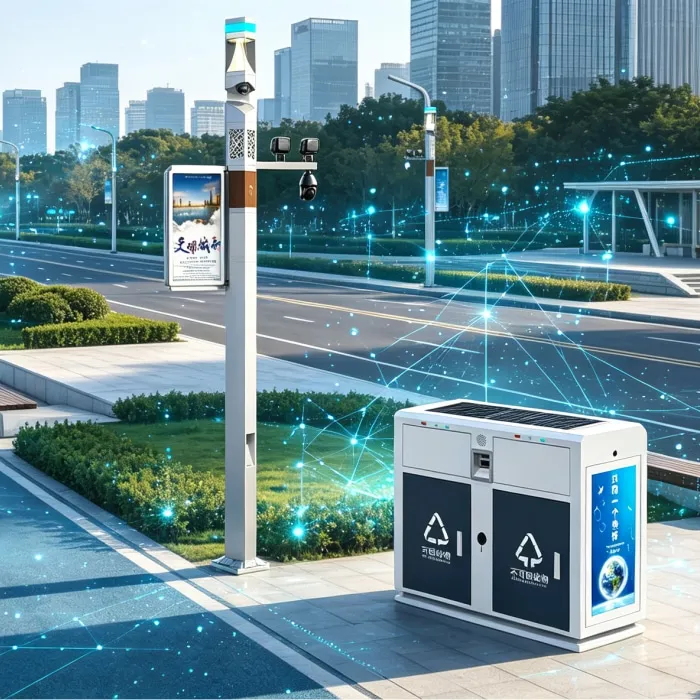
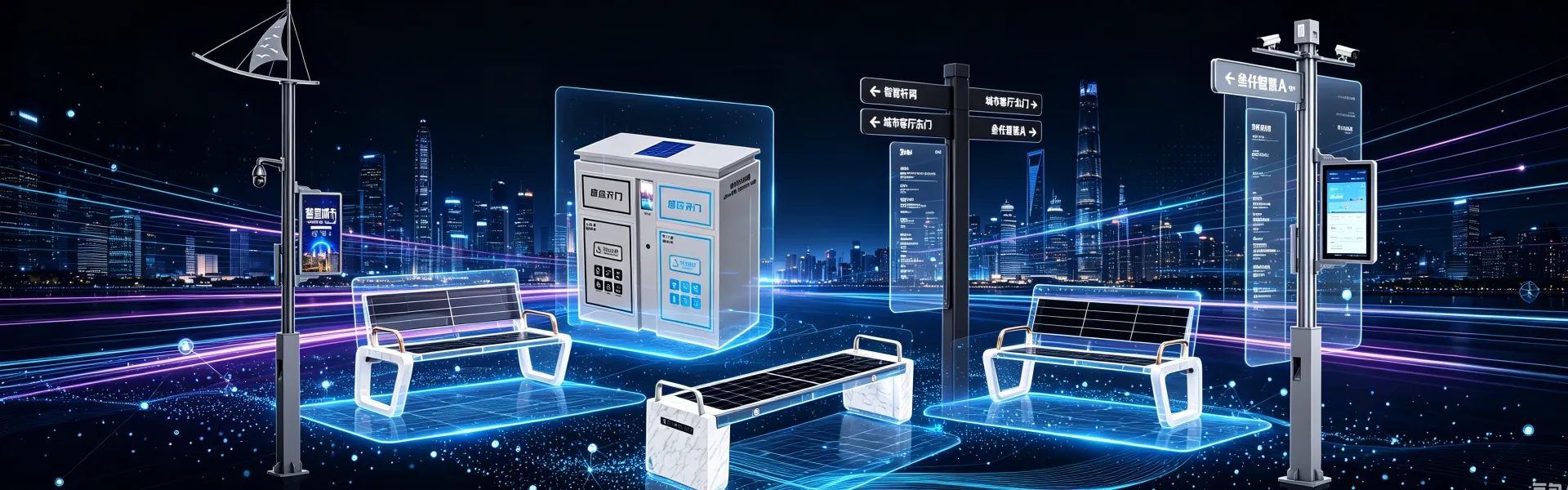
Smart street poles and smart waste bins are two key types of intelligent infrastructure for smart-community development. They can address these challenges while requiring relatively limited modification to existing facilities.
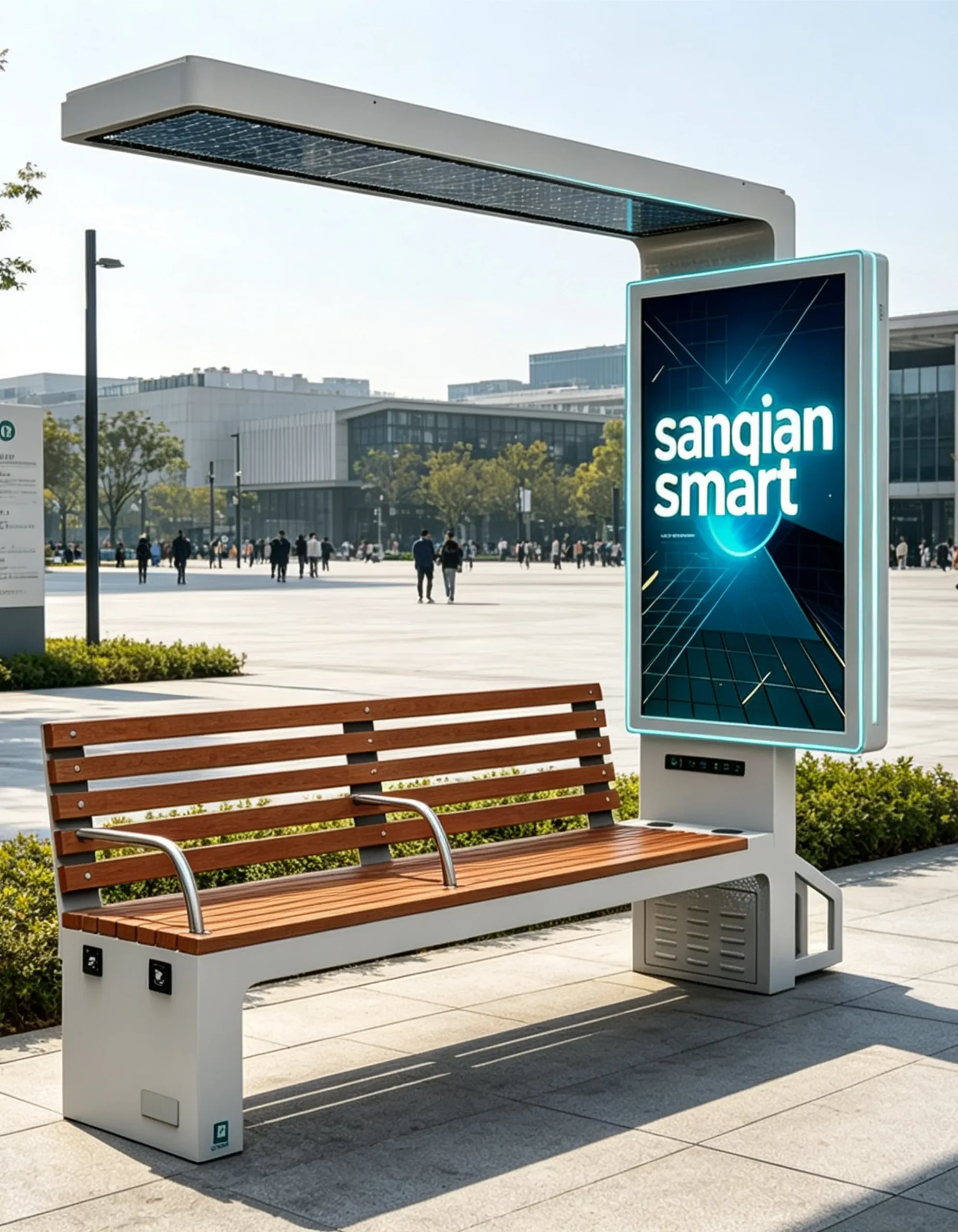
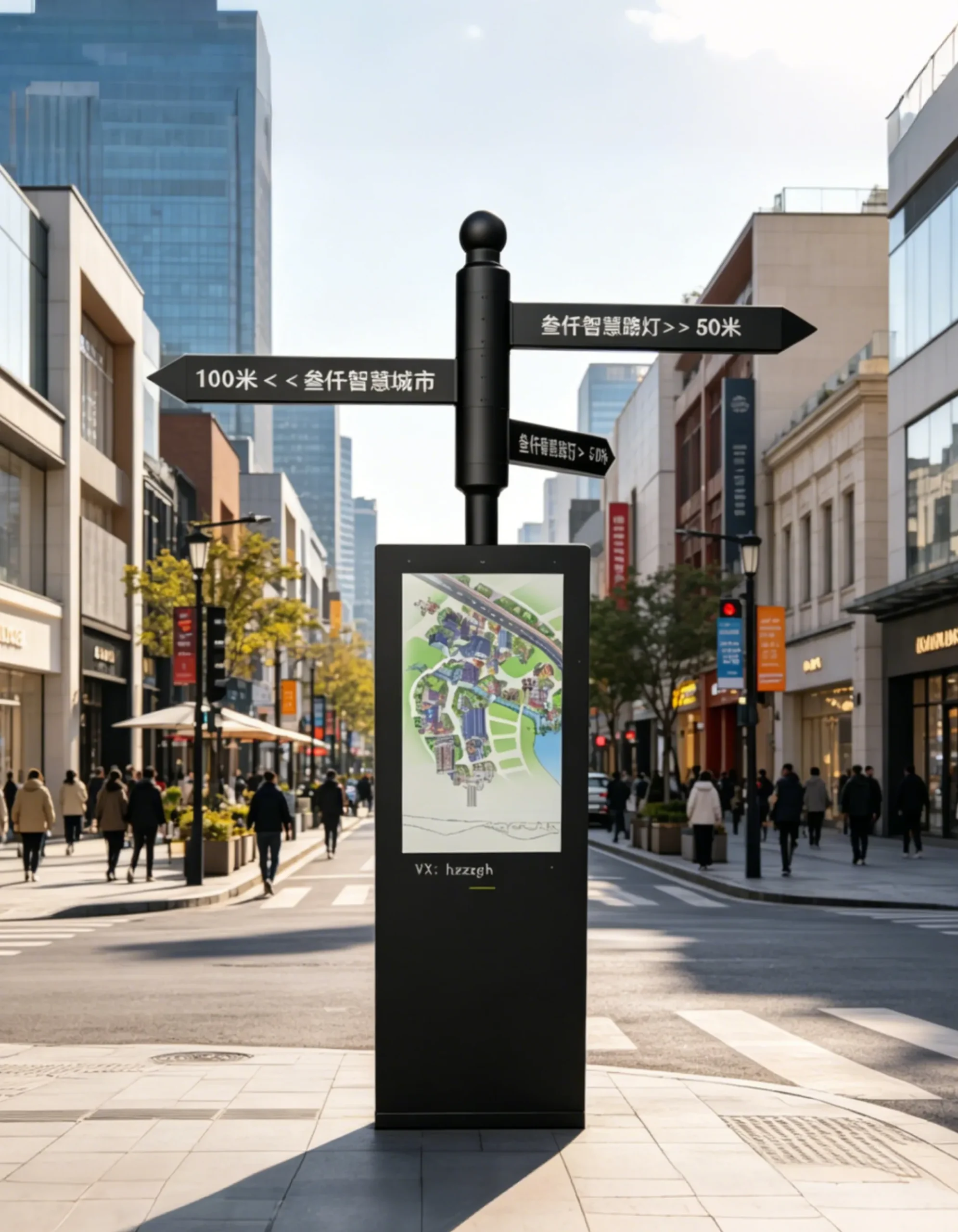
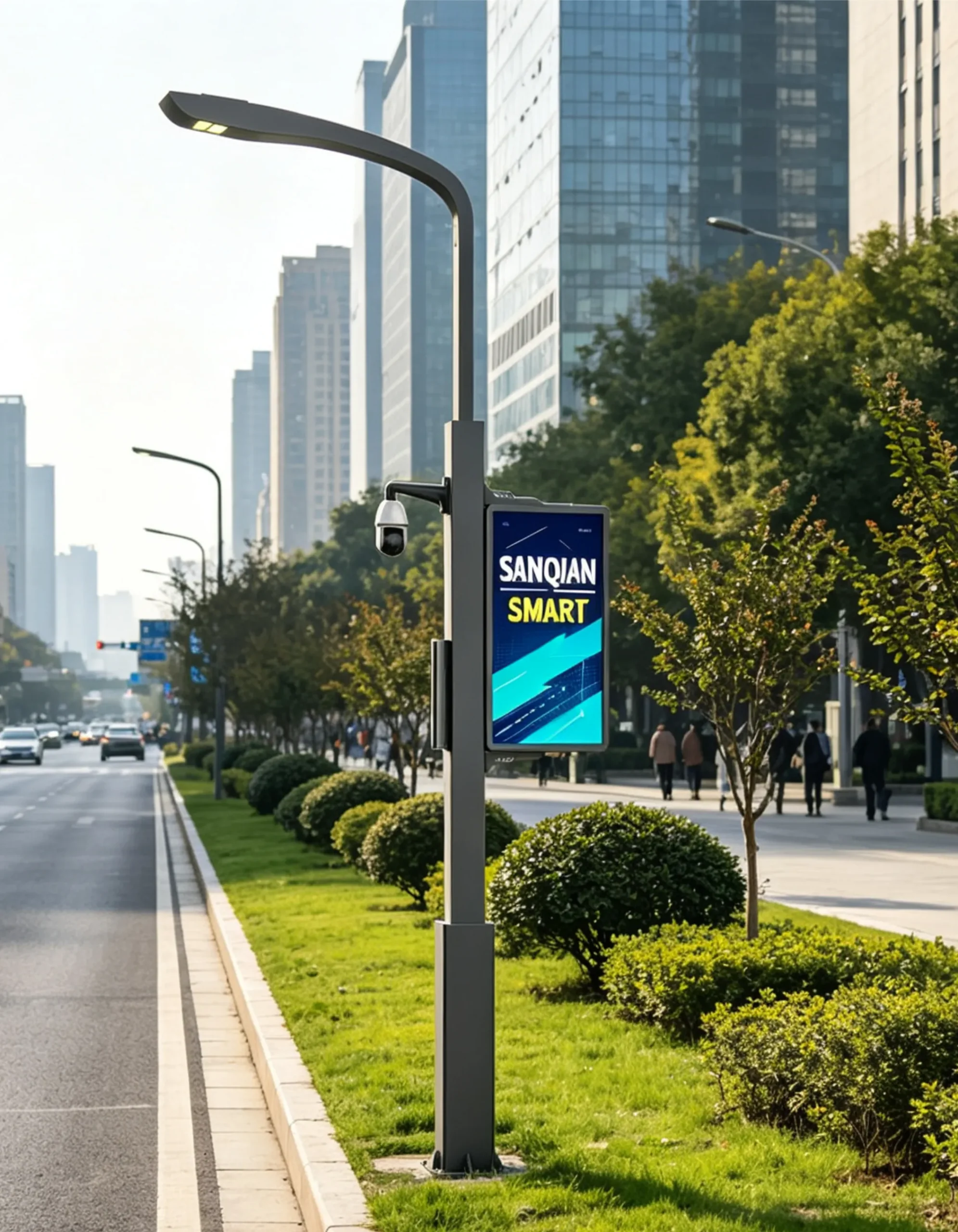
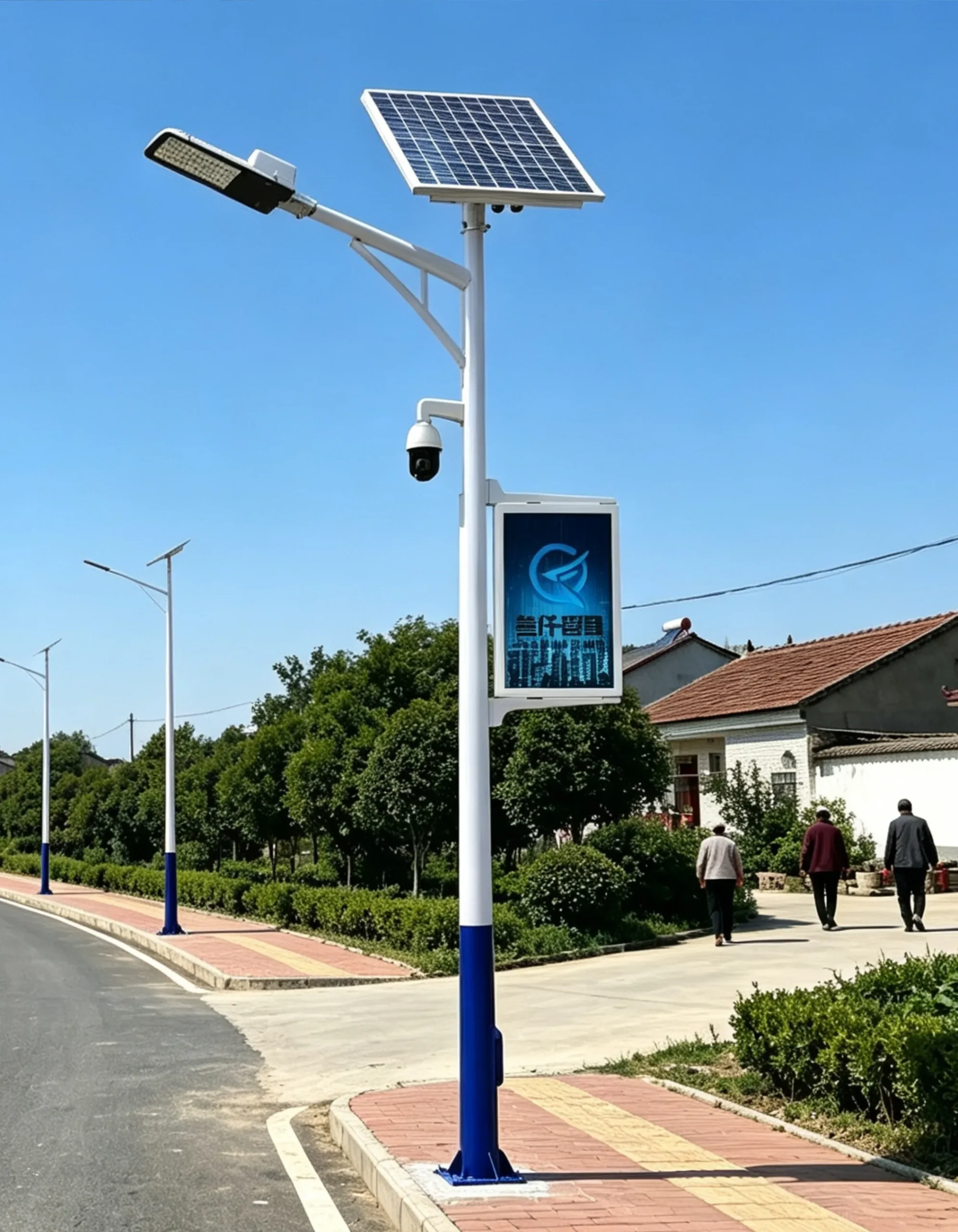
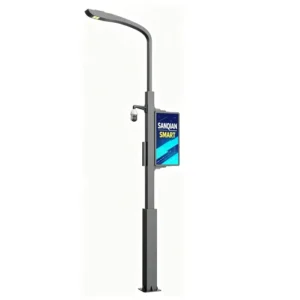
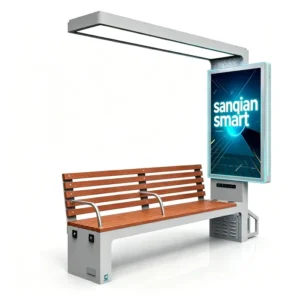
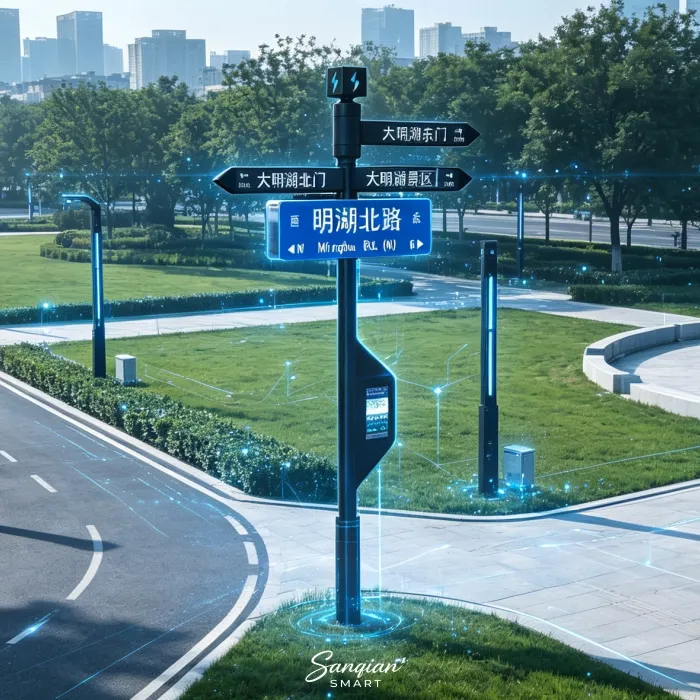
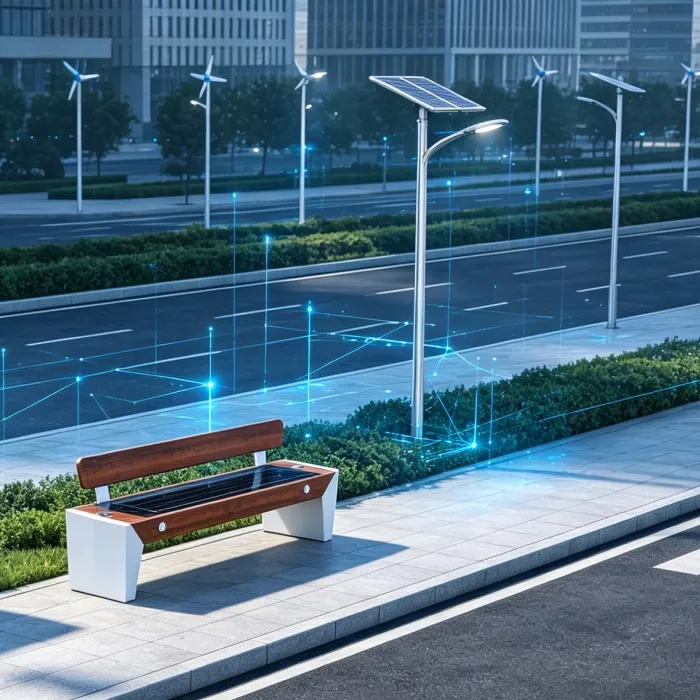
Smart street poles integrate video surveillance, one-button emergency alarms, information displays, environmental sensing, wireless connectivity, and other functions into traditional lighting infrastructure. They become intelligent sensing and service nodes for community public spaces.
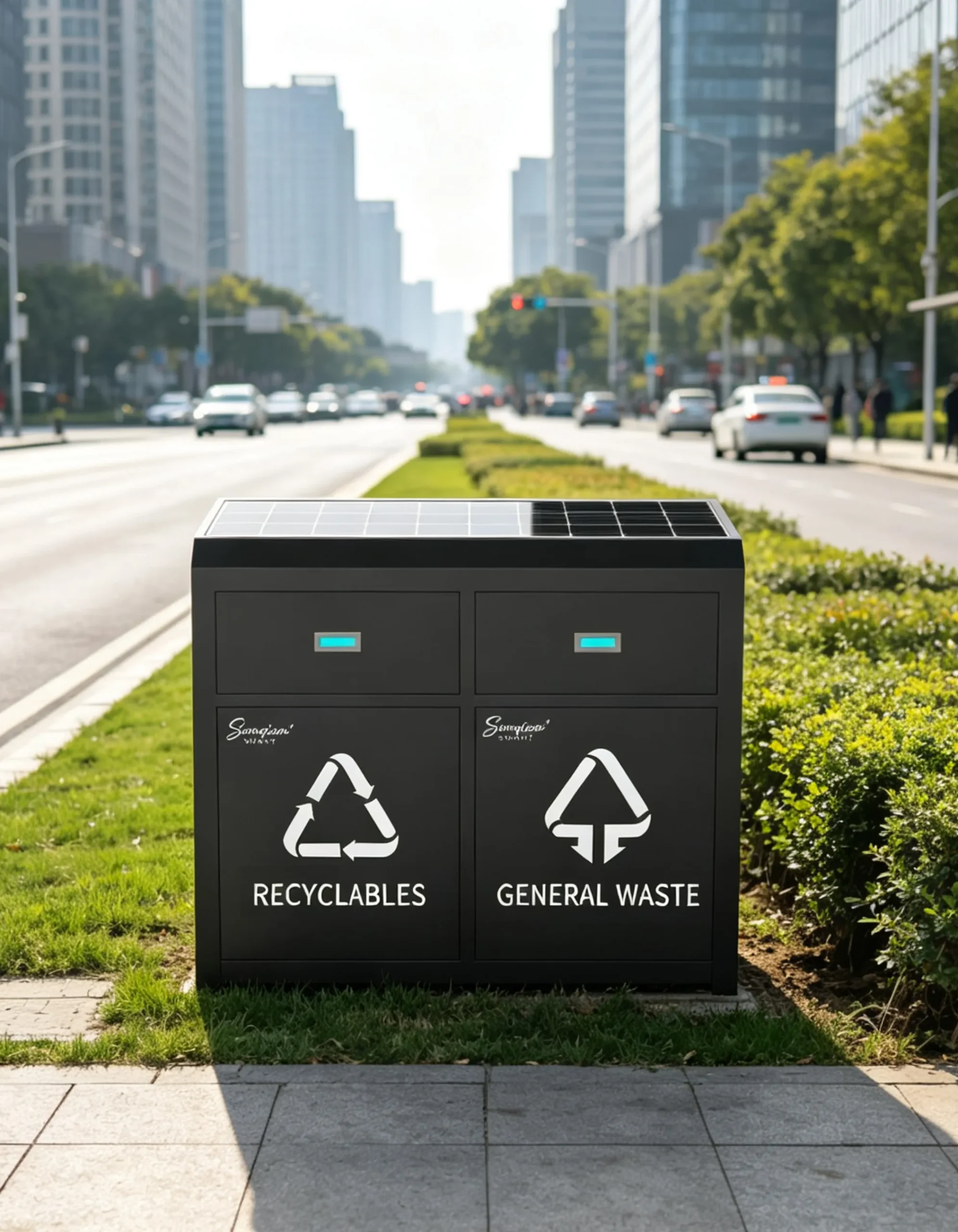
Smart waste bins use fill-level detection, automatic compression, odor control, sterilization, waste-sorting guidance, and data analysis to digitize the entire process of waste disposal and collection.
For residential communities, Sanqian Smart provides an integrated smart waste bin and smart street pole system solution. Through a unified management platform, the system enables device connectivity, data sharing, and coordinated operations, helping communities create a safe, clean, green, and intelligent living environment.
2. Design Principles and Standards
The solution follows the principles of people-oriented design, safety and reliability, green and low-carbon development, economic practicality, and easy maintenance.
The design primarily references the following standards:
- Smart City, Smart Multi-Functional Pole, Specifications for Service Functions and Operation Management (GB/T 40994)
- Standard for Urban Road Lighting Design (CJJ 45)
- Signs for Classification of Domestic Waste (GB/T 19095)
- Technical Standard for Security and Protection Engineering (GB 50348)
- Standard for Electrical Design of Civil Buildings (GB 51348)
The system is customized according to the size of the community, building layout, pedestrian and vehicle flows, and property-management model.
Key Design Indicators
- Average illuminance of at least 15 lx on primary community roads
- Average illuminance of at least 10 lx on walkways between residential buildings
- Average illuminance of at least 20 lx at underground-parking-garage entrances and exits
- Illuminance uniformity of at least 0.4
- Smart waste-bin fill-level detection accuracy of at least 98%
- Fill-level alarm response time of no more than 1 minute
- One-button emergency-alarm response time of no more than 3 seconds
- Platform device online rate of at least 99%
- Average fault-repair time of no more than 4 hours
3. Overall System Architecture
The system adopts a four-layer device–network–cloud–application architecture, creating a smart IoT network covering the public areas of the residential community.
Device and Sensing Layer
This layer consists of smart street poles and smart waste bins deployed at:
- Community roads
- Entrances and exits
- Residential-building entrances
- Waste-sorting collection points
- Leisure plazas
- Other public areas
Smart street poles can integrate:
- Intelligent lighting
- Video surveillance
- One-button emergency alarms
- IP broadcasting
- Information-display screens
- Environmental sensors
- WiFi hotspots
Smart waste bins can integrate:
- Fill-level detection
- Compression mechanisms
- Odor control and sterilization
- Waste-sorting guidance screens
- Identification and data-recording modules
Both types of equipment include intelligent controllers and communication modules for data collection, edge computing, and execution control.
Network Transmission Layer
The system uses the community’s fiber-optic backbone network and adopts fiber-to-pole and fiber-to-waste-bin control-box connections to ensure stable video and data transmission.
In areas where cables cannot be installed, 4G/5G, WiFi, or LoRa can be used to supplement network coverage.
The network layer supports secure isolation and data exchange between the community security network and property-management network.
Platform Layer
The Sanqian Smart Cloud Platform or a locally deployed smart-community management platform serves as the core of the system.
It provides:
- Device access
- Data processing and cleansing
- Rules-engine management
- Alarm handling
- Energy-consumption analysis
- GIS-based one-map visualization
- Coordinated-control strategies
- Maintenance work-order management
The platform provides standard API interfaces for integration with the property-management system and the community security platform.
Application Layer
The application layer provides web-based management interfaces, mobile mini-programs or apps, and on-site interactive terminals for:
- Property-management personnel
- Security personnel
- Cleaning staff
- Residents
The system supports role-based and permission-based access.
4. Core Equipment Functions
4.1 Smart Street Poles, the Intelligent Backbone of Community Public Spaces
Smart street poles adopt a modular design. Their height generally ranges from 4 to 8 meters, and their appearance can be coordinated with the architectural style of the residential community.
Intelligent Lighting
High-efficiency LED luminaires with a luminous efficacy of at least 160 lm/W are used. The standard configuration features 4000K neutral white light and supports stepless dimming from 0% to 100%.
Brightness can be automatically adjusted according to different areas and time periods. For example:
- Full-power operation from 18:00 to 22:00
- Brightness reduced to 30% late at night
- Automatic brightness increase when pedestrians are detected
The overall energy-saving rate can exceed 50%.
Video Surveillance and Security Coordination
The poles integrate high-definition cameras with a resolution of at least 4 megapixels.
Supported functions include:
- Infrared night vision
- Motion detection
- Area-intrusion alarms
- High-rise object-throwing detection, optional
The cameras primarily cover:
- Community entrances and exits
- Primary roads
- Children’s activity areas
- Parking lots
- Community perimeters
Video streams can be connected to the property-management security platform and linked with the one-button emergency-alarm and public-address systems.
One-Button Emergency Alarm
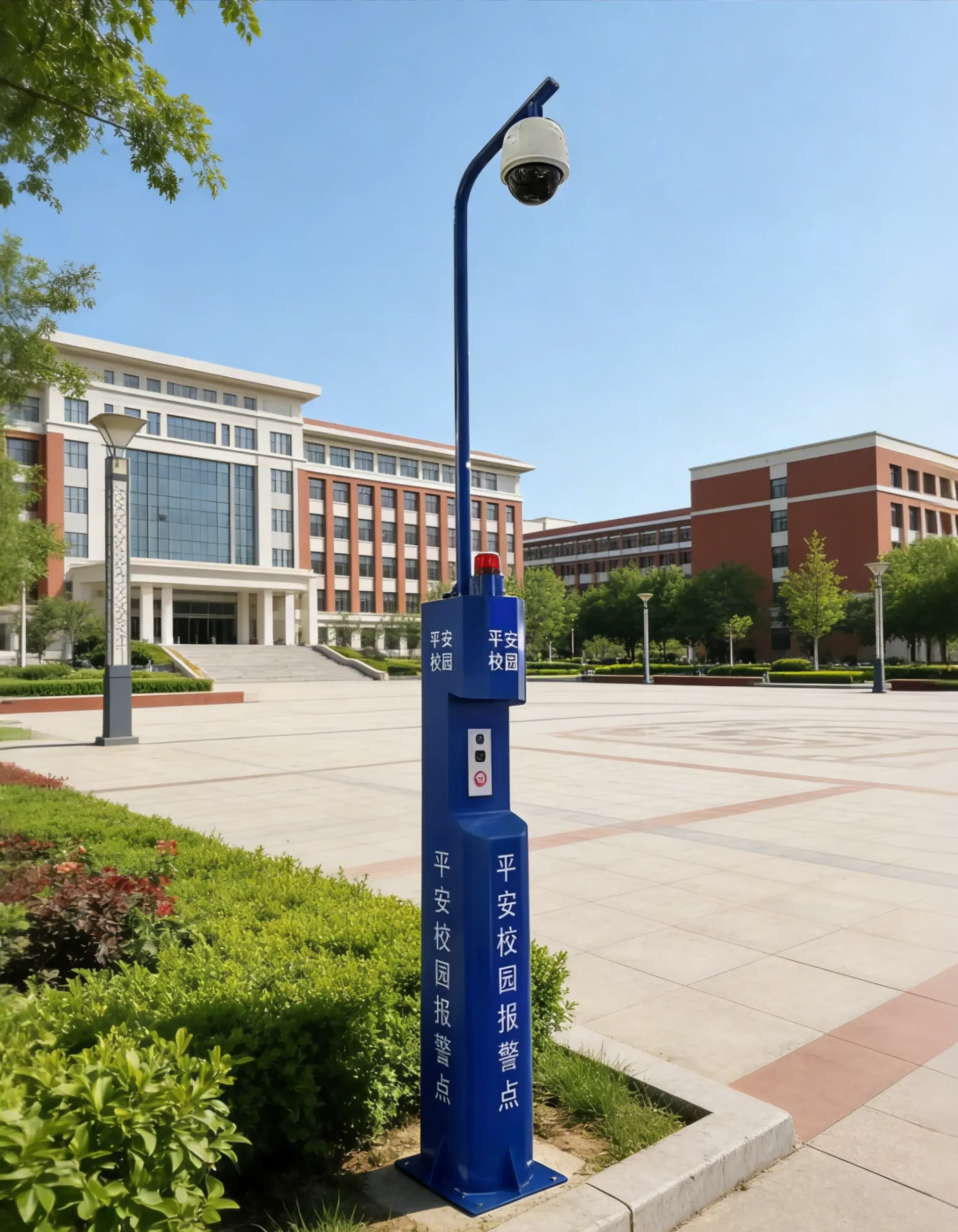
An emergency-alarm box is installed on the pole and supports two-way voice communication.
If an elderly resident falls, a child becomes separated from their family, or a resident encounters danger, pressing the button immediately establishes communication with the property-management security center.
The platform automatically identifies the alarm location and retrieves footage from nearby cameras, allowing security personnel to respond quickly.
Information-Display Screen
LED or LCD screens can display:
- Community announcements
- Payment reminders
- Event notices
- Weather alerts
- Lost-and-found information
- Public-health information
- Safety reminders
This replaces traditional paper notices and improves the speed and efficiency of information delivery.
Public Address
IP column speakers support:
- Background music
- Scheduled announcements
- Emergency voice messages
- Evacuation instructions
The system can be linked with the one-button emergency-alarm and fire-safety systems to support rapid communication during emergencies.
Environmental Monitoring
The system collects real-time data on:
- Temperature
- Humidity
- PM2.5
- PM10
- Noise
The data can be displayed on the management platform and community information screens, providing residents with useful environmental information and helping property managers improve daily operations.
WiFi Coverage, Optional
WiFi 6 access points can be integrated in leisure plazas, children’s activity areas, and other public spaces to provide residents with free wireless internet access.
The system can also support community visitor-flow analysis, subject to applicable privacy and data-protection requirements.
4.2 Smart Waste Bins, Digital Terminals for Community Sanitation
Sanqian Smart smart waste bins are designed to address the challenges of waste sorting and waste collection in residential communities.
Fill-Level Detection
Ultrasonic or infrared sensors monitor the height of waste inside the bin in real time.
The fill-level threshold can be configured, for example, at 80%. When the threshold is reached, the system automatically generates a collection work order and sends it to cleaning personnel through the mobile application.
This enables “collection when full,” helping prevent overflow and reduce the spread of unpleasant odors.
Automatic Compression, Available on Selected Models
Large-capacity waste-sorting collection stations or centralized disposal points can be equipped with compression mechanisms.
The system can compress waste to approximately 30% of its original volume, reducing collection frequency and transportation costs.
Intelligent Waste-Sorting Guidance
Touchscreens or voice prompts integrated into the waste bins guide residents in sorting their waste correctly.
The system can support card-based access, QR-code scanning, or facial recognition for disposal. It can record the waste-disposal weight and sorting accuracy of each household, providing data for community waste-sorting assessments and incentive programs.
Odor Control and Sterilization
Built-in activated-carbon filters, ultraviolet sterilization, or ozone-generation modules help inhibit odors and bacterial growth, improving the environment around waste-disposal points.
Temperature sensors automatically trigger an alarm when an abnormal increase in internal temperature is detected, helping prevent fire hazards.
Data Statistics and Sanitation Optimization
The system records:
- Waste-disposal weight
- Collection frequency
- Number of fill-level alarms
- Waste-sorting accuracy
- Participation rates
The platform generates sanitation heat maps to help property managers optimize waste-bin locations and collection routes while reducing cleaning costs.
5. Smart Community Management Platform
The Sanqian Smart Cloud Platform serves as the management center for the entire system.
Full-Life-Cycle Device Management
All smart street poles and smart waste bins in the community are assigned unique identification codes.
The platform manages:
- Device registration
- Operating status
- Maintenance records
- Service history
- Asset information
This creates a digital asset register for community infrastructure.
Lighting and Energy Management
The platform records the energy consumption of streetlights, information screens, waste bins, and other devices on a daily, weekly, and monthly basis.
It generates energy-saving reports and supports area-based and time-based lighting strategies for refined energy management.
Intelligent Sanitation Scheduling
When a smart waste bin reaches its configured fill level, the system automatically generates a work order.
Combined with GIS-based route planning, the platform determines an efficient collection route.
Cleaning personnel can accept, process, and provide feedback on work orders through the mobile application, creating a closed-loop workflow.
Security Coordination and Emergency Response
The one-button emergency-alarm, video-surveillance, and public-address systems are deeply integrated.
When an alarm is triggered, the platform automatically retrieves footage from nearby cameras.
Security personnel can issue remote voice announcements and notify patrol staff to respond on site.
Waste-Sorting Data Dashboard
The platform provides statistics on:
- Sorting accuracy at each disposal point
- Waste-disposal trends
- Resident participation rates
- Household waste-disposal records
- Collection frequency
These data support community waste-sorting assessments, resident education, and public-awareness campaigns.
Unified Information Publishing
The platform centrally manages the content and scheduling of street-pole information screens and public-address speakers.
Multi-level content review is supported to ensure the accuracy, consistency, and security of published information.
Maintenance Work Orders and Mobile Inspections
Device abnormalities automatically trigger alerts and generate work orders, which are sent to maintenance personnel through the mobile application.
The system supports:
- QR-code repair requests
- Photo uploads
- Work-order tracking
- Closed-loop completion
This helps maintain a high infrastructure availability rate.
6. Typical Application Scenarios
Main Community Entrance
Smart street poles are deployed at the main entrance and integrate:
- High-definition cameras
- License-plate recognition
- Facial-image capture
- Information-display screens
- Public-address speakers
Vehicles entering and leaving the community can be identified automatically, while visitor information can be displayed in a timely manner.
The screens can show welcome messages and community announcements, helping improve the overall image of the residential community.
Primary Roads and Walkways Between Buildings
Smart street poles are installed at intervals of approximately 20–30 meters to provide basic lighting and video surveillance.
When pedestrians are detected at night, the lighting automatically becomes brighter, improving safety for elderly residents and children.
Smart waste bins are placed near residential-building entrances, allowing residents to dispose of waste conveniently while enabling automatic fill-level alerts.
Centralized Waste-Sorting Collection Points
Large-capacity smart waste-bin units are installed at centralized collection points.
They support sorting guidance, data recording, and points-based incentives.
Smart street poles provide lighting and video surveillance, keeping the disposal area bright and safe at night.
Video monitoring records disposal behavior and assists with waste-sorting supervision.
Children’s Activity Areas and Leisure Plazas
Smart street poles integrate WiFi, public address, and video surveillance.
Parents can monitor activity in the area, while public-address speakers broadcast friendly safety reminders.
Environmental sensors monitor air quality, and smart waste bins are installed nearby to help keep the area clean.
Parking Lots and Community Perimeters
Smart street poles are deployed at key locations and integrate perimeter-intrusion alarms and infrared cameras.
High-brightness lighting can be activated automatically at night when activity is detected.
Charging stations, available as an optional function, can provide slow charging for electric vehicles.
7. Implementation and Operation & Maintenance
A strategy of unified planning and phased implementation is recommended.
During the preliminary stage, the project team should complete:
- A comprehensive community survey
- Smart street-pole location planning
- Smart waste-bin placement planning
- Power and communication-route planning
- Integration planning for existing property-management systems
Phase One
Priority should be given to:
- Main entrances and exits
- Primary roads
- Waste-sorting collection points
- Children’s activity areas
- Other key public spaces
The first phase may deploy approximately:
- 50–150 smart street poles
- 30–80 groups of smart waste bins
The management platform should be established and integrated with the property-management system.
Phase Two
Based on resident feedback and operational data, the locations and functions of the equipment can be optimized and expanded to cover the entire community.
For operation and maintenance, it is recommended to establish a structure led by the property-management company, coordinated by security and cleaning teams, and supported by a professional maintenance service provider.
The platform provides automated monitoring 24 hours a day, seven days a week. Daily on-site inspections and comprehensive quarterly maintenance should be conducted to maintain high equipment availability and reliability.
8. Benefits Analysis
Management Benefits
The integration of lighting, sanitation, security, and information-publishing systems enables property management to shift from fragmented manual work to platform-based scheduling.
Labor costs can potentially be reduced by 20%–30%, while emergency-response times can be shortened from minutes to seconds.
Economic Benefits
Intelligent lighting can reduce energy consumption by more than 50%.
Smart waste bins optimize waste-collection frequency and reduce transportation and labor costs.
Energy savings and advertising revenue from information-display screens can partially offset operation and maintenance expenses.
The typical overall investment payback period is approximately three to five years.
Social Benefits
The solution can significantly improve residents’ sense of safety, quality of life, and satisfaction.
It also increases participation and accuracy in waste sorting, creating a cleaner and more orderly community environment.
Smart infrastructure can become a distinctive feature of the residential community and help enhance the value of surrounding properties.
Environmental Benefits
Intelligent LED lighting reduces carbon emissions.
Smart waste-bin compression reduces the frequency of waste transportation.
Together, these functions support the development of greener communities and the national “Zero-Waste City” initiative.
9. Representative Case Study
A representative example is a smart infrastructure project implemented by Sanqian Smart in a newly developed large-scale residential community in a second-tier Chinese city.
The community covers approximately 300,000 square meters and contains approximately 3,200 households.
The project deployed:
- 180 smart street poles
- 120 groups of smart waste bins
The system covers:
- Main entrances and exits
- Primary roads
- Walkways between residential buildings
- Children’s activity areas
- Centralized waste-sorting collection points
- Underground-parking-garage entrances and exits
After six months of operation:
- Nighttime lighting energy consumption decreased by 46%.
- Waste overflow incidents decreased by 93%.
- The frequency of manual cleaning inspections decreased by 50%.
- All 15 one-button emergency alarms received successful responses.
- Security-incident detection and response efficiency increased by 55%.
- Resident participation in waste sorting increased from 68% to 91%.
- The property-management satisfaction score increased from 80 to 93 points.
The project was recognized by the local housing and urban-rural development authority as a Smart Community Development Demonstration Project.
10. Conclusion
Residential communities are the basic units of urban governance and the direct foundation of residents’ quality of life.
The Sanqian Smart integrated smart waste bin and smart street pole system solution uses smart street poles as public-space sensing nodes and smart waste bins as digital sanitation-management terminals.
Through a unified platform, the solution deeply integrates intelligent lighting, security, sanitation, information publishing, and other functions.
It helps property managers operate more efficiently, makes daily life more convenient for residents, and creates a cleaner and more attractive public environment.
In the future, as AI vision, digital twins, and other technologies continue to advance, smart street poles and smart waste bins will become core infrastructure for refined community governance and continue to support better living environments.