Description
I. Product Introduction
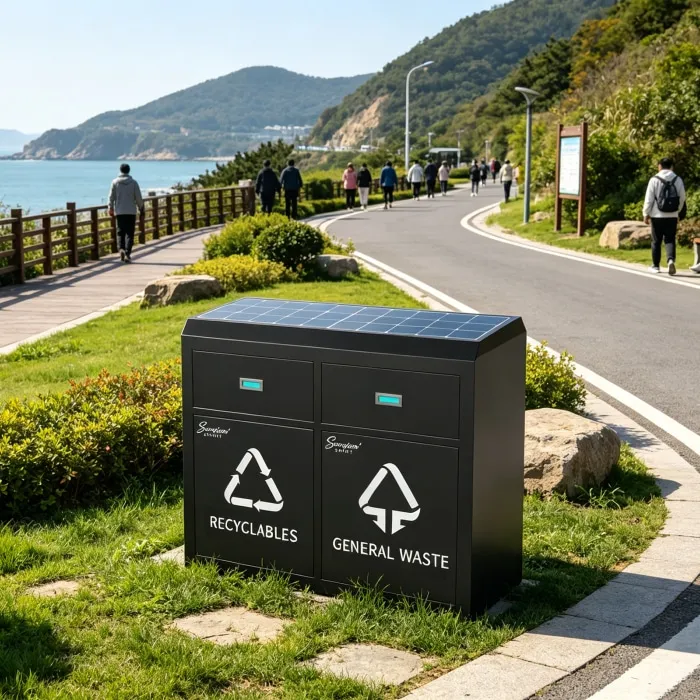
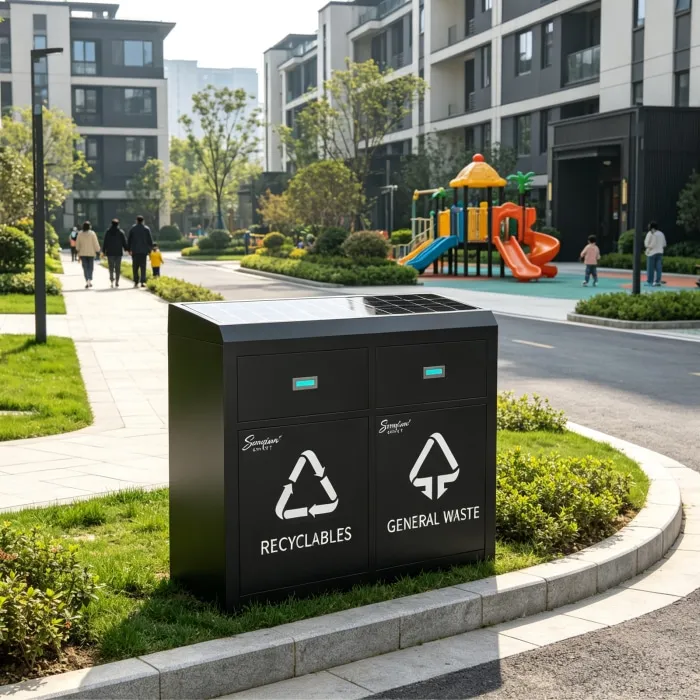
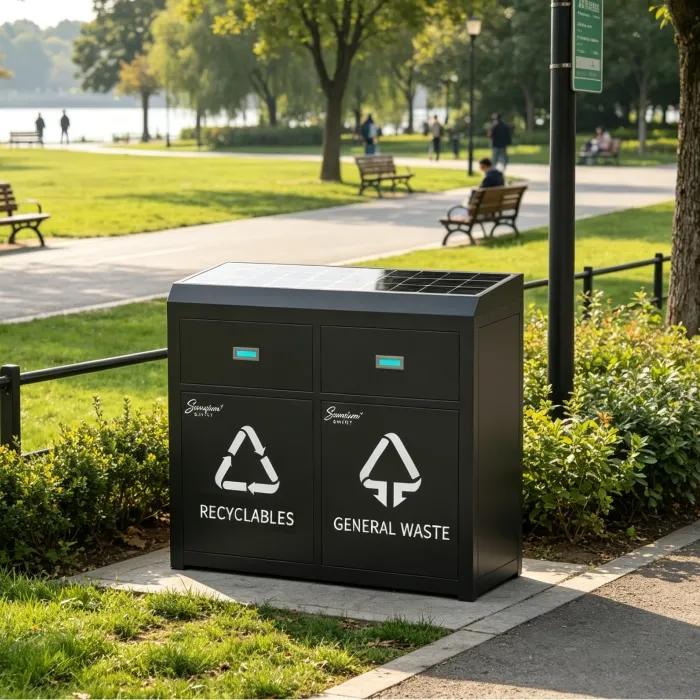
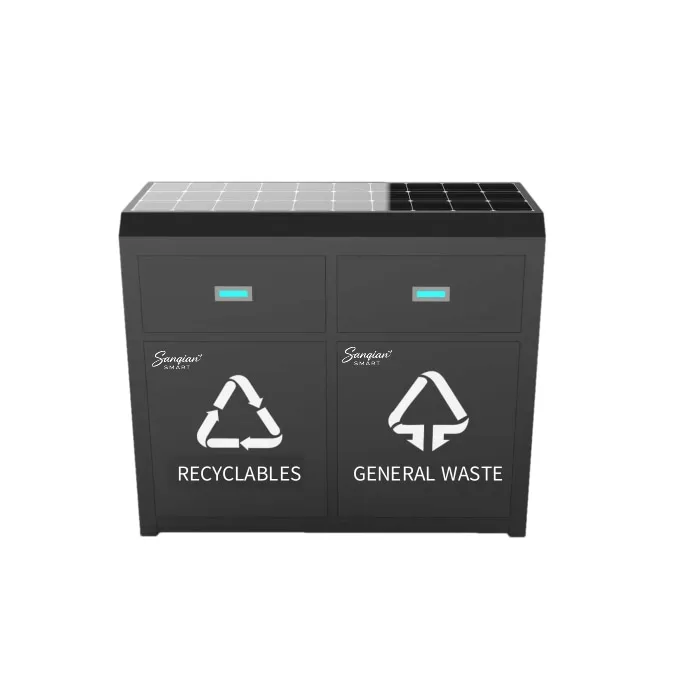
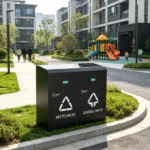
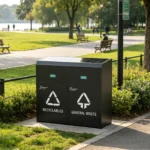
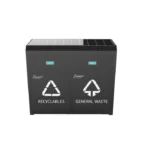
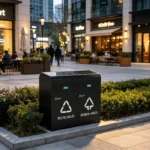
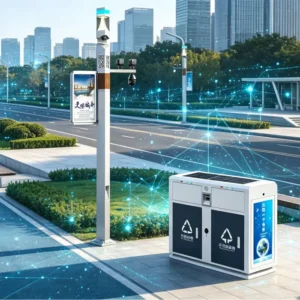
The smart solar trash bin breaks away from traditional sanitation equipment’s dependence on the grid, using solar energy as its primary power source to build an independently operating intelligent system. High-transmittance tempered glass covers the photovoltaic modules integrated into the top of the unit, efficiently converting sunlight into electrical energy stored in the built‑in lithium iron phosphate battery. The battery capacity is reasonably designed to support three consecutive cloudy/rainy days of normal operation, ensuring power supply reliability.
The whole unit is constructed of 304 stainless steel and engineering plastic composites, offering high strength, corrosion resistance, and aging resistance, making it suitable for complex climatic conditions such as high temperature, high humidity, and salt spray. The disposal openings are equipped with infrared or microwave sensors, automatically opening the lid when a user approaches for touch‑free disposal, effectively reducing the risk of bacterial cross‑infection. Inside the bin, ultrasonic or infrared fill sensors monitor waste accumulation height in real time. Once the preset threshold is reached, it triggers a local audible/visual alarm and simultaneously sends information to the management platform.
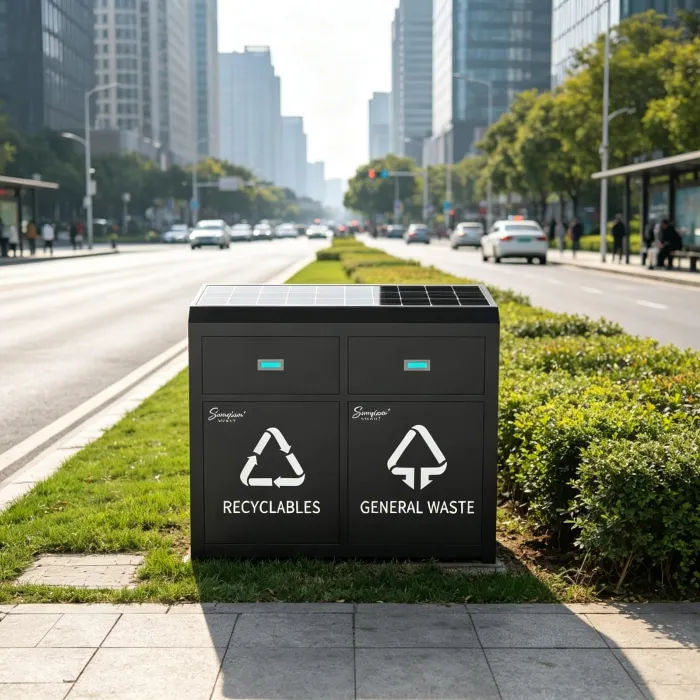
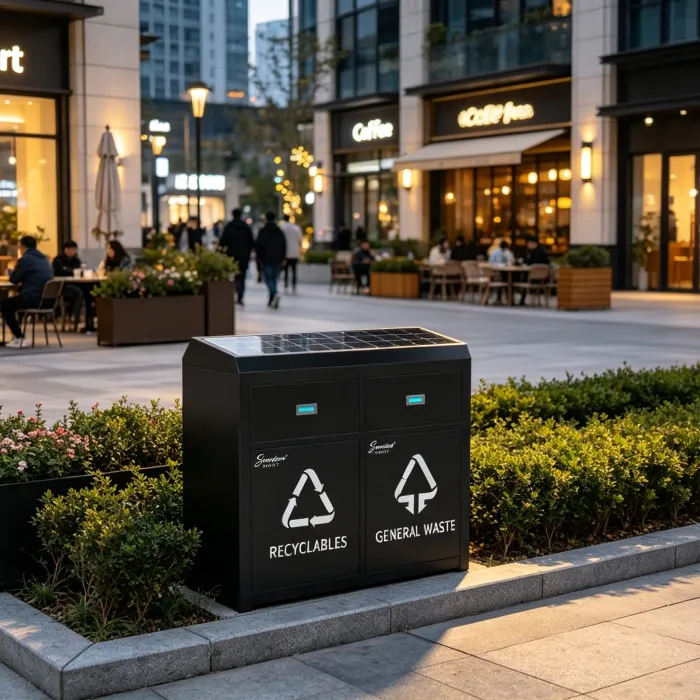
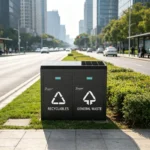
The device supports a four‑ or two‑sorting configuration, with clear disposal opening labels and built‑in voice modules that play disposal instructions corresponding to the waste category when a user approaches, improving public awareness and sorting accuracy. The control system uses a low‑power embedded chip, integrating GPS positioning and 4G/NB‑IoT communication modules, enabling real‑time upload of device status, alarm information, usage frequency, and other data to the cloud management platform for refined dispatching and maintenance management by sanitation departments.
II. Working Principle
The operation of the smart solar trash bin follows a closed‑loop logic of “solar energy collection → electricity storage → intelligent control → function execution.” During the day, the solar panels on top absorb solar radiation and generate DC electricity through the photovoltaic effect. After regulation by an MPPT (Maximum Power Point Tracking) charge controller, this electricity is preferentially used for the day’s power demands, with any surplus stored in the lithium iron phosphate battery. The battery pack is equipped with overcharge, over‑discharge, and short‑circuit protection mechanisms to ensure long‑term safe operation.
At night or under insufficient light, the system automatically switches to battery power mode to maintain normal operation. When a user approaches a disposal opening with waste, the infrared sensor detects the human activity signal and transmits the command to the main control chip. After verifying the signal, the chip drives a micro‑motor to open the lid of the corresponding bin, which automatically closes after a delay of several seconds, completing one disposal cycle.
Simultaneously, the main control system continuously reads the fill sensor data from each bin. If waste accumulation exceeds 80% capacity, the system triggers a “warning” state and illuminates a yellow indicator light. At 95%, it enters a “full” state, with a red flashing warning light, and sends alarm information (including equipment ID, location, time, and bin type) to the backend management system via the wireless network. The voice module plays pre‑recorded sorting instructions based on the activated disposal opening; the content can be updated remotely. All operational logs and status data are regularly uploaded to the cloud platform, creating traceable management records.
III. Product Features
The most notable features of the smart solar trash bin are its energy independence and intelligent management capability. It completely eliminates the need for grid wiring, making it especially suitable for remote areas with limited power access or temporary event sites, significantly reducing infrastructure costs.
The solar power system is green, with zero‑carbon operation, aligning with sustainable development concepts. The device has high environmental adaptability, with an IP54 or higher protection rating effectively resisting rain and dust ingress. The wide‑temperature battery operates stably from -20°C to +60°C. Its modular design simplifies maintenance; key components such as sensors, batteries, and control boards can be quickly replaced, reducing downtime. Low‑power optimization results in minimal standby current, extending battery life.
The robust structure resists vandalism and has a service life of up to 8‑10 years. Through IoT connectivity, it upgrades management from “passive collection” to “active alerting,” significantly improving sanitation efficiency and urban management levels.
IV. Main Functions
1. Solar Self‑Powered
Utilizes solar PV technology for energy self‑sufficiency, requiring no connection to the municipal grid, reducing energy consumption and operating costs, suitable for various outdoor scenarios.
2. Sensor‑Activated Automatic Opening
Equipped with high‑sensitivity infrared or microwave sensors, when a user approaches the disposal opening (about 30‑50 cm), the system automatically identifies them and opens the sealed lid of the corresponding bin, achieving completely touch‑free disposal. This function is not only convenient but also effectively avoids direct hand contact with the bin, greatly reducing the risk of bacterial and virus transmission, thereby enhancing public health safety. It is especially valuable during epidemic outbreaks.
3. Intelligent Voice Reminder
A built‑in voice module automatically plays waste sorting instructions according to the activated disposal opening. For example, when a user approaches the “Recyclables” opening, it announces: “Please dispose of recyclables such as paper, plastic, glass, and metal.” The voice is clear, at a moderate volume, and supports multi‑language switching, helping citizens sort correctly, reducing mis‑disposal, and continuously raising public awareness and sorting accuracy.
4. Fill‑Level Monitoring and Alarm
Each bin is equipped with a non‑contact fill sensor that monitors waste accumulation height in real time. When the waste reaches a preset threshold (e.g., 80% or 95%), the system immediately triggers an audible/visual alarm, and a local red LED indicator flashes to alert cleaning staff for timely collection. Simultaneously, the alarm information is uploaded to the sanitation management platform via 4G/NB‑IoT networks. Managers can pinpoint the problematic device on a map, optimizing collection routes and scheduling to avoid environmental and visual pollution caused by overflow.
5. Remote Monitoring and Data Management
Through the built‑in communication module, the device sends operational status, alarm records, usage frequency, battery level, and other data back to the cloud management platform in real time. Managers can view equipment distribution, health status, and historical data anytime via computer or mobile app, generate operation reports, and achieve a data‑driven transformation from “experience‑based” to “intelligent,” comprehensively improving the refinement and intelligence of urban sanitation systems.
V. Get a Custom Solution & Quote
Based on your project requirements, deployment environment, and functional needs, we will provide a tailored smart solar trash bin solution, including model recommendations, configuration lists, and detailed quotations, to support efficient project implementation.
Frequently Asked Questions(FAQ)
Q:Who manufactures your smart solar trash bins?
A:Hangzhou Sanqian Smart City Technology Co., Ltd. is a manufacturer and smart city solutions provider specializing in smart solar trash bins, smart urban furniture, intelligent street poles, and solar-powered outdoor facilities. The Smart Solar Trash Bin is designed for parks, campuses, commercial areas, scenic locations, residential communities, transportation hubs, and other public spaces.
Q:What is a smart solar trash bin?
A:A smart solar trash bin combines solar power supply with outdoor waste collection. Depending on the model and configuration, it can include solar power supply, automatic waste compaction, fill-level monitoring, motion-sensor lid opening, LED indicators, odor control, sterilization, IoT connectivity, GPS tracking, and other smart functions.
The available features depend on the selected model, project requirements, and customization options.
Q:Can the design of the smart solar trash bin be customized?
A:Yes. We can customize the bin capacity, dimensions, structure, materials, colors, branding, waste inlet design, inner bin structure, compaction mechanism, solar panel, sensors, installation method, and overall appearance according to your project requirements.
All custom designs are subject to technical evaluation and will be manufactured according to the final approved drawings, specifications, and samples.
Q:Is there a design fee?
A:Basic design adjustments and preliminary concept discussions are usually available at no additional cost.
Complex structural design, engineering drawings, 3D modeling, prototype development, or dedicated software development may involve additional fees. Any applicable fees and refund conditions will be confirmed before the project begins.
Q:Can the functions of the smart solar trash bin be customized?
A:Yes. Depending on your project requirements, the smart solar trash bin can be configured with solar power supply, automatic compaction, fill-level detection, motion-sensor lid opening, LED indicators, odor control/sterilization, IoT connectivity, GPS tracking, data reporting, advertising display, and other functions.
Customized features may affect the product structure, software development, certification requirements, production lead time, and final price. The final configuration is subject to technical evaluation.
Q:How much does a smart solar trash bin cost?
A:The price depends on the bin capacity, materials, design, solar power system, battery capacity, compaction system, smart functions, order quantity, packaging requirements, and delivery location.
To prepare an accurate quotation, please provide:
• Required quantity;
• Destination country or market;
• Required functions;
• Customization requirements;
• Expected delivery time;
• Preferred shipping method.
Q:Is there a minimum order quantity?
A:The minimum order quantity depends on the selected model and level of customization.
Small customized orders may involve higher unit costs because of design, prototyping, production setup, and shipping expenses. The exact minimum quantity and pricing will be confirmed according to the project requirements.
Q:What product and export documents can you provide?
A:Depending on the product model, destination country, and trade terms, we may provide relevant technical and export documents, including:
• Product specifications;
• User manuals;
• Packing lists;
• Commercial invoices;
• Certificates of conformity;
• Test reports;
• Certificates of origin;
• Other project-specific documents.
The exact documents available will be confirmed according to the product configuration, destination-country requirements, and order terms.
Q:What is the production lead time?
A:The typical production lead time for standard products is approximately 20–30 days, depending on the order quantity, material availability, product configuration, customization requirements, and order confirmation date.
Customized products, samples, and large-volume orders may require additional time. The final lead time will be confirmed after the drawings, specifications, payment terms, and order details have been approved.
Q:What payment methods do you accept?
A:Payment methods may vary depending on the order value, customer location, and agreed trade terms. Bank transfer, PayPal, or other mutually agreed payment methods may be available.
The payment schedule and balance payment conditions will be specified in the official quotation, sales contract, or proforma invoice.
Q:What is the warranty period?
A:The warranty period depends on the product model, configuration, and sales contract.
The warranty generally covers agreed material and manufacturing defects. It does not normally cover damage caused by improper installation, misuse, unauthorized modifications, natural disasters, or normal wear and tear.
The exact warranty period, coverage, and after-sales conditions will be stated in the quotation or sales contract.
Q:How are smart solar trash bins packaged and shipped?
A:The products are packaged according to their size, structure, quantity, and shipping method to reduce the risk of impact, moisture, and damage during transportation.
Wooden crates, pallets, moisture-resistant packaging, reinforced packaging, and other special packaging options can be arranged upon request. Additional packaging requirements may incur extra costs.
If the product includes batteries or other components subject to transportation regulations, the shipping method and required documents will be confirmed according to the actual configuration and destination-country requirements.
Q:Where are the products shipped from?
A:The products are generally manufactured and shipped from Hangzhou, Zhejiang, China, and nearby supply-chain locations.
The specific loading port, delivery location, and trade terms will depend on the order quantity, shipping method, and destination country. For ocean freight, the final loading port will be confirmed according to the logistics plan and order arrangement.
Q:How much is the shipping cost?
A:Shipping costs depend on:
• Destination country and city;
• Shipping method;
• Order quantity;
• Package dimensions and total weight;
• Whether the products include batteries or other regulated components;
• Agreed trade terms, such as EXW, FOB, CIF, or DDP.
For bulky bins, shipping costs may also depend on volume, stacking requirements, and loading efficiency.
Please provide the product model, quantity, and delivery location so we can prepare a shipping quotation based on the actual logistics requirements.