1. Project Background and Needs Analysis
With the continued advancement of Education Informatization 2.0, smart campus development has expanded from basic digital teaching to the comprehensive intelligent transformation of campus infrastructure.
University campuses cover large areas, feature complex functional zones, and experience high population mobility. Traditional infrastructure management faces numerous challenges, including high road-lighting energy consumption, insufficient refined management, scattered security-monitoring points with blind spots, inconvenient emergency-response methods, reliance on posters or separate electronic screens for information dissemination, a lack of real-time environmental monitoring, and weak wireless-network coverage in certain areas.
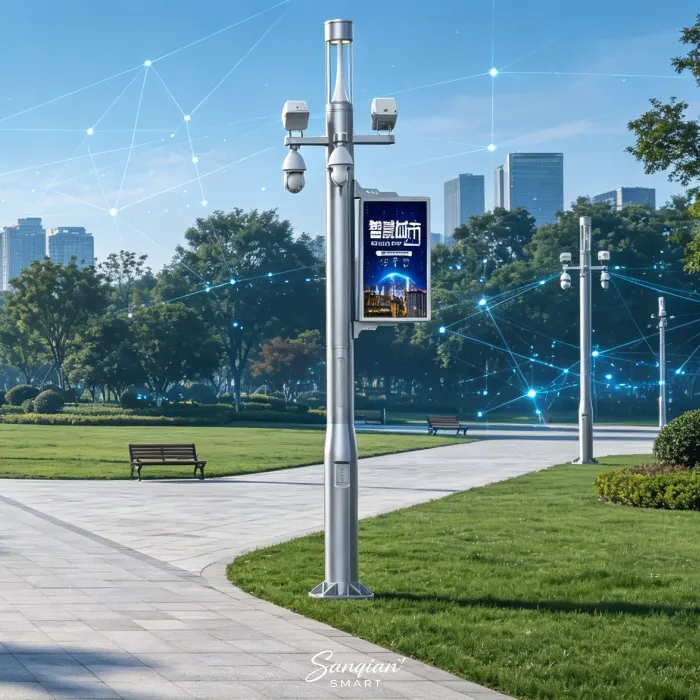
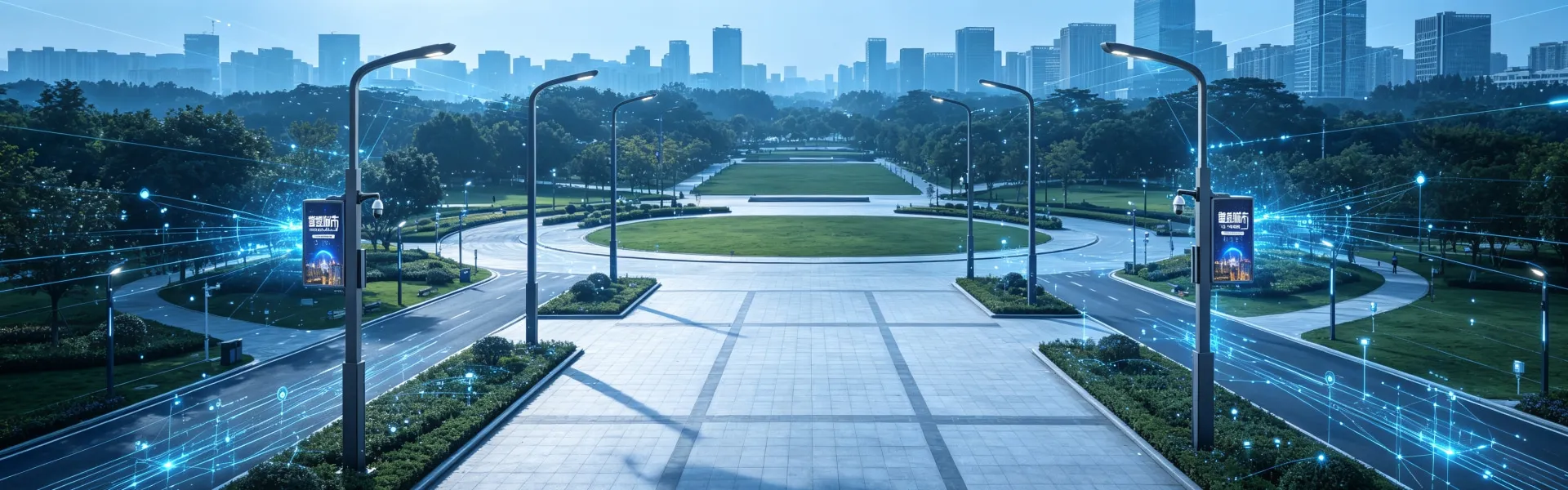
At the same time, the numerous light poles distributed along campus roads, around plazas, in residential areas, and near sports fields have become ideal carriers for various smart devices because of their natural spatial distribution and stable power supply.
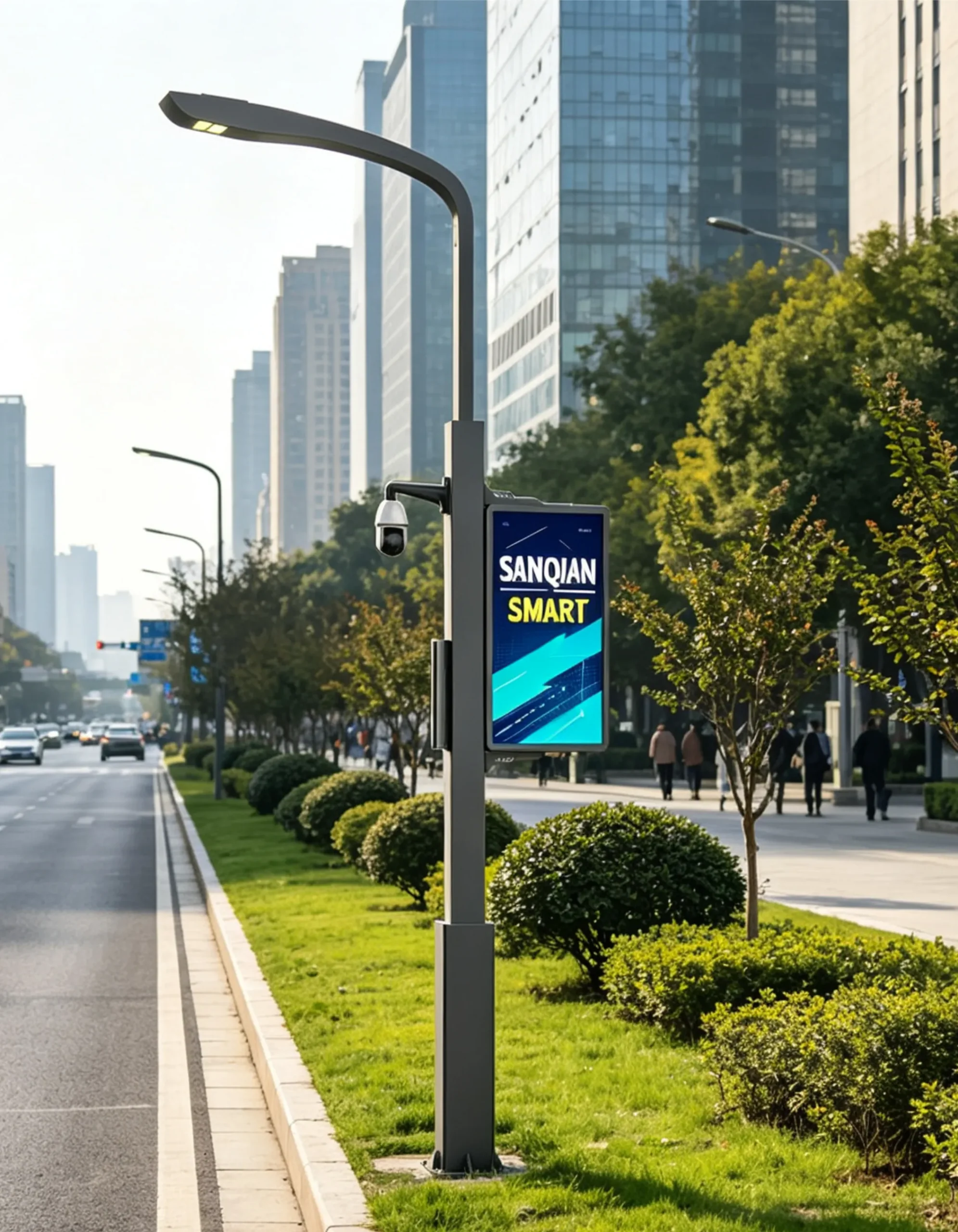
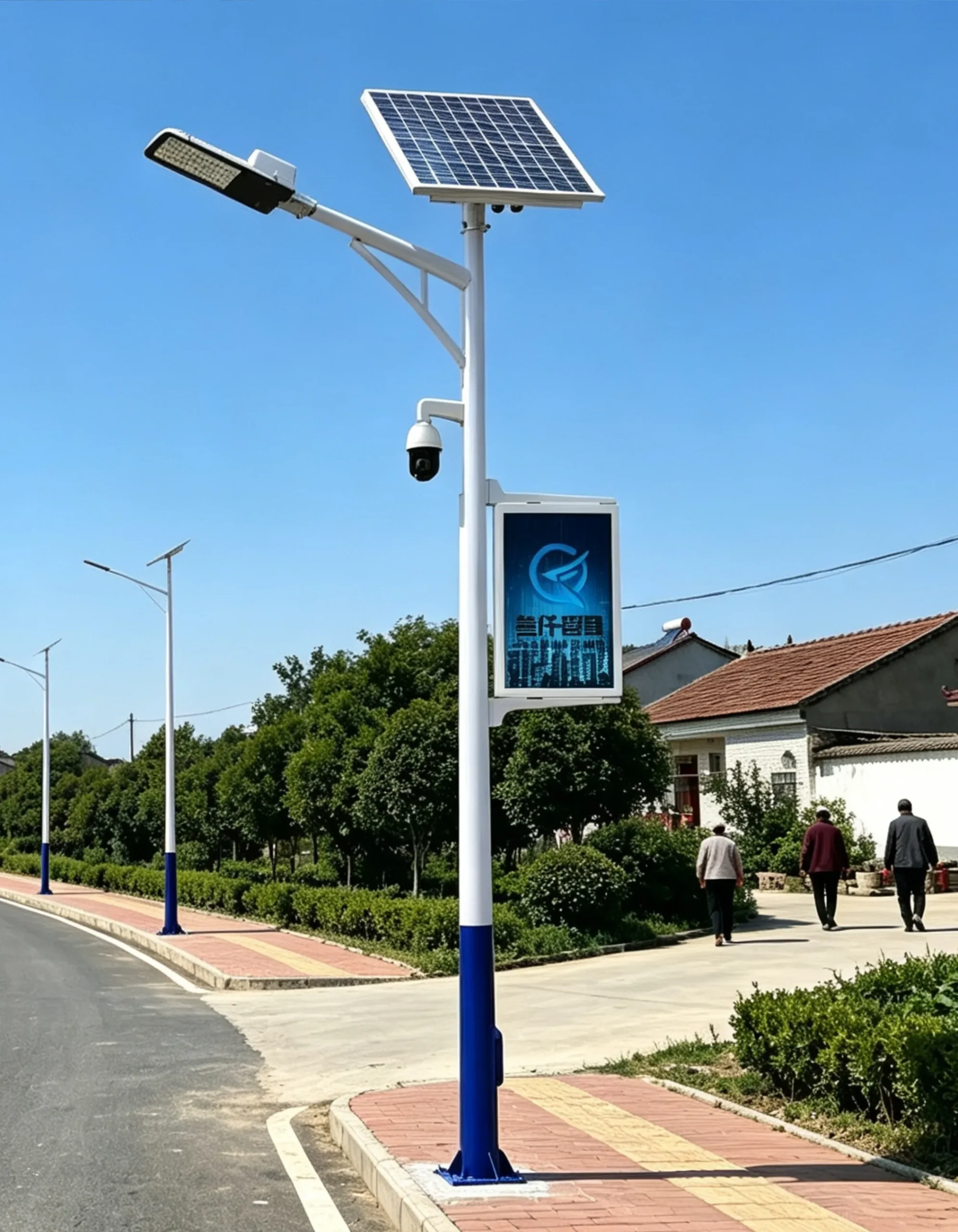
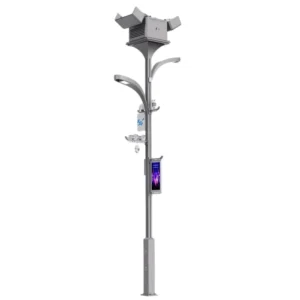
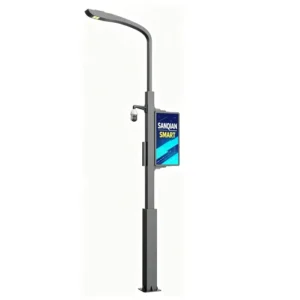
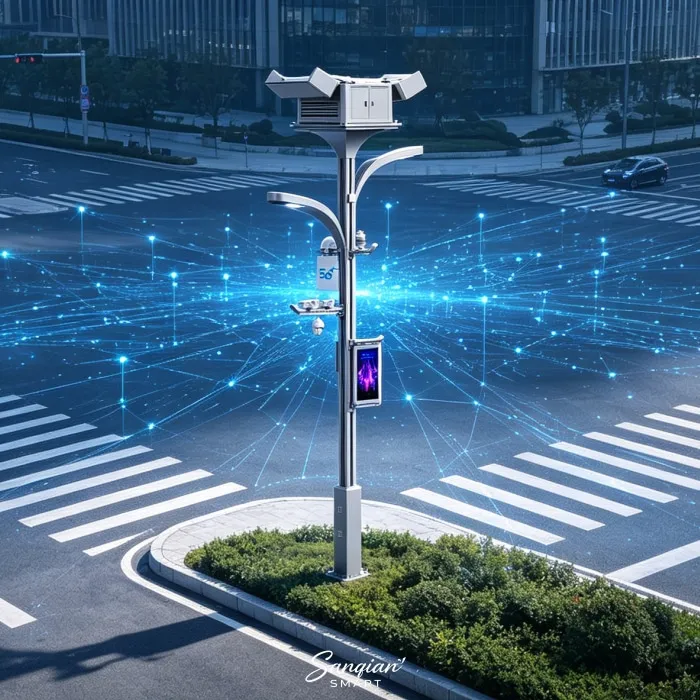
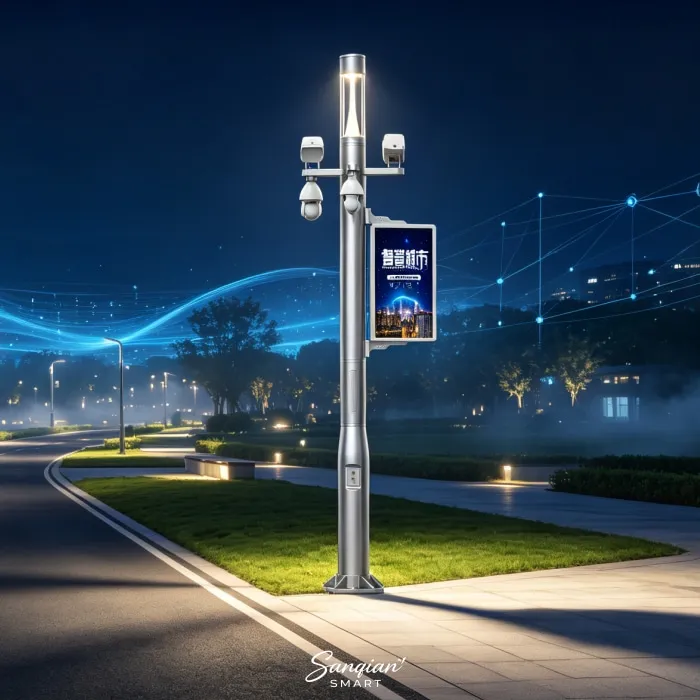
Based on years of experience in smart street pole research, development, and system integration, Sanqian Smart has introduced a smart campus smart street pole system solution for universities. Centered on multifunctional smart street poles, the solution integrates intelligent lighting, video security, one-button emergency alarms, public broadcasting, information displays, environmental monitoring, wireless coverage, and other functions. Through a unified smart campus management platform, it enables “multiple functions on one pole and unified management through one network,” helping universities create a safe, green, efficient, and human-centered smart campus environment.
2. Design Principles and Standards
The solution follows the basic principles of safety and reliability, integration and resource sharing, flexible expansion, energy efficiency, and aesthetic coordination.
It primarily refers to the following standards:
- Smart City, Smart Multi-Functional Pole, Service Functions and Operation Management Specifications (GB/T 40994)
- Standard for Urban Road Lighting Design (CJJ 45)
- Technical Standard for Security and Protection Engineering (GB 50348)
- Standard for Electrical Design of Civil Buildings (GB 51348)
- Relevant information-technology development standards for the education sector
The system is customized according to campus road classifications, functional zones, pedestrian density, and landscape requirements.
Key design indicators include:
- Average illuminance of at least 20 lx on primary campus roads
- Average illuminance of at least 15 lx on secondary roads
- Average illuminance of at least 10 lx on pedestrian walkways
- Uniformity of at least 0.4
- 100% coverage of key video-monitoring areas
- One-button emergency-alarm response time of no more than 3 seconds
- Remote centralized management of information-display screens
- Environmental-data collection at least once every 5 minutes
- Device online rate of at least 99% on the smart street pole management platform
3. Overall System Architecture
The system adopts a four-layer architecture consisting of devices, network, cloud, and applications, creating a complete smart street pole Internet of Things system for university campuses.
Perception and Device Layer
This layer consists of smart street poles deployed throughout the campus. According to specific application requirements, each pole can integrate intelligent lighting fixtures, network cameras, one-button emergency alarm boxes, IP broadcasting speakers, LED information-display screens, environmental sensors, WiFi 6 wireless access points, electric-vehicle charging stations, and other devices.
The devices are responsible for data collection, edge computing, and execution control.
Network Transmission Layer
The system relies on the existing campus fiber-optic backbone network and uses a fiber-to-pole architecture to ensure high-bandwidth and low-latency data transmission.
In areas where cables cannot be installed, 5G/4G or WiFi wireless backhaul can be used. The network layer also supports integration with existing campus security networks, campus broadcasting systems, campus information-publishing systems, and other networks.
Platform Layer
The Sanqian Smart Campus Smart Street Pole Management Platform serves as the core of the system. It provides device access, data aggregation, rule engines, alarm management, energy-consumption analysis, GIS mapping, linkage strategies, and other services.
The platform also provides standard API interfaces for integration with existing university systems, such as academic administration systems, security platforms, and logistics-management systems.
Application Layer
The application layer provides web-based management interfaces and mobile applications for different departments, including the Security Office, Logistics Department, Information Center, and Publicity Department.
It supports role-based and permission-based access, enabling “one platform with multi-department collaboration.”
4. Smart Street Pole Functions
4.1 Intelligent Lighting System
The system uses high-efficiency LED lighting fixtures with a luminous efficacy of at least 160 lm/W, a color temperature of 4000K, and a color-rendering index of Ra ≥ 70.
The fixtures support stepless dimming from 0% to 100%. Combined with built-in microwave radar or light sensors, they enable an intelligent lighting strategy in which the lights become brighter when people approach and remain at a low brightness level when people leave.
The platform can issue differentiated lighting plans according to different areas and time periods:
- Higher brightness during evening self-study hours in teaching areas
- Brightness reduced to 30% at night in residential areas, with sensor-based activation
- Automatic switching of sports-field lighting according to operating hours
The overall energy-saving rate can exceed 50%.
4.2 Video Security Monitoring
Each smart street pole can integrate a high-definition network camera with at least 4 megapixels. The camera supports infrared night vision, intelligent motion detection, area-intrusion alarms, and other functions.
The installation height and viewing angle are optimized according to road width and pedestrian-flow direction. Key coverage areas include:
- Campus entrances
- Main-road intersections
- Entrances and exits of residential areas
- Parking lots
- Isolated pathways
Video streams can be connected to the campus security platform and linked with the one-button emergency-alarm and broadcasting systems to create a closed loop of detection, alarm, and intervention.
4.3 One-Button Emergency Alarm
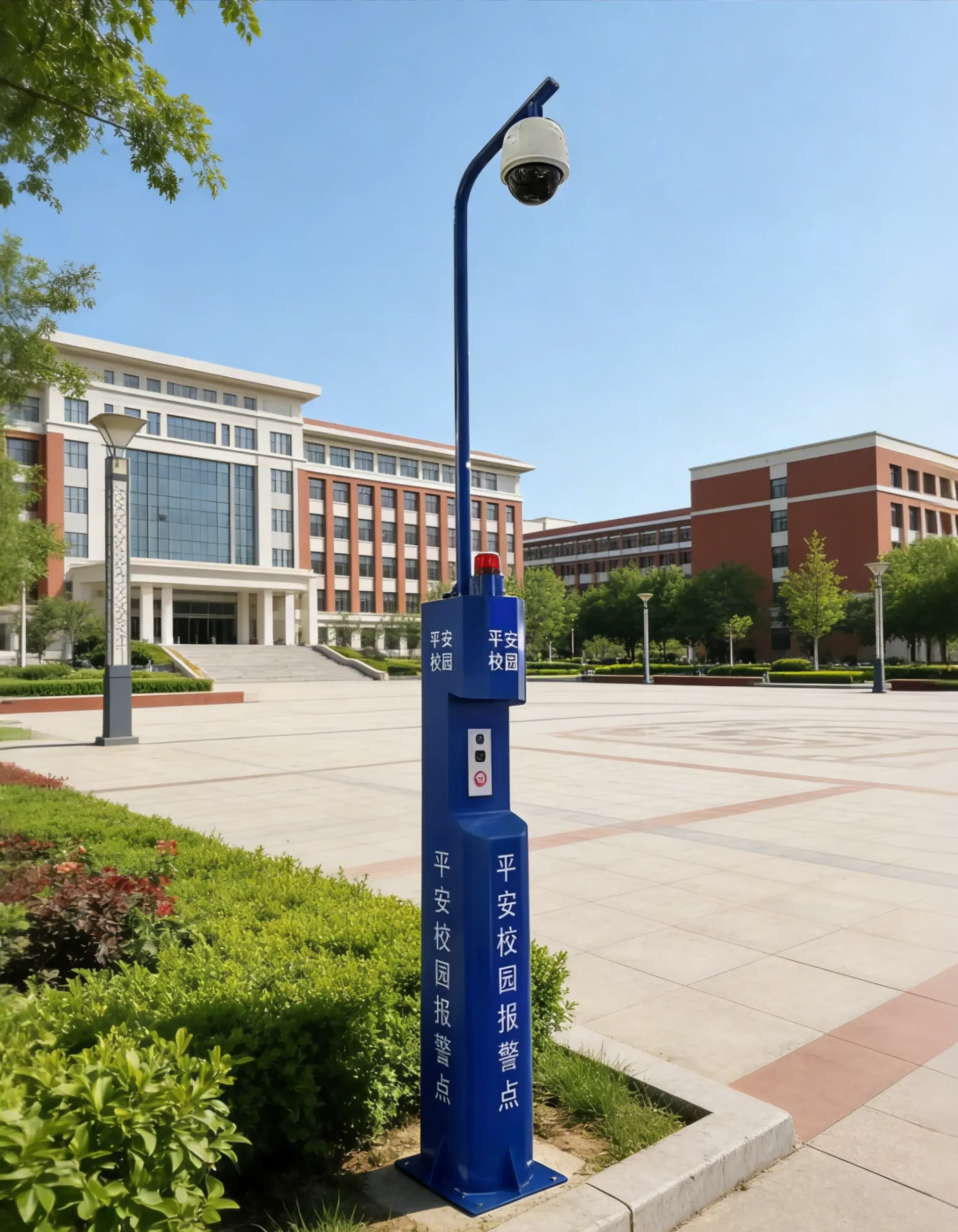
A one-button emergency-alarm box is installed on the pole at a height of approximately 1.2–1.5 meters above ground level. It includes a microphone and speaker and supports two-way voice communication.
When a student or staff member encounters an emergency, pressing the button immediately establishes communication with the campus security center. At the same time, the platform displays the video feed from the alarm location, allowing security personnel to quickly assess and respond to the situation.
The alarm box features anti-tampering, waterproof, and false-trigger prevention designs. It also supports location tracking, and alarm information is sent in real time to the mobile phones of security personnel on duty.
4.4 Public Broadcasting and Information Display
The smart street poles can integrate IP network speakers that support zone-based broadcasting, scheduled announcements, and emergency broadcasting.
Through the platform, the university can centrally broadcast messages for class schedules, examinations, sports events, emergency evacuations, and other scenarios.
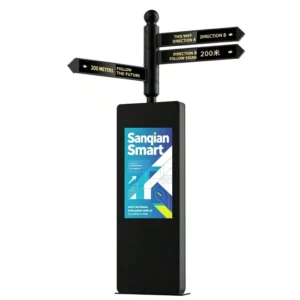
A double-sided LED information-display screen can be installed on the upper or middle section of the pole. It can be used to display campus announcements, event previews, safety reminders, weather forecasts, lost-and-found information, and other content.
This replaces traditional banners and posters while improving information-delivery efficiency and the overall image of the campus.
4.5 Environmental and Weather Monitoring
An integrated environmental sensor is installed at the top of the pole or on its cross arm to collect real-time data, including:
- Temperature
- Humidity
- PM2.5
- PM10
- Noise
- Illuminance
- Wind speed
- Wind direction
After the data is uploaded to the platform, it can be displayed on campus dashboards or information-display screens, providing students and staff with real-time environmental information.
In areas such as sports fields, noise-monitoring data can serve as a reference for event management.
4.6 Wireless Network Coverage
In high-density public areas such as plazas, sports fields, and common areas of residential zones, smart street poles can integrate WiFi 6 wireless access points to provide high-speed wireless connectivity and support a large number of simultaneous connections.
The access points can be linked with the management platform. During large-scale events, transmission power and channels can be dynamically adjusted to ensure network quality.
4.7 New-Energy Charging and Public Convenience Services, Optional
Near parking lots and faculty residential areas, selected poles can integrate AC charging stations to provide slow charging for electric vehicles. The platform can also support charging-fee management.
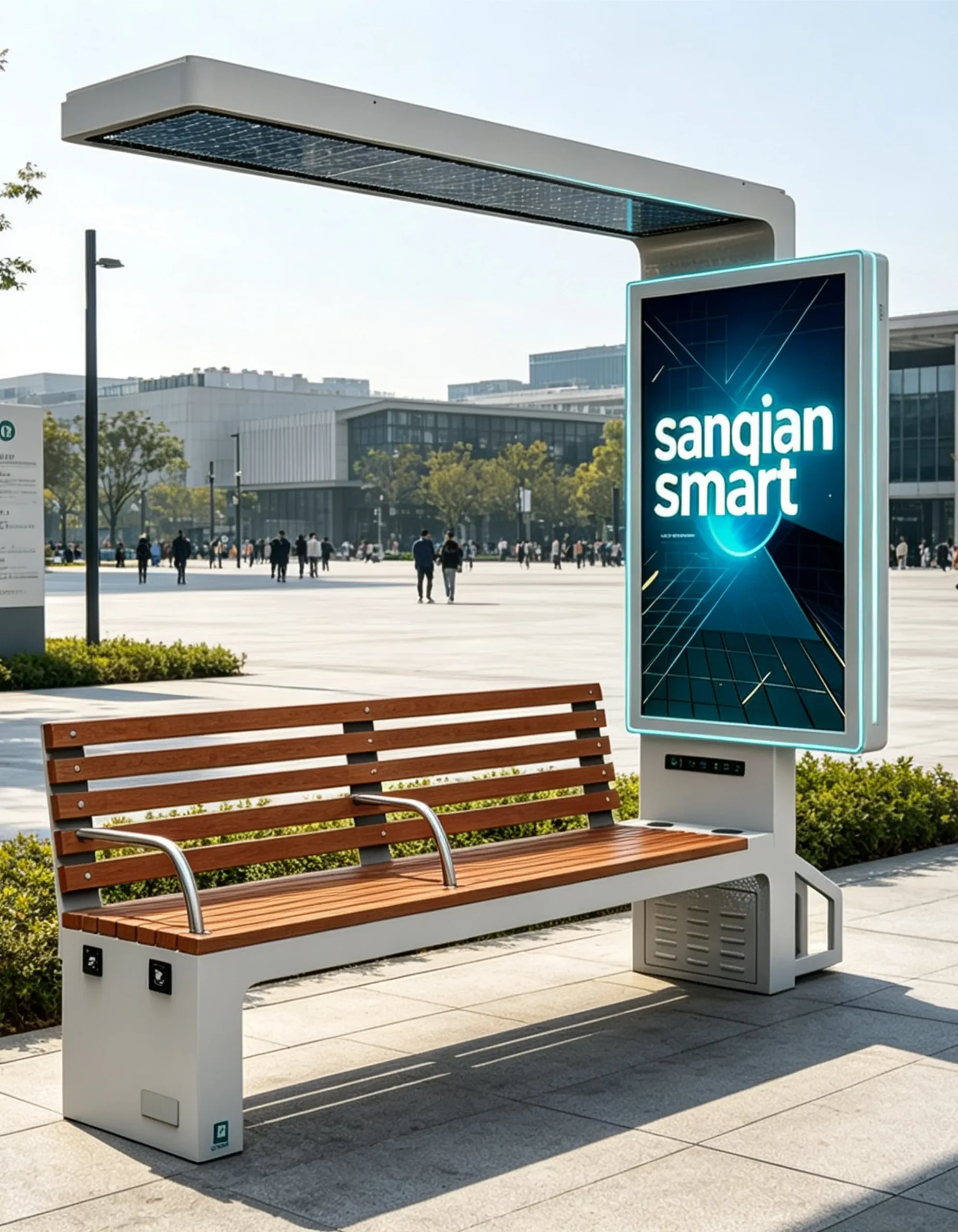
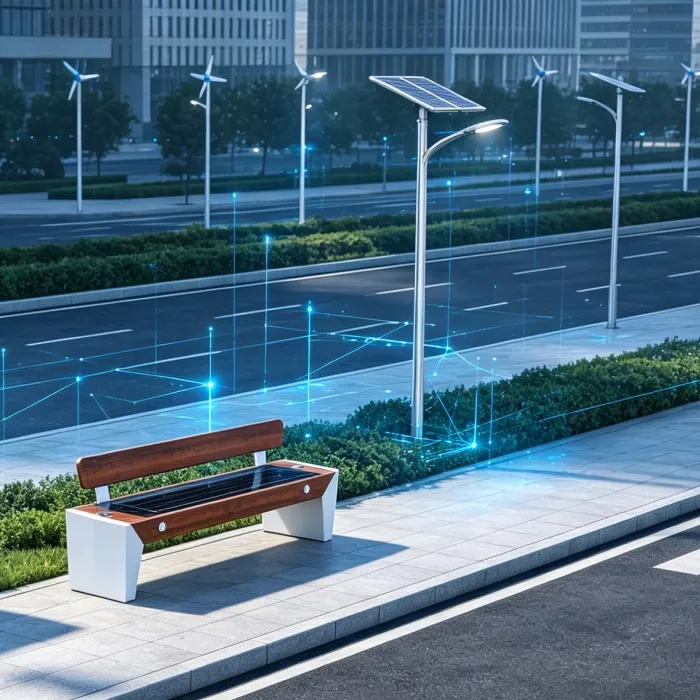
USB charging ports, seats, hooks, and other public convenience facilities can be reserved or installed at the bottom of the poles to improve the quality of public-space services.
5. Smart Campus Management Platform
The Sanqian Smart Campus Smart Street Pole Management Platform serves as the management center of the entire system. Its core functions include the following:
Full-Life-Cycle Device Management
Each street pole and mounted device is assigned a unique code. The platform records its location, model, operating status, and maintenance history, creating a digital asset register for campus infrastructure.
Lighting Strategy and Energy-Consumption Management
Based on class schedules, seasons, weather conditions, and real-time pedestrian flow, the platform can automatically generate lighting strategies.
It calculates energy consumption for each street pole and generates daily and monthly reports, providing data support for the university’s energy-saving assessments.
Security Linkage and Incident Management
The platform links video monitoring, one-button emergency alarms, and broadcasting systems.
When an alarm is triggered, the platform automatically retrieves footage from nearby cameras, activates broadcast announcements, notifies security personnel, and records the entire incident-management process.
Unified Information-Publishing Management
The system supports multi-level review, scheduled publishing, and area-based distribution.
Information displayed on the LED screens can be synchronized with the campus website and official WeChat account, enabling unified management across multiple media channels.
Environmental Data Visualization
Using GIS maps and charts, the platform displays campus environmental heat maps and air-quality trends. It also supports historical-data queries and exports.
Maintenance Work Orders and Mobile Inspections
When a device malfunctions, the system automatically generates a work order and sends it to the mobile devices of logistics-maintenance personnel.
The platform supports QR-code-based repair requests, photo uploads, and closed-loop work-order completion, improving maintenance efficiency.
6. Typical Application Scenarios
Main Campus Roads
The main functions include lighting, video monitoring, and broadcasting. These functions ensure safe nighttime travel and assist with traffic management.
The system automatically increases brightness during class-change periods and reduces brightness late at night while activating sensor-based lighting.
Plaza in Front of the Library
Lighting, information-display screens, environmental monitoring, and WiFi coverage work together to create a public space for gathering, leisure, and information access.
During large-scale events, the broadcasting system and display screens can be linked to support unified coordination and command.
Residential Areas and Surroundings
Lighting, one-button emergency alarms, video monitoring, and WiFi are combined to strengthen nighttime security.
Alarm points are automatically linked with nearby cameras, shortening emergency-response times.
Sports Fields and Athletic Facilities
Lighting, broadcasting, and environmental monitoring are integrated to automatically control lighting according to operating hours.
Noise and air quality are monitored to provide students and staff with a comfortable sporting environment.
Parking Lots and Campus Entrances
Lighting, video monitoring, and charging stations are integrated to provide security monitoring and electric-vehicle charging services, improving the intelligence of campus transportation management.
7. Implementation and Operation & Maintenance
A strategy of overall planning and phased implementation is recommended.
During Phase One, priority should be given to the main campus roads, entrances, residential areas, sports fields, and other security-sensitive areas with concentrated functional requirements.
The first phase is expected to deploy approximately 100–200 smart street poles, establish the management platform, and complete integration with existing systems.
During Phase Two, the system can be extended to secondary roads, parking lots, landscaped walkways, and other areas, ultimately achieving full campus coverage.
For operation and maintenance, it is recommended to establish a mechanism in which the Information Center takes overall responsibility, the Security Office and Logistics Department coordinate operations, and a professional maintenance team carries out implementation.
Daily remote inspections can be performed through the platform. On-site maintenance of the street poles and mounted devices should be conducted every quarter to ensure long-term stable operation.
8. Benefits Analysis
Security Benefits
Video-monitoring coverage can be increased to 100%, while one-button emergency-alarm points cover key areas.
Emergency-response time can be reduced from several minutes to several seconds, significantly strengthening campus security and prevention capabilities.
Energy-Saving Benefits
Intelligent lighting strategies can reduce public-lighting energy consumption by more than 50%.
Based on an estimate of 200 street lights, the university can save hundreds of thousands of yuan in electricity costs annually while reducing carbon emissions.
Management Benefits
After integrating multiple systems, the university no longer needs to separately develop independent systems for lighting, monitoring, broadcasting, and information publishing.
This reduces duplicate investment and operation and maintenance costs. A single platform can be used to monitor the operating status of public spaces across the campus, greatly improving management efficiency.
Social Benefits and Image Enhancement
As a visible carrier of smart campus development, smart street poles enhance the technological atmosphere and human-centered quality of the campus.
They can also serve as an important platform for showcasing the university to the public, generating positive effects on student recruitment, inter-university exchanges, and social recognition.
9. Case Study: Smart Campus Smart Street Pole Project at a University
The following case is based on a smart campus project implemented by Sanqian Smart at a key provincial university.
The university covers approximately 1,500 mu and has more than 20,000 students and staff members.
During Phase One, a total of 180 smart street poles were deployed, covering the southern entrance main road, the library plaza, student residential areas, the sports field, and two parking lots.
The project adopted customized smart street poles developed by Sanqian Smart. The poles are 6–8 meters high, with designs coordinated with the campus landscape style.
Each pole integrates:
- Intelligent LED lighting
- A 4-megapixel camera
- A one-button emergency-alarm box
- An IP speaker
- A double-sided information-display screen
- Environmental sensors
- A WiFi 6 access point
The platform was integrated with the university’s existing security system, broadcasting system, and logistics-management system.
After one academic year of operation:
- Nighttime campus-lighting energy consumption decreased by 52% compared with before the upgrade.
- The efficiency of security-incident detection and response increased by 60%.
- More than 40 uses of the one-button emergency-alarm system were successfully handled.
- The information-display screens published more than 1,200 notices.
- Environmental-monitoring data was used by the Environmental Engineering Department for teaching and practical training.
The project was recognized by the provincial education authority as a Demonstration Case for Smart Campus Development and became a landmark achievement in the university’s digital transformation.
10. Conclusion
University campuses are ideal environments for smart street pole applications.
The Sanqian Smart Campus Smart Street Pole System Solution uses street poles as spatial anchors and integrates lighting, security, information services, environmental monitoring, wireless networks, and other functions.
Through a unified platform, the solution enables coordinated management, addressing the traditional challenges of scattered and inefficient campus infrastructure while providing universities with a safer, greener, smarter, and more human-centered campus environment.
In the future, with the further integration of technologies such as artificial intelligence and digital twins, smart street poles will become core nodes in campus sensing networks and continue to support the modernization of education.